• Link to X
  • Link to Facebook
  • Link to Instagram
  • Link to Rss this site
Indigenous Climate Hub
  • Home
    • About Us
  • Climate Action Programs
    • First Nation Adapt Program
      • Indigenous Climate Change Adaptation Gatherings
    • Indigenous Community-Based Climate Monitoring Program
    • Climate Change and Health Adaptation Program
    • Climate Change Preparedness in the North
    • Environment and Climate Change Canada
  • Funding
  • Resources
    • Climate Change Directory
    • Resource Library
    • Community Adaptation Projects
  • Events
  • Podcast
  • Blog
  • Contact/FAQs
  • Click to open the search input field Click to open the search input field Search
  • Menu Menu

The Sacred Turtle: Teachings on Our Shared Responsibility to Mother Earth
Blog
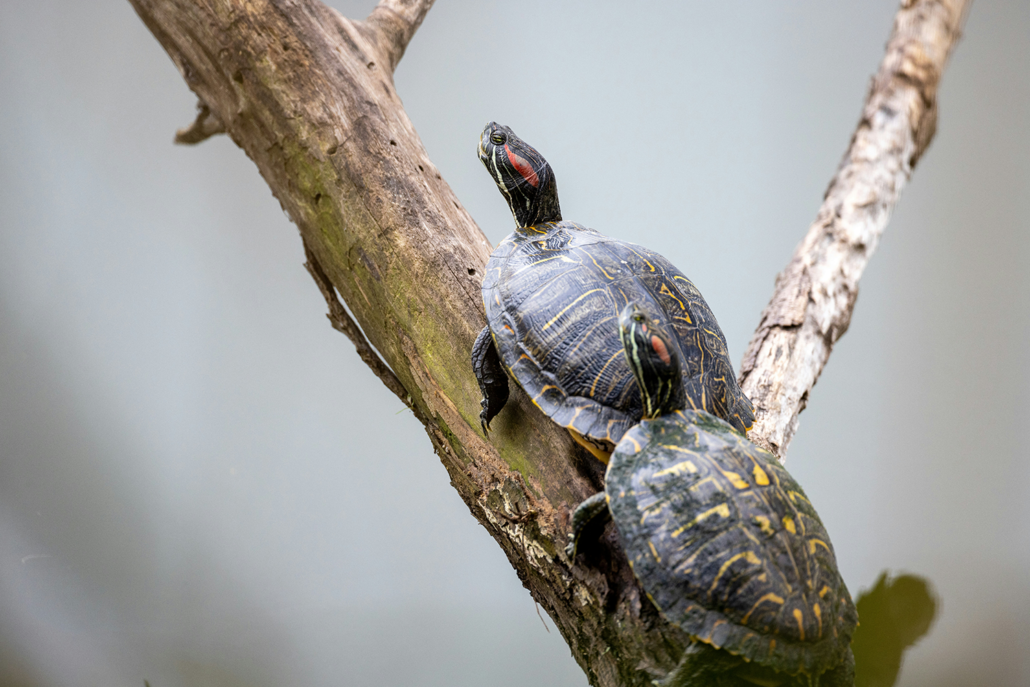
Painted turtlesMatt Bango, Unsplash

In the rich cultures of Indigenous Peoples across the Great Lakes basin, the turtle holds a place of profound significance. For the Haudenosaunee and Anishinaabe peoples, the turtle is far more than an animal; it is a sacred being, a symbol of creation, and an influential teacher of balance, patience, and interconnectedness. Yet, as climate change accelerates, turtles in the Great Lakes region face increasing threats, bringing their survival—and the health of our shared environment—into sharp focus.

Turtles of the Great Lakes Region: Sacred Beings and Environmental Indicators

 The Great Lakes basin is home to several species of turtles, including the painted turtle, snapping turtle, Blanding’s turtle, wood turtle, spotted turtle, musk turtle, and map turtle. These species play a vital role in maintaining ecosystem health, functioning as scavengers, seed dispersers, and contributors to aquatic food webs. However, they are increasingly at risk from habitat loss, pollution, invasive species, and the profound effects of climate change.

Turtles are sensitive to environmental changes, making them key indicators of ecological health. Rising temperatures, erratic weather patterns, and altered water levels disrupt their nesting cycles, hatchling success rates, and sex ratios. Since the nest’s temperature determines a turtle’s sex during incubation, warming climates produce disproportionately more females, threatening population stability. These disruptions are not just a concern for turtles; they provide a stark warning about the broader impacts of climate change on the ecosystems we depend on.

Creation Stories and Sacred Roles: Turtle as Teacher

The Haudenosaunee and Anishinaabe creation stories place the turtle at the center of the land’s formation. For the Haudenosaunee, the turtle’s back became the foundation of Turtle Island when Sky Woman fell from the Sky World, assisted by water animals like the muskrat. Similarly, in the Anishinaabe tradition, Nanabozho orchestrated the creation of land on a turtle’s back with the help of the muskrat’s selfless sacrifice. These stories reflect profound ecological truths: cooperation, resilience, and the interdependence of all life.

Turtle Island

Turtle Island (AI-generated image)

Turtles are sacred to both cultures. The Haudenosaunee see the 13 large scales on a turtle’s shell as a representation of the 13 lunar cycles, emphasizing time’s sacred rhythm and the wisdom of patience. The Anishinaabe view the turtle’s shell as a symbol of protection and interconnectedness, embodying the Earth. As clans, turtles often hold leadership roles, guiding communities with steadiness and wisdom.

Climate Change Through an Indigenous Lens

For the Haudenosaunee and Anishinaabe, the natural world is a network of relationships in which every being has a role and agency. Turtles, as sacred beings and environmental sentinels, teach us about the health of our ecosystems and the urgent need for action. The Haudenosaunee’s Seven Generations principle implores us to consider the long-term consequences of our actions, particularly as we witness climate change’s accelerating impacts.

The Anishinaabe teaching of Mino-Bimaadiziwin (“the Good Life”) emphasizes harmony and reciprocity with nature. This includes understanding that the turtle’s survival is not separate from our own—it reflects the broader state of the natural world. As caretakers, our shared duty is to protect turtles, their habitats, and the delicate ecosystems they sustain.

A Call to Action: Honouring the Turtle and Addressing Climate Change

Protecting turtles in the Great Lakes region requires immediate, collaborative action. This includes safeguarding wetlands, preventing pollution, addressing invasive species, and mitigating climate change’s effects. Indigenous Traditional Ecological Knowledge (TEK) offers powerful guidance for these efforts, grounded in a worldview that sees humans as interconnected with all beings rather than dominant over them.

Practical steps include supporting conservation programs that protect turtle habitats and ensure sustainable ecosystems. For example, Indigenous-led initiatives emphasize the importance of wetlands—key nesting and feeding areas for turtles—which also help buffer against climate change by sequestering carbon and reducing flooding. Incorporating Indigenous teachings into broader environmental strategies can amplify their effectiveness and foster a deeper respect for the natural world.

Learning from the Turtle: A Sacred Responsibility

The turtle teaches us patience, resilience, and the interconnectedness of life. As climate change threatens their survival, their plight reminds us of the urgent need for collective action to protect the Earth. By embracing the wisdom of the Haudenosaunee, Anishinaabe, and other Indigenous Peoples, we can learn to walk more gently on Turtle Island, honouring our responsibility to the land and its sacred beings.

Humanity must steadfastly carry this responsibility, much like the turtle carries the world. By doing so, we ensure the survival of these ancient beings and the health of the ecosystems that sustain us all. Together, we can create a future that reflects the turtle’s balance, perseverance, and wisdom—an enduring symbol of our sacred connection to Mother Earth.


By Rye Karonhiowanen Barberstock


(Header Image Credit: Matt Bango, Licensed under Unsplash+)
January 1, 2025/by IndigenousClimateHub
Tags: Creation Stories, Traditional Ecological Knowledge (TEK), Turtle Island, Turtles, Wetlands
Share this entry
  • Share on Facebook
  • Share on X
  • Share on WhatsApp
  • Share on Pinterest
  • Share on LinkedIn
  • Share on Tumblr
  • Share on Reddit
  • Share by Mail
https://indigenousclimatehub.ca/wp-content/uploads/2025/01/matt-bango-turtles-unsplash.png 1000 1500 IndigenousClimateHub https://indigenousclimatehub.ca/wp-content/uploads/2020/10/logo-horiz-clr-01-small-300x88.png IndigenousClimateHub2025-01-01 17:16:162025-01-26 19:00:58The Sacred Turtle: Teachings on Our Shared Responsibility to Mother Earth
You might also like
Zarif Ali, Unsplash Traditional Ecological Knowledge: The Cornerstone of Indigenous Climate Adaptation in Canada
LaDawn Preuninger, Unsplash Seasonal Shifts: How Climate Change is Impacting Traditional Hunting and Gathering Practices
The Role of Elders in Guiding Climate Change Mitigation: Wisdom from Canada’s First Nations
RaspberriesChristian Wiediger, Unsplash Small Berries, Big Lessons: A Reflection on Nature’s Wisdom and the Impacts of Climate Change
Indigenous Design and Climate Change Adaptation
Nathan Anderson, Unsplash The Healing Land: Indigenous-Led Conservation Efforts as Climate Change Mitigation
X Logo X Logo Followon X RSS Feed Logo RSS Feed Logo Subscribeto RSS Feed

Subscribe to Our Blog

This field is required.

Check your inbox or spam folder to confirm your subscription.

Recent Posts

  • Water Is a Relative, Not a Resource
  • The River Is Telling Us Something: Indigenous-Led Water Monitoring as Canada’s Climate Early Warning System
  • Night Skies and Shifting Stars: How Indigenous Celestial Knowledge Tracks a Changing Climate
  • From Ownership to Relationship: Reclaiming Our Responsibilities to Land
  • Human Foolishness in Floodplains

Archives

  • June 2026
  • May 2026
  • April 2026
  • March 2026
  • February 2026
  • January 2026
  • December 2025
  • November 2025
  • October 2025
  • September 2025
  • August 2025
  • July 2025
  • June 2025
  • May 2025
  • April 2025
  • March 2025
  • February 2025
  • January 2025
  • December 2024
  • November 2024
  • October 2024
  • September 2024
  • August 2024
  • July 2024
  • June 2024
  • May 2024
  • April 2024
  • March 2024
  • February 2024
  • January 2024
  • December 2023
  • November 2023
  • October 2023
  • September 2023
  • August 2023
  • July 2023
  • June 2023
  • May 2023
  • April 2023
  • March 2023
  • February 2023
  • January 2023
  • December 2022
  • November 2022
  • October 2022
  • September 2022
  • August 2022
  • July 2022
  • June 2022
  • May 2022
  • April 2022
  • March 2022
  • February 2022
  • January 2022
  • December 2021
  • November 2021
  • October 2021
  • September 2021
  • August 2021
  • July 2021
  • June 2021
  • May 2021
  • April 2021
  • March 2021
  • February 2021
  • January 2021
  • December 2020
  • November 2020
  • October 2020
  • September 2020
  • August 2020
  • July 2020
  • June 2020
  • February 2020
  • October 2019
  • August 2019
  • July 2019
  • June 2019
  • May 2019
  • April 2019
  • March 2019

Categories

  • Adaptation
  • Alberta
  • Announcements
  • Arctic
  • Atlantic/NB
  • Awards
  • Blog
  • British Columbia
  • Climate Change
  • Climate Change Adaptation
  • Climate Change Education
  • Climate Change News
  • Climate Change Project
  • Climate Crisis
  • Climate Monitoring
  • Community Engagement
  • Community-Based Environmental Monitoring
  • Documentaries
  • Documentary
  • Events
  • Flooding
  • Food
  • Food Security
  • Food Sovereignty
  • Forest Fires
  • Funding Opportunity
  • ICCAG 2019
  • Indigenous Perspectives
  • Manitoba
  • Media
  • Métis
  • Métis Settlement
  • News
  • Op-Ed
  • Quebec
  • Saskatchewan
  • Technology
  • Video
  • Water
  • Webinars

Tags

Alberta Arctic Arctic Resilience Forum British Columbia Carbon Sequestration Caribou Caribou Recovery CIRNAC Climate Adaptation Climate Change Climate Change Adaptation Climate Resilience Community Engagement Education Environmental Stewardship Environment and Climate Change Canada (ECCC) First Nations Flooding Food Security Food Sovereignty Global Warming Indigenous Indigenous Guardians Toolkit Indigenous Knowledge Indigenous Stewardship Infrastructure Inuit landscape Mental Health Paris Agreement Policy Renewable Energy Research Resilience Science Traditional Ecological Knowledge Traditional Ecological Knowledge (TEK) Traditional Knowledge UNDRIP United Nations United Nations (UN) Webinar Wildfires WWF-Canada Youth
Contact

About Us

The Indigenous Climate Hub is a unique online community of Indigenous climate change leaders that have come together to share their stories and climate change adaptation experiences. The website is the result of the recommendations brought forward by Indigenous peoples at the Indigenous Climate Change Adaptation Gathering in 2018.

Indigenous Climate Hub Podcast

Be a part of the Indigenous Climate Hub Podcast. We are looking for unique perspectives and experiences in environmental stewardship, Indigenous ecological and traditional knowledge, and resource management offer valuable knowledge and teachings that can benefit Indigenous communities across Turtle Island and beyond.

Indigenous-led Initiatives

Are you a program or organization that funds or supports Indigenous Peoples  working on climate change initiatives?  If you would like to provide information to potential recipients here, please reach out to Okwaho so that we can work with you to highlight your program.

© Copyright - Indigenous Climate Hub, 2025-2026
  • Terms of Service
  • Privacy Policy
Link to: Ticks as Environmental Indicators: Learning from Wildlife Movement and Traditional Knowledge Link to: Ticks as Environmental Indicators: Learning from Wildlife Movement and Traditional Knowledge Ticks as Environmental Indicators: Learning from Wildlife Movement and Traditional...TickErik Kartis, Unsplash Link to: The Spirit of Water: Life’s Electrical Symphony Link to: The Spirit of Water: Life’s Electrical Symphony WaterJong Marshes, UnsplashThe Spirit of Water: Life’s Electrical Symphony
Scroll to top Scroll to top Scroll to top