• Link to X
  • Link to Facebook
  • Link to Instagram
  • Link to Rss this site
Indigenous Climate Hub
  • Home
    • About Us
  • Climate Action Programs
    • First Nation Adapt Program
      • Indigenous Climate Change Adaptation Gatherings
    • Indigenous Community-Based Climate Monitoring Program
    • Climate Change and Health Adaptation Program
    • Climate Change Preparedness in the North
    • Environment and Climate Change Canada
  • Funding
  • Resources
    • Climate Change Directory
    • Resource Library
    • Community Adaptation Projects
  • Events
  • Podcast
  • Blog
  • Contact/FAQs
  • Click to open the search input field Click to open the search input field Search
  • Menu Menu

The River Is Telling Us Something: Indigenous-Led Water Monitoring as Canada’s Climate Early Warning System
Blog
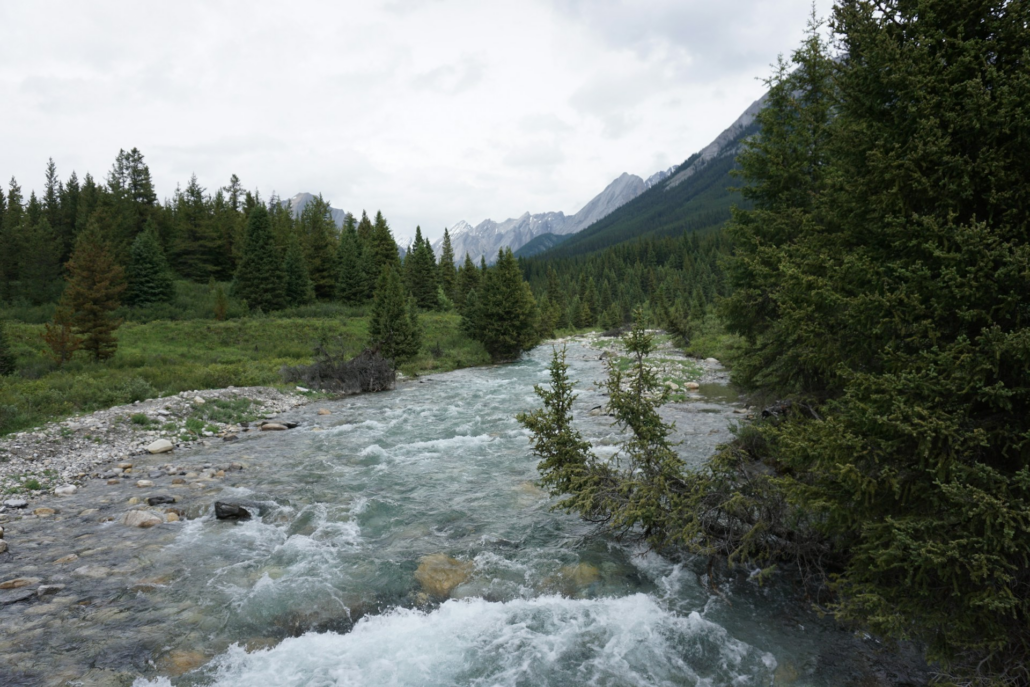
Image Credit Philip Davis-Unspalsh

For communities who have lived beside rivers for thousands of years, change in the water is never just a data point —it is a message.

Water as a Living Relative

In many Indigenous traditions across Canada, water is not a resource to be measured and managed. It is a relative, a living system with memory, voice, and place in the web of life. And this worldview, far from being incompatible with environmental science, turns out to produce some of the most sensitive monitoring on the continent. Because Indigenous communities live in close, generations-long relationship with rivers, lakes, and wetlands, they notice changes early and they notice things that instruments alone often miss.

What Elders Knew Before the Data Arrived

Along the Peace-Athabasca Delta in northern Alberta, a wetland of international ecological significance and Ramsar World Heritage status —Dene and Cree community members were observing changes in river flow, ice formation, and water quality for decades before formal scientific monitoring confirmed their observations. Mikisew Cree guides and Elders who have navigated the delta’s waters across a lifetime track changes in water depth at critical passages, noting that summer flows have declined and that boat navigation is increasingly difficult in areas that were once reliably deep.¹ Research confirms that ice conditions and break-up patterns in the Peace-Athabasca Delta have changed measurably, with Mikisew Cree First Nation Elders reporting that ice “just melts away” where dramatic break-ups once occurred.²

The Keepers of the Water

Organizations like Keepers of the Water, an Indigenous-led network working across the Arctic Drainage Basin, have built formal programs that combine Elder observation with modern tools measuring oxygen, salinity, temperature, and pH.³ In the Inuvialuit Settlement Region, community-owned aquatic monitoring programs near Sachs Harbour and Ulukhaktok have been collecting water quality data since 2019, producing novel long-term datasets from areas where government monitoring has historically been absent.⁴

A National Network of Indigenous Monitors

Through the federal Indigenous Community-Based Climate Monitoring Program —which provides approximately $8 million per year; dozens of First Nations, Métis Settlements, and Inuit communities across Canada have established their own water and environmental monitoring programs.⁵ In the Peace-Athabasca Delta, this funding has supported hydrometric stations, buoys, and trail cameras providing real-time data on water and ice conditions. These programs produce ecological intelligence that no southern laboratory can replicate.

Why This Matters for All of Canada

University of Saskatchewan researcher Dr. John Pomeroy, Canada Research Chair in Water Resources and Climate Change (2003-2024), has described the current situation plainly: western Canada is entering new climate territory, with more severe droughts and more intense rainfall events.⁶ The rivers and lakes that Indigenous communities have observed through ceremony and practice for millennia are now among the most important early warning systems Canada has. Integrating that knowledge respectfully and in genuine partnership into national water policy is both good science and a long-overdue recognition of who has been watching longest.

Passing the Knowledge Forward

In communities across the north, Elders speak about passing water knowledge to their children  not as nostalgia, but as urgent practical preparation for a changing world. That ethic captures what Indigenous-led water monitoring represents at its core: an ancient responsibility made newly urgent by a crisis these communities did not create but are among the first to confront.


Blog by Rye Karonhiowanen Barberstock

Photo by Philip Davis on Unsplash


References

[1] CBC News. (2022, October 3). Climate change is drying up the Peace-Athabasca Delta. Can the people who live there adapt? https://www.cbc.ca/newsinteractives/features/climate-change-Indigenous-adaption-Peace-Athabasca-Delta

[2] State of the Athabasca-Bow-North Saskatchewan River Basin (SOAER). Peace – Water Quantity. https://soaer.ca/peace-water-quantity/ [Mikisew Cree First Nation Elders reporting on ice conditions and break-ups]

[3] Keepers of the Water. (2024). About Keepers of the Water. https://www.keepersofthewater.ca/

[4] Crown-Indigenous Relations and Northern Affairs Canada (CIRNAC). (2024). Indigenous Community-Based Climate Monitoring Program. Government of Canada.

[5] CIRNAC. (2024). Indigenous Community-Based Climate Monitoring Program. Government of Canada. Approx. $8 million per year.

[6] Pomeroy, J. (Various). Canada Research Chair in Water Resources and Climate Change. University of Saskatchewan. https://www.usask.ca/research/chairs/pomeroy.php
May 15, 2026/by IndigenousClimateHub
Tags: Environmental Sustainability, Indigenous Climate Leadership, Peace-Athabasca Delta, Traditional Ecological Knowledge, Water Protection Canada
Share this entry
  • Share on Facebook
  • Share on X
  • Share on WhatsApp
  • Share on Pinterest
  • Share on LinkedIn
  • Share on Tumblr
  • Share on Reddit
  • Share by Mail
https://indigenousclimatehub.ca/wp-content/uploads/2026/05/philip-davis-unsplash.png 1280 1920 IndigenousClimateHub https://indigenousclimatehub.ca/wp-content/uploads/2020/10/logo-horiz-clr-01-small-300x88.png IndigenousClimateHub2026-05-15 08:30:422026-05-15 12:27:22The River Is Telling Us Something: Indigenous-Led Water Monitoring as Canada’s Climate Early Warning System
You might also like
Stephen Walker (Unsplash) Adapting to Climate Change through Indigenous-led Watershed Planning
Tawny Stowe Change is Constant
ThisisEngineering, Licensed from Unsplash Bridging Two Worlds: Integrating Indigenous Knowledge and Western Science in Climate Policy
Image Credit : Tandem X visuals, Unsplash Indigenous Innovation and Climate Solutions: Building a Future of Balance
X Logo X Logo Followon X RSS Feed Logo RSS Feed Logo Subscribeto RSS Feed

Subscribe to Our Blog

This field is required.

Check your inbox or spam folder to confirm your subscription.

Recent Posts

  • Water Is a Relative, Not a Resource
  • The River Is Telling Us Something: Indigenous-Led Water Monitoring as Canada’s Climate Early Warning System
  • Night Skies and Shifting Stars: How Indigenous Celestial Knowledge Tracks a Changing Climate
  • From Ownership to Relationship: Reclaiming Our Responsibilities to Land
  • Human Foolishness in Floodplains

Archives

  • June 2026
  • May 2026
  • April 2026
  • March 2026
  • February 2026
  • January 2026
  • December 2025
  • November 2025
  • October 2025
  • September 2025
  • August 2025
  • July 2025
  • June 2025
  • May 2025
  • April 2025
  • March 2025
  • February 2025
  • January 2025
  • December 2024
  • November 2024
  • October 2024
  • September 2024
  • August 2024
  • July 2024
  • June 2024
  • May 2024
  • April 2024
  • March 2024
  • February 2024
  • January 2024
  • December 2023
  • November 2023
  • October 2023
  • September 2023
  • August 2023
  • July 2023
  • June 2023
  • May 2023
  • April 2023
  • March 2023
  • February 2023
  • January 2023
  • December 2022
  • November 2022
  • October 2022
  • September 2022
  • August 2022
  • July 2022
  • June 2022
  • May 2022
  • April 2022
  • March 2022
  • February 2022
  • January 2022
  • December 2021
  • November 2021
  • October 2021
  • September 2021
  • August 2021
  • July 2021
  • June 2021
  • May 2021
  • April 2021
  • March 2021
  • February 2021
  • January 2021
  • December 2020
  • November 2020
  • October 2020
  • September 2020
  • August 2020
  • July 2020
  • June 2020
  • February 2020
  • October 2019
  • August 2019
  • July 2019
  • June 2019
  • May 2019
  • April 2019
  • March 2019

Categories

  • Adaptation
  • Alberta
  • Announcements
  • Arctic
  • Atlantic/NB
  • Awards
  • Blog
  • British Columbia
  • Climate Change
  • Climate Change Adaptation
  • Climate Change Education
  • Climate Change News
  • Climate Change Project
  • Climate Crisis
  • Climate Monitoring
  • Community Engagement
  • Community-Based Environmental Monitoring
  • Documentaries
  • Documentary
  • Events
  • Flooding
  • Food
  • Food Security
  • Food Sovereignty
  • Forest Fires
  • Funding Opportunity
  • ICCAG 2019
  • Indigenous Perspectives
  • Manitoba
  • Media
  • Métis
  • Métis Settlement
  • News
  • Op-Ed
  • Quebec
  • Saskatchewan
  • Technology
  • Video
  • Water
  • Webinars

Tags

Alberta Arctic Arctic Resilience Forum British Columbia Carbon Sequestration Caribou Caribou Recovery CIRNAC Climate Adaptation Climate Change Climate Change Adaptation Climate Resilience Community Engagement Education Environmental Stewardship Environment and Climate Change Canada (ECCC) First Nations Flooding Food Security Food Sovereignty Global Warming Indigenous Indigenous Guardians Toolkit Indigenous Knowledge Indigenous Stewardship Infrastructure Inuit landscape Mental Health Paris Agreement Policy Renewable Energy Research Resilience Science Traditional Ecological Knowledge Traditional Ecological Knowledge (TEK) Traditional Knowledge UNDRIP United Nations United Nations (UN) Webinar Wildfires WWF-Canada Youth
Contact

About Us

The Indigenous Climate Hub is a unique online community of Indigenous climate change leaders that have come together to share their stories and climate change adaptation experiences. The website is the result of the recommendations brought forward by Indigenous peoples at the Indigenous Climate Change Adaptation Gathering in 2018.

Indigenous Climate Hub Podcast

Be a part of the Indigenous Climate Hub Podcast. We are looking for unique perspectives and experiences in environmental stewardship, Indigenous ecological and traditional knowledge, and resource management offer valuable knowledge and teachings that can benefit Indigenous communities across Turtle Island and beyond.

Indigenous-led Initiatives

Are you a program or organization that funds or supports Indigenous Peoples  working on climate change initiatives?  If you would like to provide information to potential recipients here, please reach out to Okwaho so that we can work with you to highlight your program.

© Copyright - Indigenous Climate Hub, 2025-2026
  • Terms of Service
  • Privacy Policy
Link to: Night Skies and Shifting Stars: How Indigenous Celestial Knowledge Tracks a Changing Climate Link to: Night Skies and Shifting Stars: How Indigenous Celestial Knowledge Tracks a Changing Climate Night Skies and Shifting Stars: How Indigenous Celestial Knowledge Tracks a...Image Credit: Dustin Bowdige, Unsplash Link to: Water Is a Relative, Not a Resource Link to: Water Is a Relative, Not a Resource Image Credit-Yunus Tug-UnsplashWater Is a Relative, Not a Resource
Scroll to top Scroll to top Scroll to top