
• Link to X
  • Link to Facebook
  • Link to Instagram
  • Link to Rss this site
Indigenous Climate Hub
  • Home
    • About Us
  • Climate Action Programs
    • First Nation Adapt Program
      • Indigenous Climate Change Adaptation Gatherings
    • Indigenous Community-Based Climate Monitoring Program
    • Climate Change and Health Adaptation Program
    • Climate Change Preparedness in the North
    • Environment and Climate Change Canada
  • Funding
  • Resources
    • Climate Change Directory
    • Resource Library
    • Community Adaptation Projects
  • Events
  • Podcast
  • Blog
  • Contact/FAQs
  • Click to open the search input field Click to open the search input field Search
  • Menu Menu

From Ownership to Relationship: Reclaiming Our Responsibilities to Land
Blog, Op-Ed
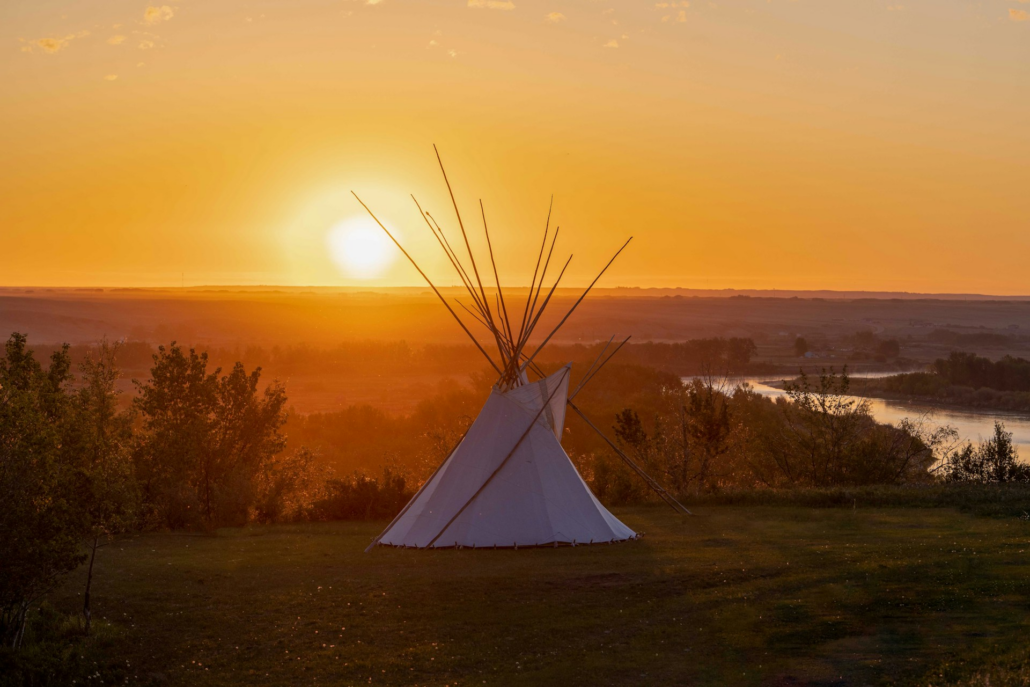
Image Credit: Davey Gravy, Unsplash

Humans are deeply responsible for the current climate crisis, and a significant root cause is the nationstate fiction that land and morethanhuman relations can be reduced to “property” to be owned, controlled, and exhausted for profit. This ownership paradigm is inseparable from the Doctrine of Discovery and Terra Nullius, by Church and Crown, which gave moral and legal cover to seize Indigenous lands and suppress Indigenous laws of responsibility and reciprocity with the web of life.​ 

The modern idea that a Crown or state holds “underlying title” to Indigenous lands in Canada flows directly from these doctrines, which treated alreadyinhabited territories as “empty” and available to Christian European empires. In practice, this has allowed Canada to assert ultimate authority over unceded territories, reduce Indigenous Nations to “claimants” on their own lands, and legitimize largescale extraction and dispossession.​

This way of thinking has fractured the integrity of land and the broader web of life. When land is seen as property rather than as a living relation, decisions are framed around shortterm economic gain instead of the continuity of waters, soils, plants, animals, and communities. From clearcut logging and fossil fuel expansion to exclusionary conservation, the same logic of unilateral control has fragmented habitats, undermined biodiversity, and disrupted longstanding Indigenous stewardship practices.​

For Indigenous Nations, climate change intensifies these harms. Shifting seasons, altered animal migrations, and degraded waters are eroding the conditions for hunting, fishing, trapping, and gathering, and with them, language, ceremony, and landbased teachings. This is not just environmental damage; it is an attack on living Indigenous legal orders that were designed to keep human behaviour accountable to the land.​

Politically, the ownership myth entrenches a hierarchy in which the state imagines itself as the final decisionmaker over territories it claims. Indigenous Nations are pushed into endless “consultation,” while absolute authority and benefitsharing rarely shift. Economically, this worldview feeds a growthdriven model in which “wealth” is measured by what can be extracted, privatized, and traded, rather than by the health of ecosystems and communities. Socially and spiritually, it normalizes disconnection from place, where many people experience land as a commodity rather than as a living network to which they belong and are accountable.​

Human arrogance thrives in this disconnection. The belief that humans stand above other beings, entitled to engineer, commodify, or sacrifice them for convenience and profit, has opened a climate change Pandora’s box: land turned into property, relations turned into resources, and the garden of life left to rot around us while humanity chooses profits over peace. Our current geopolitical and geoeconomic crises are symptoms of the same disorder, power and control elevated above responsibility and reciprocity.​

There is no doubt that human activities, shaped by colonialism, fossil capitalism, and the property mindset, are driving the climate crisis. Yet Indigenous knowledge holders and communities across Turtle Island insist that genuine solutions must be rooted in decolonization, land back, and the restoration of landbased responsibilities and Indigenous selfdetermination. Indigenousled renewable energy projects, landback agreements, and the revitalization of traditional land use practices show it is possible to align livelihoods with the wellbeing of ecosystems instead of their destruction.​

This moment demands more than new policies; it calls for a profound shift in worldview. Humans are not owners, but relatives, not masters, but participants in a living treaty with the rest of creation. Moving from ownership to relationship feeling as well as thinking our way back into reciprocity offers one path out of the current crisis.​

Householdlevel conversations are an essential place to begin reconciling with Mother Earth. These conversations can ask different questions: Who rather than What is this land to us? What are our responsibilities here? How do our everyday choices, food, energy, transport, investments, and political action support or undermine Indigenousled visions of climate justice? When families and communities begin to live as if land is a relative rather than a possession, the foundations of a different future begin to take root.


Blog by Rye Karonhiowanen Barberstock

Image Credit: Davey Gravy, Unsplash

March 15, 2026/by IndigenousClimateHub
Tags: current climate crisis, Indigenous Nations, property mindset, reconciling with Mother Earth, shaped by colonialism
Share this entry
  • Share on Facebook
  • Share on X
  • Share on WhatsApp
  • Share on Pinterest
  • Share on LinkedIn
  • Share on Tumblr
  • Share on Reddit
  • Share by Mail
https://indigenousclimatehub.ca/wp-content/uploads/2026/03/Davey-Gravy-Unsplash.png 1280 1920 IndigenousClimateHub https://indigenousclimatehub.ca/wp-content/uploads/2020/10/logo-horiz-clr-01-small-300x88.png IndigenousClimateHub2026-03-15 08:45:242026-03-13 21:13:01From Ownership to Relationship: Reclaiming Our Responsibilities to Land
X Logo X Logo Followon X RSS Feed Logo RSS Feed Logo Subscribeto RSS Feed

Subscribe to Our Blog

This field is required.

Check your inbox or spam folder to confirm your subscription.

Recent Posts

  • Water Is a Relative, Not a Resource
  • The River Is Telling Us Something: Indigenous-Led Water Monitoring as Canada’s Climate Early Warning System
  • Night Skies and Shifting Stars: How Indigenous Celestial Knowledge Tracks a Changing Climate
  • From Ownership to Relationship: Reclaiming Our Responsibilities to Land
  • Human Foolishness in Floodplains

Archives

  • June 2026
  • May 2026
  • April 2026
  • March 2026
  • February 2026
  • January 2026
  • December 2025
  • November 2025
  • October 2025
  • September 2025
  • August 2025
  • July 2025
  • June 2025
  • May 2025
  • April 2025
  • March 2025
  • February 2025
  • January 2025
  • December 2024
  • November 2024
  • October 2024
  • September 2024
  • August 2024
  • July 2024
  • June 2024
  • May 2024
  • April 2024
  • March 2024
  • February 2024
  • January 2024
  • December 2023
  • November 2023
  • October 2023
  • September 2023
  • August 2023
  • July 2023
  • June 2023
  • May 2023
  • April 2023
  • March 2023
  • February 2023
  • January 2023
  • December 2022
  • November 2022
  • October 2022
  • September 2022
  • August 2022
  • July 2022
  • June 2022
  • May 2022
  • April 2022
  • March 2022
  • February 2022
  • January 2022
  • December 2021
  • November 2021
  • October 2021
  • September 2021
  • August 2021
  • July 2021
  • June 2021
  • May 2021
  • April 2021
  • March 2021
  • February 2021
  • January 2021
  • December 2020
  • November 2020
  • October 2020
  • September 2020
  • August 2020
  • July 2020
  • June 2020
  • February 2020
  • October 2019
  • August 2019
  • July 2019
  • June 2019
  • May 2019
  • April 2019
  • March 2019

Categories

  • Adaptation
  • Alberta
  • Announcements
  • Arctic
  • Atlantic/NB
  • Awards
  • Blog
  • British Columbia
  • Climate Change
  • Climate Change Adaptation
  • Climate Change Education
  • Climate Change News
  • Climate Change Project
  • Climate Crisis
  • Climate Monitoring
  • Community Engagement
  • Community-Based Environmental Monitoring
  • Documentaries
  • Documentary
  • Events
  • Flooding
  • Food
  • Food Security
  • Food Sovereignty
  • Forest Fires
  • Funding Opportunity
  • ICCAG 2019
  • Indigenous Perspectives
  • Manitoba
  • Media
  • Métis
  • Métis Settlement
  • News
  • Op-Ed
  • Quebec
  • Saskatchewan
  • Technology
  • Video
  • Water
  • Webinars

Tags

Alberta Arctic Arctic Resilience Forum British Columbia Carbon Sequestration Caribou Caribou Recovery CIRNAC Climate Adaptation Climate Change Climate Change Adaptation Climate Resilience Community Engagement Education Environmental Stewardship Environment and Climate Change Canada (ECCC) First Nations Flooding Food Security Food Sovereignty Global Warming Indigenous Indigenous Guardians Toolkit Indigenous Knowledge Indigenous Stewardship Infrastructure Inuit landscape Mental Health Paris Agreement Policy Renewable Energy Research Resilience Science Traditional Ecological Knowledge Traditional Ecological Knowledge (TEK) Traditional Knowledge UNDRIP United Nations United Nations (UN) Webinar Wildfires WWF-Canada Youth
Contact

About Us

The Indigenous Climate Hub is a unique online community of Indigenous climate change leaders that have come together to share their stories and climate change adaptation experiences. The website is the result of the recommendations brought forward by Indigenous peoples at the Indigenous Climate Change Adaptation Gathering in 2018.

Indigenous Climate Hub Podcast

Be a part of the Indigenous Climate Hub Podcast. We are looking for unique perspectives and experiences in environmental stewardship, Indigenous ecological and traditional knowledge, and resource management offer valuable knowledge and teachings that can benefit Indigenous communities across Turtle Island and beyond.

Indigenous-led Initiatives

Are you a program or organization that funds or supports Indigenous Peoples  working on climate change initiatives?  If you would like to provide information to potential recipients here, please reach out to Okwaho so that we can work with you to highlight your program.

© Copyright - Indigenous Climate Hub, 2025-2026
  • Terms of Service
  • Privacy Policy
Link to: Human Foolishness in Floodplains Link to: Human Foolishness in Floodplains Human Foolishness in FloodplainsImage Credit: Ries Bosch, Unsplash Link to: Night Skies and Shifting Stars: How Indigenous Celestial Knowledge Tracks a Changing Climate Link to: Night Skies and Shifting Stars: How Indigenous Celestial Knowledge Tracks a Changing Climate Image Credit: Dustin Bowdige, UnsplashNight Skies and Shifting Stars: How Indigenous Celestial Knowledge Tracks a...
Scroll to top Scroll to top Scroll to top