
Water Is a Relative, Not a Resource
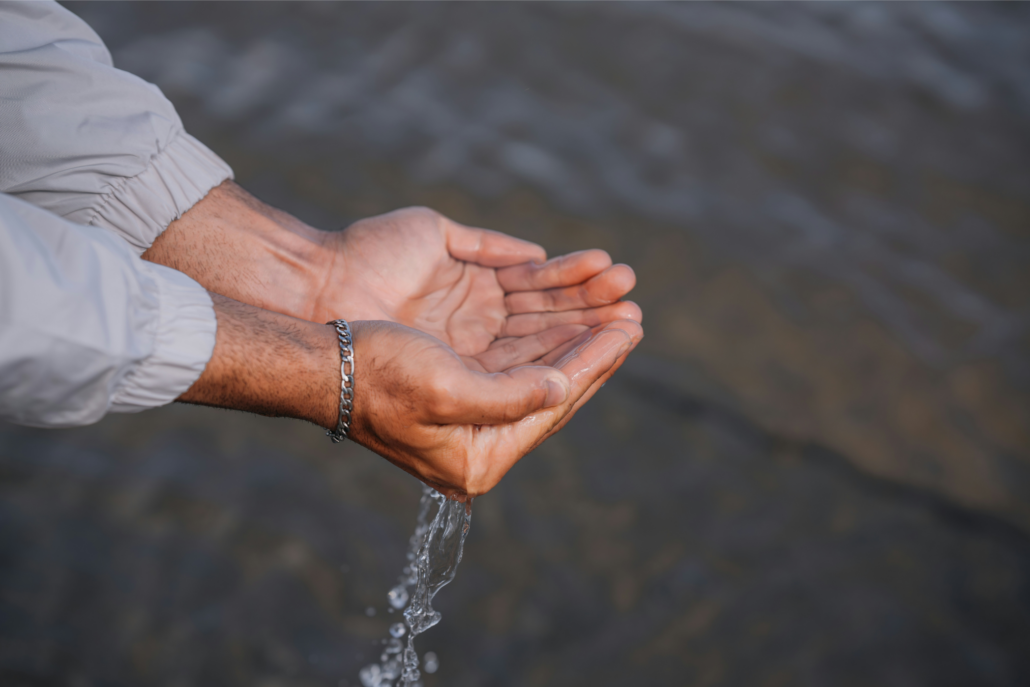 Image Credit-Yunus Tug-Unsplash
Rethinking clean water in First Nations through the sovereignty and rights of water itself.
This month, Canada tabled a new version of its First Nations clean-water legislation, and the shift in its language is quietly telling.
The previous bill, C-61, the First Nations Clean Water Act, contained something notable for a Canadian statute: it “recognized and affirmed” that it is a human right of every individual on First Nations land to have access to clean and safe drinking water, albeit only “in accordance with” that Act. That bill lapsed when Parliament was prorogued in early 2025. Its replacement, Bill C-37, introduced this June, frames the same idea more cautiously. Rather than recognizing a right outright, it commits to “further the progressive realization, for individuals on First Nation lands, of the human right to safe drinking water, as protected by the International Covenant on Economic, Social and Cultural Rights.” It is a subtle change in wording, but those close to the file noticed it at once.
It is worth sitting with that for a moment—not as a matter of politics, but of permanence. A right to water that one law can affirm and the next can soften is, by its nature, a provisional thing. The water itself, meanwhile, does not wait on language. Communities like Neskantaga First Nation in northern Ontario have lived under a drinking-water advisory since 1995—long enough that children born into the advisory are now raising children of their own under it. Dozens of advisories remain in place across the country, including long-term ones that governments pledged to end years ago. The wording on the page changes; the water on and under the ground does not.
So we are left with a quieter, harder question. If the right to water can be written and unwritten, strengthened and softened, then was it ever truly secure—and on what foundation did it rest? Perhaps the difficulty lies in the frame itself: the idea that water is something granted to people, rather than something with a life, a continuity, and a standing of its own.
Let’s flip the script entirely. Not water as a human right, but the rights of water—and the sovereignty of water itself.
The trap inside a good word
“Water is a human right” is a sentence written in defence of people, and people do need defending. But notice what it assumes. It makes water an object of human entitlement—a thing we are owed, a benefit we are due, a resource to be delivered to the human end of a pipe. The framing puts humanity at the centre and water at the service end.
That framing is not neutral. It is the same logic that lets a corporation bottle billions of litres from an aquifer and call it commerce, and the same logic that lets a data centre evaporate a river to keep its servers cool. Once water is framed primarily as a resource to which humans hold rights, every argument becomes an argument about which humans, and how much, and at what price. The water itself never gets a seat at the decision-making table. It is only ever the prize.
Indigenous law begins somewhere else. Water is not a resource. Water is a relative.
Water governs
Consider what water actually does before any human claims it.
At the smallest scale, water is the medium of life itself—the solvent inside every living cell, the substance through which a body becomes a body. We are mostly water, carrying memory and breath. At the largest scale, water is the author of the landscape: it carves valleys, lays down floodplains, and decides where forests stand, where deserts begin, where fish spawn, and where birds rest on their migrations. Rivers do not flow through the land as guests. They govern it. The shape of a watershed is water’s own decision, written over millennia.
And water does not act alone. It moves in relationship with the sky and the land, in a rhythm older than any law a government could pass. The land holds the water; the water nourishes the land; the sky lifts the water and returns it as rain and snow. Earth needs all three—water, sky, and land—to keep its rhythm, and nowhere in that rhythm are humans required. The cycle ran for billions of years without us, and it would still run on without us. This is the part we are slowest to accept: water’s agency and autonomy do not depend on human recognition. We do not animate the water. We arrived in a world that the water had already made.
To say, “I have a right to water,” then, is to get the order of things backwards. Water does not owe its existence to our rights. We owe our existence to it.
Stewards, not owners
If water holds its own sovereignty, where does that leave Indigenous Peoples—who have asserted, rightly and urgently, a relationship to water since time immemorial?
The answer is not ownership. It is stewardship. And the difference is everything.
For generations, Indigenous nations did not merely survive within their waters; they thrived within them, because thriving required something colonial water management has never had: an awareness of water governance as a living obligation. To be a steward is to hold something in trust—to carry responsibility for it—not to hold title over it. Around the sharing circle, the supreme decision-maker is not the Chief, the council, or the loudest voice. It is the water itself, the life force on which every being in the circle depends. The people speak with the water. They do not speak over it or for it.
This is the distinction that even good-hearted advocacy can blur. When a First Nation insists on its right to clean drinking water, the demand is just and overdue. But it should never be misread to mean that the people have become the final owners of the water—its de facto decision-makers, its masters. They are something more dignified than owners. They are part of water’s reality, participants in its self-determination—relatives who carry the duty to keep a sacred balance, not proprietors who treat it as something to be extracted for their own gain.
Claiming water as a possession, even with the best intentions, quietly diminishes the natural law and order that set the conditions for life in the first place. Stewardship enlarges human beings. Ownership shrinks both humanity and the water.
A deplorable inheritance
None of this excuses Canada. If anything, it indicts it more deeply.
The boil-water advisories that have shadowed First Nations for decades are not a plumbing failure. They are a colonial inheritance. The Crown displaced Indigenous Peoples from the waters they had stewarded for millennia and confined them within a reserve system designed to control and assimilate. That system broke the relationships between people, land, and water that made a nation a nation. When you sever people from their waters and then deny them safe water in the cramped territory you have confined them to, you are not just failing to deliver a service. You are continuing a project of dehumanization—one that delegitimizes even the most basic human rights affirmed by the United Nations.
Those rights are now recognized internationally. The UN General Assembly has affirmed the human right to water and sanitation, along with the right to a clean, healthy, and sustainable environment. The UN Declaration on the Rights of Indigenous Peoples (UNDRIP) sets out the collective rights of Indigenous Peoples, including the requirement of free, prior, and informed consent for decisions that affect their lands, territories, and resources. Canada has endorsed these instruments. And Canada keeps failing—failing the people who are sorely in need of clean water, and, more profoundly, failing to protect the most precious source of all life: the water itself.
Here is the part that should unsettle every Canadian, not only First Nations. If First Nations communities are treated as the acceptable outliers of poor water quality—the places where unsafe water is tolerated because the people are out of sight—then what becomes of everyone else when the water runs short? It is not hypothetical. We already buy water by the litre. We already accept that water is something sold to us in plastic. The First Nations water crisis is no exception to Canada’s treatment of water. It is a preview of it.
The thirst of empire
Look at how thoroughly water has already been turned into a commodity. National and international conglomerates draw countless billions of litres from springs and aquifers, truck them into grocery stores and urban centres, and sell them back to us for billions in profit—not because the water needs bottling, but because thirst is reliable revenue. And now a new and enormous mouth has opened: Artificial intelligence runs hot, and the data centres that power it drink to stay cool.
Recent research and policy analysis estimate that global data centre operations consume hundreds of billions of litres of water each year, with use projected to roughly double by 2030 as AI workloads expand. A single large facility can require millions of litres of water per day for cooling in some regions. Some studies estimate that running a sequence of AI prompts can consume enough cooling water to fill a small bottle—a figure magnified across billions of queries daily, often in already water-stressed basins. The industry now promises closed-loop cooling and “water-positive” pledges, and some of that innovation is real. But the demand curve is climbing far faster than the solutions curve.
This is precisely the danger hidden inside “water as a human right.” If water is a right held by humanity, for humanity’s benefit, then there is nothing in that framing, by itself, to stop humanity from drinking the planet dry to feed its conveniences and its machines. The right to water, untethered from any duty to water, becomes a licence for its destruction. If these conglomerates can find ways to extract water at a planetary scale, they can find ways to use it responsibly—protecting the sources, the watersheds, the living bodies of water, and the governance of those bodies. The question is whether we will compel them to do so, and on whose terms.
Water self-determination
So how do we shift the ideology from water as a human right to water as a living relation to which we are responsible?
Across Canada, we can start by naming what we are actually defending: water self-determination—the water’s own right to flow, to be whole, to keep its rhythm with the land and the sky. And together, we can recognize Indigenous Peoples not as the new owners of that sovereignty but as its treaty partners and shared stewards—the rights holders charged with maintaining a sacred sovereignty that was never theirs, or anyone’s, to control.
This is not abstract. It already exists in Canadian law and governance experiments. In 2021, the Innu Council of Ekuanitshit and the Regional County Municipality of Minganie declared the Magpie River (Muteshekau shipu) a legal entity, the first river in Canada to hold rights of its own. The river was granted rights to flow, to maintain its biodiversity, to be safe from pollution, and to have legal standing in court. Guardians appointed by the Innu and the municipality can speak (with, not for) on the river’s behalf. It is a guardianship model: the water holds the rights, and the people hold the responsibility to defend them. This is the rights of water and water self-determination actualized—Indigenous law and the global rights-of-nature movement meeting in a single river.
That is one pathway. Real solutions to the First Nations water crisis cannot stop at finally laying the pipe and lifting the advisory—though that must happen, urgently, and is owed. They must go further than anything the Crown currently holds in place:
- Protect water at its source, not just at the tap—through Indigenous-led source-water protection, Indigenous Protected and Conserved Areas, and guardianship that treats a watershed as a living body with standing.
- Recognize the sovereignty and rights of water bodies, following Muteshekau shipu, so that a river can be defended in court before it is harmed, not mourned after.
- Honour free, prior, and informed consent as a floor, not a courtesy, so that no decision over source water, drinking water, or wastewater is made without the consent of the Nations whose relatives those waters are.
- Hold the commodifiers accountable—bottlers, extractive industries, and the AI infrastructure now drinking deeply—to the protection of the sources they profit from.
- Centre Indigenous governance not as consultation after the fact but as authority, because the knowledge of how to keep the water’s balance was never lost; it was only ignored.
A balance kept for seven generations
The point of all this is not to take away the right to clean water from the people who are dying for lack of it. It is to anchor that water in something stronger than a clause that a future Parliament can delete. A human right to water can be granted and weakened. The rights of water, held in trust by the people who have always known themselves to be its relatives, are grounded in a law older than Canada—natural law, the law of the sharing circle, where the water decides because every life in the circle depends on it.
We are not the source of water’s sovereignty. We are part of its reality, and we have the chance to be its stewards instead of its undoing. That is the work: to remedy the atrocity Canada engineered in First Nations communities, and at the same time to build pathways of protection that honour the water itself—so that the rhythm of water, land, and sky is kept whole, not for our convenience, but for seven generations and the seven beyond them.
Water gave us life. The least we owe it is a right to its own.
By Rye Karonhiowanen Barberstock
 Bart Heird (Unsplash)

 Envato Elements (licensed)
 Envato Elements (Licensed)
 Arnaud Measureur, Unsplash
 Image Credit Philip Davis-Unspalsh