• Link to X
  • Link to Facebook
  • Link to Instagram
  • Link to Rss this site
Indigenous Climate Hub
  • Home
    • About Us
  • Climate Action Programs
    • First Nation Adapt Program
      • Indigenous Climate Change Adaptation Gatherings
    • Indigenous Community-Based Climate Monitoring Program
    • Climate Change and Health Adaptation Program
    • Climate Change Preparedness in the North
    • Environment and Climate Change Canada
  • Funding
  • Resources
    • Climate Change Directory
    • Resource Library
    • Community Adaptation Projects
  • Events
  • Podcast
  • Blog
  • Contact/FAQs
  • Click to open the search input field Click to open the search input field Search
  • Menu Menu

Night Skies and Shifting Stars: How Indigenous Celestial Knowledge Tracks a Changing Climate
Blog
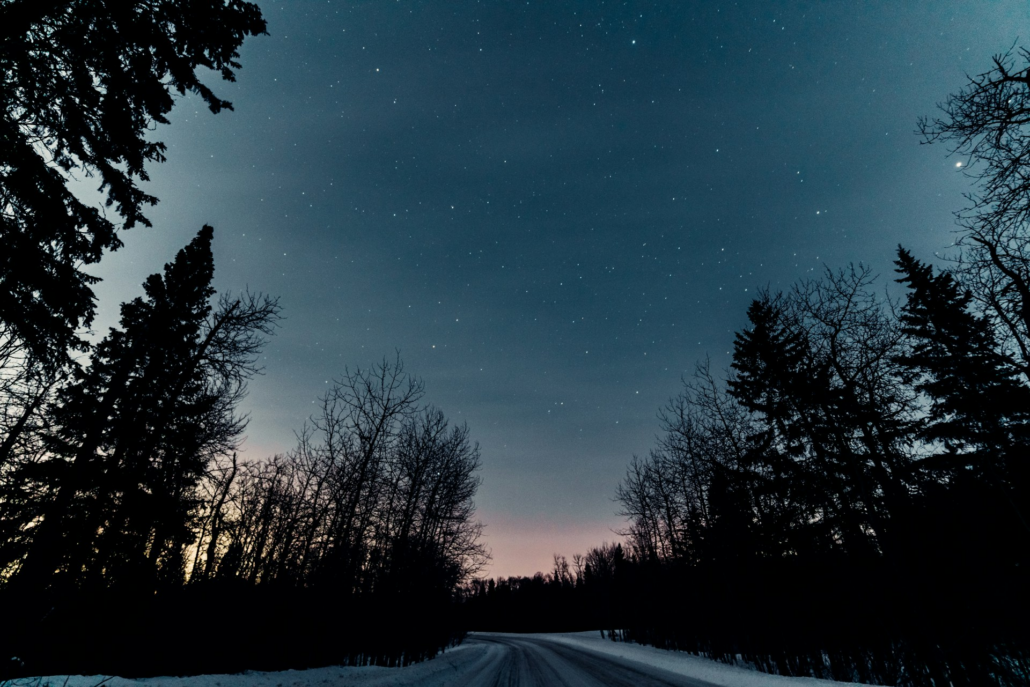
Image Credit: Dustin Bowdige, Unsplash

When the land no longer answers the stars the way it once did, Indigenous peoples are among the first to notice — and the first to ask why.

A Sky Full of Knowledge

Look up on a clear night on Turtle Island and you’re seeing a sky that has guided human life for thousands of years. Across Indigenous nations in Canada, detailed systems of celestial knowledge developed not as abstract science but as living, practical guides —telling people when to plant, when to harvest, when herds would move, and when ice would come. This astronomical knowledge was woven into language, ceremony, and everyday life, passed down through generations with remarkable precision.

The Mi’kmaq and the Celestial Bear

Among the Mi’kmaq of Atlantic Canada, star stories are ecological calendars, precise and functional. The story of Muin and the Seven Bird Hunters connects the annual movement of what Western astronomy calls Ursa Major to the seasonal cycle of hunting and harvest: the bear rises in spring, is hunted through summer, and falls to earth in autumn. This knowledge was brought to broader public attention in 2009 during the International Year of Astronomy, when Mi’kmaq Elders Lillian Marshall of Potlotek First Nation and Murdena Marshall of Eskasoni First Nation shared the story through an animated film produced at Cape Breton University narrated in English, French, and Mi’kmaq.¹ The story encodes specific observations about when and where to hunt, and which species to expect at which time of year. It is science in narrative form.

The Anishinaabe and the Seasonal Star Map

Among the Anishinaabe peoples of the Great Lakes and northern Ontario, celestial knowledge forms part of a comprehensive seasonal understanding. Knowledge keepers like Michael Wassegijig Price of Wikwemikong First Nation have described how Anishinaabe constellations  quite different from those of Western astronomy connect the movement of the heavens to naming ceremonies, seasonal gatherings, and land practices.² The Royal Astronomical Society of Canada now offers planispheres featuring Indigenous constellations from Cree, Ojibwe, and Dakota sky traditions, recognizing their value as both cultural heritage and ecological knowledge systems.³

When the Stars and the Land Fall Out of Rhythm

Here’s the challenge that climate change has introduced: the stars still move on their ancient, reliable schedule. But the land no longer always responds as expected. Migratory birds that once arrived when certain constellations appeared are now showing up earlier or later. Ice that once formed in predictable windows is forming weeks late, or not at all. Berry harvests, fish runs, animal migrations, all once timed by celestial cues accumulated over millennia are shifting. Indigenous knowledge holders across Canada describe this as a kind of dissonance: the sky remains faithful, but the land has changed.⁴

Long-Baseline Ecological Records

Far from being historical curiosity, Indigenous celestial knowledge systems are now being recognized by researchers as long-baseline ecological calendars —records of how nature behaved over centuries, encoded in story and ceremony. When an Elder observes that a particular star rising no longer predicts the arrival of certain geese, that observation represents a departure from a pattern that may have held true for hundreds of years. The Climate Atlas of Canada integrates Indigenous knowledge observations alongside western climate data, recognizing that both contribute meaningfully to understanding ecological change.⁵

Keeping the Knowledge Alive

Language revitalization and land-based education programs are helping ensure this knowledge reaches the future. From youth astronomy nights on-reserve to the integration of Indigenous sky stories in school curricula, there is growing recognition that these knowledge systems belong to what comes next, not only what came before. As Canada grapples with accelerating ecological change, the quiet precision of thousands of years of skyward observation offers something no satellite can fully replicate: a continuous record of the relationship between the cosmos and a living land.


Blog by Rye Karonhiowanen Barberstock

Image Credit: Dustin Bowdige, Unsplash


References 

[1] Marshall, L., Marshall, M., Harris, P., & Bartlett, C. (2010). Muin and the Seven Bird Hunters: A Mi’kmaw Night Sky Story. Cape Breton University Press. See also: Integrative Science, CBU. (2009). Background on the Making of the Muin Video for IYA2009. http://www.integrativescience.ca/uploads/activities/BACKGROUND-making-video-Muin-Seven-Bird-Hunters-IYA-binder.pdf

[2] Price, M.W. (Various). Anishinaabe celestial knowledge. Wikwemikong First Nation. Referenced in: Royal Astronomical Society of Canada Indigenous Astronomy resources.

[3] Royal Astronomical Society of Canada. (2020). Indigenous Skies planisphere series. RASC. https://www.rasc.ca/indigenous-skies

[4] Neilson, H. (2022, December 11). The night sky over Mi’kmaki: A Q&A with astronomer Hilding Neilson. CBC News. https://www.cbc.ca/news/canada/newfoundland-labrador/hilding-neilson-indigenizing-astronomy-1.6679072

[5] Climate Atlas of Canada. (2024). Prairie Climate Centre, University of Winnipeg. https://climateatlas.ca/
April 15, 2026/by IndigenousClimateHub
Tags: Astronomy, Climate Adaptation, Climate Awareness, Climate Change, Ecological Change, Indigenous Knowledge
Share this entry
  • Share on Facebook
  • Share on X
  • Share on WhatsApp
  • Share on Pinterest
  • Share on LinkedIn
  • Share on Tumblr
  • Share on Reddit
  • Share by Mail
https://indigenousclimatehub.ca/wp-content/uploads/2026/04/Dustin-Bowdige-Unsplash.png 1281 1920 IndigenousClimateHub https://indigenousclimatehub.ca/wp-content/uploads/2020/10/logo-horiz-clr-01-small-300x88.png IndigenousClimateHub2026-04-15 09:00:032026-04-28 19:01:41Night Skies and Shifting Stars: How Indigenous Celestial Knowledge Tracks a Changing Climate
You might also like
Meechim Project – Food Sovereignty in Northern Manitoba (Video)
Planning for Climate Change in Canadian Municipalities
Evidence of Changing Seasons in the Context of Climate Change
Casey Horner, Unsplash Reflecting on the Future: The Importance of Generational Stewardship in Combating Climate Change
Fellipe Ditadi, Unsplash+ Reimagining Our Relationship with Natural Resources: A Path Toward Climate Resilience through Natural Law and Decommodification
ThisisEngineering, Licensed from Unsplash Bridging Two Worlds: Integrating Indigenous Knowledge and Western Science in Climate Policy
X Logo X Logo Followon X RSS Feed Logo RSS Feed Logo Subscribeto RSS Feed

Subscribe to Our Blog

This field is required.

Check your inbox or spam folder to confirm your subscription.

Recent Posts

  • Water Is a Relative, Not a Resource
  • The River Is Telling Us Something: Indigenous-Led Water Monitoring as Canada’s Climate Early Warning System
  • Night Skies and Shifting Stars: How Indigenous Celestial Knowledge Tracks a Changing Climate
  • From Ownership to Relationship: Reclaiming Our Responsibilities to Land
  • Human Foolishness in Floodplains

Archives

  • June 2026
  • May 2026
  • April 2026
  • March 2026
  • February 2026
  • January 2026
  • December 2025
  • November 2025
  • October 2025
  • September 2025
  • August 2025
  • July 2025
  • June 2025
  • May 2025
  • April 2025
  • March 2025
  • February 2025
  • January 2025
  • December 2024
  • November 2024
  • October 2024
  • September 2024
  • August 2024
  • July 2024
  • June 2024
  • May 2024
  • April 2024
  • March 2024
  • February 2024
  • January 2024
  • December 2023
  • November 2023
  • October 2023
  • September 2023
  • August 2023
  • July 2023
  • June 2023
  • May 2023
  • April 2023
  • March 2023
  • February 2023
  • January 2023
  • December 2022
  • November 2022
  • October 2022
  • September 2022
  • August 2022
  • July 2022
  • June 2022
  • May 2022
  • April 2022
  • March 2022
  • February 2022
  • January 2022
  • December 2021
  • November 2021
  • October 2021
  • September 2021
  • August 2021
  • July 2021
  • June 2021
  • May 2021
  • April 2021
  • March 2021
  • February 2021
  • January 2021
  • December 2020
  • November 2020
  • October 2020
  • September 2020
  • August 2020
  • July 2020
  • June 2020
  • February 2020
  • October 2019
  • August 2019
  • July 2019
  • June 2019
  • May 2019
  • April 2019
  • March 2019

Categories

  • Adaptation
  • Alberta
  • Announcements
  • Arctic
  • Atlantic/NB
  • Awards
  • Blog
  • British Columbia
  • Climate Change
  • Climate Change Adaptation
  • Climate Change Education
  • Climate Change News
  • Climate Change Project
  • Climate Crisis
  • Climate Monitoring
  • Community Engagement
  • Community-Based Environmental Monitoring
  • Documentaries
  • Documentary
  • Events
  • Flooding
  • Food
  • Food Security
  • Food Sovereignty
  • Forest Fires
  • Funding Opportunity
  • ICCAG 2019
  • Indigenous Perspectives
  • Manitoba
  • Media
  • Métis
  • Métis Settlement
  • News
  • Op-Ed
  • Quebec
  • Saskatchewan
  • Technology
  • Video
  • Water
  • Webinars

Tags

Alberta Arctic Arctic Resilience Forum British Columbia Carbon Sequestration Caribou Caribou Recovery CIRNAC Climate Adaptation Climate Change Climate Change Adaptation Climate Resilience Community Engagement Education Environmental Stewardship Environment and Climate Change Canada (ECCC) First Nations Flooding Food Security Food Sovereignty Global Warming Indigenous Indigenous Guardians Toolkit Indigenous Knowledge Indigenous Stewardship Infrastructure Inuit landscape Mental Health Paris Agreement Policy Renewable Energy Research Resilience Science Traditional Ecological Knowledge Traditional Ecological Knowledge (TEK) Traditional Knowledge UNDRIP United Nations United Nations (UN) Webinar Wildfires WWF-Canada Youth
Contact

About Us

The Indigenous Climate Hub is a unique online community of Indigenous climate change leaders that have come together to share their stories and climate change adaptation experiences. The website is the result of the recommendations brought forward by Indigenous peoples at the Indigenous Climate Change Adaptation Gathering in 2018.

Indigenous Climate Hub Podcast

Be a part of the Indigenous Climate Hub Podcast. We are looking for unique perspectives and experiences in environmental stewardship, Indigenous ecological and traditional knowledge, and resource management offer valuable knowledge and teachings that can benefit Indigenous communities across Turtle Island and beyond.

Indigenous-led Initiatives

Are you a program or organization that funds or supports Indigenous Peoples  working on climate change initiatives?  If you would like to provide information to potential recipients here, please reach out to Okwaho so that we can work with you to highlight your program.

© Copyright - Indigenous Climate Hub, 2025-2026
  • Terms of Service
  • Privacy Policy
Link to: From Ownership to Relationship: Reclaiming Our Responsibilities to Land Link to: From Ownership to Relationship: Reclaiming Our Responsibilities to Land From Ownership to Relationship: Reclaiming Our Responsibilities to LandImage Credit: Davey Gravy, Unsplash Link to: The River Is Telling Us Something: Indigenous-Led Water Monitoring as Canada’s Climate Early Warning System Link to: The River Is Telling Us Something: Indigenous-Led Water Monitoring as Canada’s Climate Early Warning System Image Credit Philip Davis-UnspalshThe River Is Telling Us Something: Indigenous-Led Water Monitoring as Canada’s...
Scroll to top Scroll to top Scroll to top