• Link to X
  • Link to Facebook
  • Link to Instagram
  • Link to Rss this site
Indigenous Climate Hub
  • Home
    • About Us
  • Climate Action Programs
    • First Nation Adapt Program
      • Indigenous Climate Change Adaptation Gatherings
    • Indigenous Community-Based Climate Monitoring Program
    • Climate Change and Health Adaptation Program
    • Climate Change Preparedness in the North
    • Environment and Climate Change Canada
  • Funding
  • Resources
    • Climate Change Directory
    • Resource Library
    • Community Adaptation Projects
  • Events
  • Podcast
  • Blog
  • Contact/FAQs
  • Click to open the search input field Click to open the search input field Search
  • Menu Menu

Reimagining Our Relationship with Natural Resources: A Path Toward Climate Resilience through Natural Law and Decommodification
Blog, Op-Ed
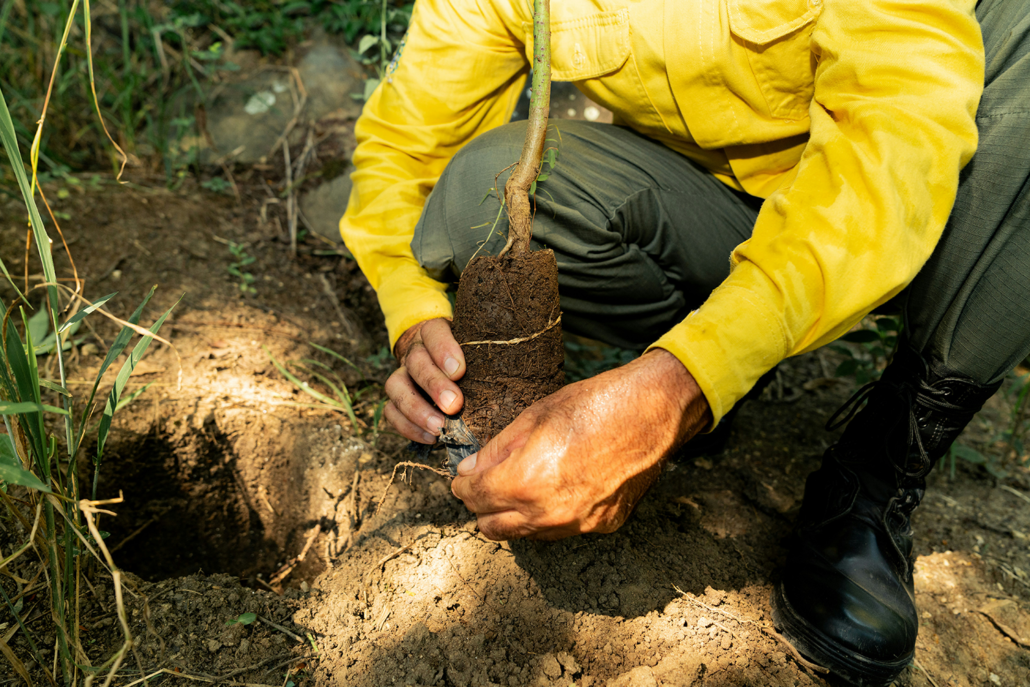
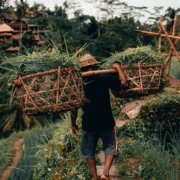
Fellipe Ditadi, Unsplash+

Introduction: A Warning and a Call for Transformation

In an era of ecological crisis and climate disruption, it is increasingly clear that the colonial constructs that define our current economic systems—especially those that reduce the natural world to commodities—are no longer sustainable. As humanity grapples with climate change, biodiversity loss, and ecosystem collapse, we are called to rethink how we understand the value of nature. This is not a moment for fear but for hope rooted in responsibility. The time has come to reconstitute new forms of recognition for natural resources—forms that draw from natural law and Indigenous worldviews and move us toward decommodification processes.

Understanding Natural Law: A Foundation for Balance and Reciprocity

 In many Indigenous traditions, natural law is a set of guiding principles that govern the relationships between all beings—human and non-human. It is rooted in observation, interdependence, respect, and responsibility. Natural law recognizes that humans are not above nature but are part of it and that every element of the natural world holds intrinsic value beyond economic worth.

In contrast to colonial legal and economic systems prioritizing ownership, control, and extraction, natural law prioritizes relationality, responsibility, and continuity. It is about living by the rhythms and rules of Mother Earth rather than trying to dominate them.

Lumber and Natural Law: A New Way to Value Forests

Take the Canadian lumber industry as an example. Under colonial economic systems, forests are measured by board feet, market value, and export potential. Trees are seen as units of production.

Under natural law, however, a forest is not just timber—it is a living ecosystem. It provides medicines, oxygen, shelter, cultural teachings, and spiritual connection. Decommodifying lumber means recognizing and protecting these broader values. It could involve setting harvest limits based on ecological regeneration, requiring community-governed stewardship, or embedding cultural protocols and consent in forestry operations. This approach would align extractive industries with the natural cycles and laws of the territories in which they operate.

What Happens If We Don’t Change? A Vision of 50 Years Without Decommodification

 If we fail to implement decommodification processes, the next 50 years may see natural resources pushed beyond their limits:

  • Forests depleted beyond regeneration, triggering mass species extinction.
  • Waterways are poisoned or privatized, denying future generations access to clean water.
  • Sacred sites are destroyed for short-term gains.
  • Climate systems pushed into irreversible tipping points, affecting global food security, migration, and public health.

Without intentional change, our value systems will prioritize profit over planetary survival.

Decommodification as Policy: What Could It Look Like?

 Decommodification doesn’t mean halting all use of natural resources—it means rethinking how we value and manage them. Policies rooted in natural law could include:

  • Community-Led Stewardship Models: Return governance of lands and resources to Indigenous Nations and local communities.
  • Ecological Carrying Capacity Laws: Mandate that extraction levels stay within nature’s regenerating ability.
  • Cultural Impact Assessments: Alongside environmental reviews, evaluate resource projects’ cultural and spiritual impacts.
  • Rights of Nature Legislation: Recognize rivers, forests, and ecosystems as legal persons with rights to thrive.
  • Circular and Regenerative Economies: Design systems that reuse, restore, and regenerate rather than extract and discard.

Each of these policies would build toward an economy that is aligned with rather than in opposition to the Earth’s well-being.

Technology and Innovation: A Partner in Responsibility

 When aligned with values of responsibility and sustainability, technology can support a future of balanced resource use. Imagine:

  • Biomaterials replacing fossil fuels.
  • AI and data analytics monitoring ecosystem health in real-time.
  • Traditional Knowledge databases informing climate-smart agriculture.
  • Clean energy grids co-designed by Indigenous communities.

Technological innovation can either accelerate the destruction of nature—or help us restore and protect it. The choice lies in the values we embed within our systems.

Decommodification and Climate Action: Mitigation and Adaptation

 Decommodification of natural resources is not just a philosophical shift—it is a practical strategy for climate change mitigation and adaptation:

  • Mitigation: Reduced extraction and emissions through regenerative systems.
  • Adaptation: Stronger community resilience through land-based governance and ecological health.
  • Equity: Ensuring all peoples, especially Indigenous Nations, have agency in climate solutions.

By recognizing that nature is not a commodity but a relation, we build the cultural, spiritual, and ecological foundations for long-term resilience.

A Shared Future Rooted in Respect

The consequences will be severe if we continue to commodify and exploit nature. But if we reimagine our relationship to the Earth through natural law, decommodify our policies and economies, and act with love for future generations—for all our relations—we can create a just, thriving future.

Now is the time to ask: What do we value? And how will we ensure that our grandchildren and their grandchildren inherit a planet where they can live well, in balance, and in beauty?


By Rye Karonhiowanen Barberstock


(Image Credit: Fellipe Ditadi, Unsplash+, licensed image)
April 1, 2025/by IndigenousClimateHub
Tags: Climate Adaptation, Climate Mitigation, Climate Resilience, Decolonization, Decommodification, Natural Law, Policy, Technology and Innovation
Share this entry
  • Share on Facebook
  • Share on X
  • Share on WhatsApp
  • Share on Pinterest
  • Share on LinkedIn
  • Share on Tumblr
  • Share on Reddit
  • Share by Mail
https://indigenousclimatehub.ca/wp-content/uploads/2025/04/fellipe-ditadi-unsplash.png 1000 1500 IndigenousClimateHub https://indigenousclimatehub.ca/wp-content/uploads/2020/10/logo-horiz-clr-01-small-300x88.png IndigenousClimateHub2025-04-01 15:35:572025-04-10 16:16:25Reimagining Our Relationship with Natural Resources: A Path Toward Climate Resilience through Natural Law and Decommodification
You might also like
Connecting Climate Justice and Social Justice
A.C., Unsplash+ Decolonizing Urban and Regional Planning: Haudenosaunee Knowledge, Stewardship, and Climate Adaptation
Annie Spratt Promoting Gender-Responsive Budgeting for Climate Action and Social Change
Nathan Anderson, Unsplash The Healing Land: Indigenous-Led Conservation Efforts as Climate Change Mitigation
Photo Credit : Diego-Marin, Unsplash Re-Constituting Indigenous Food Economies: The Promise of Plant-Based Regeneration
What Does UNDRIP Have to Do With Environmental Protection in Canada?
X Logo X Logo Followon X RSS Feed Logo RSS Feed Logo Subscribeto RSS Feed

Subscribe to Our Blog

This field is required.

Check your inbox or spam folder to confirm your subscription.

Recent Posts

  • Water Is a Relative, Not a Resource
  • The River Is Telling Us Something: Indigenous-Led Water Monitoring as Canada’s Climate Early Warning System
  • Night Skies and Shifting Stars: How Indigenous Celestial Knowledge Tracks a Changing Climate
  • From Ownership to Relationship: Reclaiming Our Responsibilities to Land
  • Human Foolishness in Floodplains

Archives

  • June 2026
  • May 2026
  • April 2026
  • March 2026
  • February 2026
  • January 2026
  • December 2025
  • November 2025
  • October 2025
  • September 2025
  • August 2025
  • July 2025
  • June 2025
  • May 2025
  • April 2025
  • March 2025
  • February 2025
  • January 2025
  • December 2024
  • November 2024
  • October 2024
  • September 2024
  • August 2024
  • July 2024
  • June 2024
  • May 2024
  • April 2024
  • March 2024
  • February 2024
  • January 2024
  • December 2023
  • November 2023
  • October 2023
  • September 2023
  • August 2023
  • July 2023
  • June 2023
  • May 2023
  • April 2023
  • March 2023
  • February 2023
  • January 2023
  • December 2022
  • November 2022
  • October 2022
  • September 2022
  • August 2022
  • July 2022
  • June 2022
  • May 2022
  • April 2022
  • March 2022
  • February 2022
  • January 2022
  • December 2021
  • November 2021
  • October 2021
  • September 2021
  • August 2021
  • July 2021
  • June 2021
  • May 2021
  • April 2021
  • March 2021
  • February 2021
  • January 2021
  • December 2020
  • November 2020
  • October 2020
  • September 2020
  • August 2020
  • July 2020
  • June 2020
  • February 2020
  • October 2019
  • August 2019
  • July 2019
  • June 2019
  • May 2019
  • April 2019
  • March 2019

Categories

  • Adaptation
  • Alberta
  • Announcements
  • Arctic
  • Atlantic/NB
  • Awards
  • Blog
  • British Columbia
  • Climate Change
  • Climate Change Adaptation
  • Climate Change Education
  • Climate Change News
  • Climate Change Project
  • Climate Crisis
  • Climate Monitoring
  • Community Engagement
  • Community-Based Environmental Monitoring
  • Documentaries
  • Documentary
  • Events
  • Flooding
  • Food
  • Food Security
  • Food Sovereignty
  • Forest Fires
  • Funding Opportunity
  • ICCAG 2019
  • Indigenous Perspectives
  • Manitoba
  • Media
  • Métis
  • Métis Settlement
  • News
  • Op-Ed
  • Quebec
  • Saskatchewan
  • Technology
  • Video
  • Water
  • Webinars

Tags

Alberta Arctic Arctic Resilience Forum British Columbia Carbon Sequestration Caribou Caribou Recovery CIRNAC Climate Adaptation Climate Change Climate Change Adaptation Climate Resilience Community Engagement Education Environmental Stewardship Environment and Climate Change Canada (ECCC) First Nations Flooding Food Security Food Sovereignty Global Warming Indigenous Indigenous Guardians Toolkit Indigenous Knowledge Indigenous Stewardship Infrastructure Inuit landscape Mental Health Paris Agreement Policy Renewable Energy Research Resilience Science Traditional Ecological Knowledge Traditional Ecological Knowledge (TEK) Traditional Knowledge UNDRIP United Nations United Nations (UN) Webinar Wildfires WWF-Canada Youth
Contact

About Us

The Indigenous Climate Hub is a unique online community of Indigenous climate change leaders that have come together to share their stories and climate change adaptation experiences. The website is the result of the recommendations brought forward by Indigenous peoples at the Indigenous Climate Change Adaptation Gathering in 2018.

Indigenous Climate Hub Podcast

Be a part of the Indigenous Climate Hub Podcast. We are looking for unique perspectives and experiences in environmental stewardship, Indigenous ecological and traditional knowledge, and resource management offer valuable knowledge and teachings that can benefit Indigenous communities across Turtle Island and beyond.

Indigenous-led Initiatives

Are you a program or organization that funds or supports Indigenous Peoples  working on climate change initiatives?  If you would like to provide information to potential recipients here, please reach out to Okwaho so that we can work with you to highlight your program.

© Copyright - Indigenous Climate Hub, 2025-2026
  • Terms of Service
  • Privacy Policy
Link to: The Indigenous Climate Hub Launches New Podcast Series Amplifying Indigenous Voices on Climate Action Link to: The Indigenous Climate Hub Launches New Podcast Series Amplifying Indigenous Voices on Climate Action The Indigenous Climate Hub Launches New Podcast Series Amplifying Indigenous...Will Francis, Unsplash Link to: Naming, Knowing, and Listening: Deepening Our Understanding of Personhood in Place and Space Link to: Naming, Knowing, and Listening: Deepening Our Understanding of Personhood in Place and Space James ShookNaming, Knowing, and Listening: Deepening Our Understanding of Personhood in...
Scroll to top Scroll to top Scroll to top