
Proposing A Global Indigenous Centre for Climate Change Resilience: A Vision for the Future
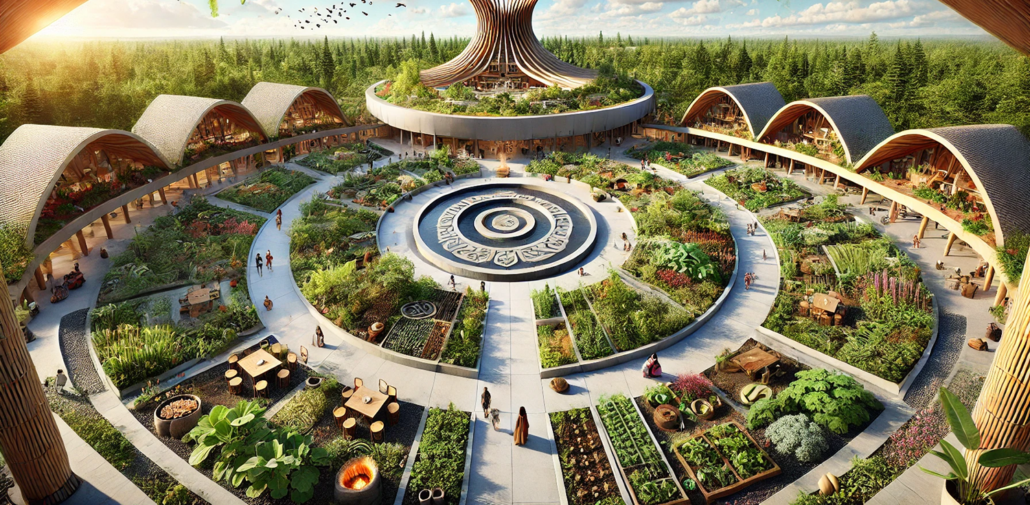 ChatGPT AI Generated Centre Concept
In the face of escalating climate change challenges, Indigenous Peoples worldwide remain steadfast as the stewards of the Earth’s most ecologically vital regions. Their knowledge systems, sciences, and philosophies have sustained human and non-human relations with nature for millennia, offering profound insights into resilience and adaptation. Recognizing this, establishing a Global Indigenous Centre for Climate Change Resilience would be a monumental step toward leveraging Indigenous expertise in shaping a sustainable future.
This imagined Indigenous-led institution would provide a global platform for Indigenous Nations to unify their voices and influence climate policy, adaptation strategies, and resource management. Free from political interference, this Centre would operate on co-definition, co-design, and co-development principles—ensuring the perspectives of Indigenous communities, ecosystems, and non-human relations are equally represented in shaping the planet’s future.
Serving as a hub of innovation and action, where Indigenous leaders, scientists, policymakers, educators, and knowledge keepers collaborate on meaningful solutions. The Centre would focus on preserving Indigenous ways of knowing and integrating them into cutting-edge climate science, policy development, and implementation strategies.
Four Critical Pillars of Climate Action
To address the pressing issues of climate change, the Centre would focus on four fundamental pillars universally recognized within climate action frameworks:
-
Climate Change Adaptation
Adaptation is the process of adjusting to current and expected climate conditions. Indigenous knowledge systems have long mastered adaptation, developing ways to work harmoniously with natural cycles. The Centre would facilitate:
- Knowledge-sharing hubs that connect Indigenous Nations and researchers across different regions, ensuring that adaptation strategies are customized to diverse environments, from the Arctic to the Amazon.
- Community-driven initiatives focus on reviving traditional ecological knowledge, such as sustainable water management, climate-resilient agriculture, and nature-based solutions to prevent soil erosion, flooding, and habitat loss.
- Education and training programs tailored for both Indigenous and non-Indigenous communities to implement adaptation solutions that honour the land, promoting resilient food systems, wildfire mitigation, and habitat restoration.
- Developing climate-resilient infrastructure using Indigenous construction methods that have been perfected over generations, such as passive heating and cooling techniques, eco-friendly building materials, and sustainable urban planning.
-
Climate Change Mitigation
Mitigation focuses on reducing greenhouse gas emissions and enhancing natural carbon sinks. Indigenous Nations have maintained balanced ecosystems for centuries, making them essential leaders in climate mitigation. The Centre would:
- Advocate for sustainable land management practices, such as rotational grazing, agroforestry, and controlled burns, which have been scientifically proven to increase biodiversity and carbon sequestration.
- Support Indigenous-led renewable energy projects, including off-grid solar, wind, and hydroelectric initiatives that provide clean energy while respecting the land and natural cycles.
- Develop policies promoting circular economies, reducing dependency on extractive industries, and fostering regenerative economic practices that emphasize environmental harmony over mass consumption.
- Enhance forest and ocean conservation efforts by expanding Indigenous land tenure rights and supporting Indigenous-led initiatives that protect rainforests, mangroves, and marine ecosystems—some of the planet’s most significant carbon sinks.
-
Resilience and Restoration
Resilience is about building stronger ecosystems and communities in response to climate disruptions. Indigenous approaches recognize that nature itself is a regenerator, and human intervention should focus on supporting these natural cycles. The Centre would:
- Implement land and water healing initiatives, applying Indigenous ecological restoration practices such as wetland renewal, seed banking, and permaculture to revitalize degraded ecosystems.
- Promote Indigenous architecture and urban planning models, ensuring that future city and community development aligns with land-based principles rather than extractive, unsustainable infrastructure.
- Establish cooperative agreements with global institutions, ensuring Indigenous ecological governance is fully integrated into international resilience strategies, from the UN to grassroots environmental organizations.
- Develop Indigenous-led disaster response frameworks, incorporating traditional knowledge in disaster mitigation, early warning systems, and emergency response planning.
-
Policy and Governance
Effective climate action requires policy reform grounded in Indigenous worldviews. This Centre would advocate for Indigenous-led policies at the global level and work towards embedding Indigenous governance in national and international climate strategies. This includes:
- Creating an Indigenous Climate Policy Advisory Council that influences global climate agreements, ensuring that Indigenous perspectives are represented at climate negotiations such as COP summits.
- Establishing legal protections for Indigenous lands, advocating for international recognition of Indigenous land rights as essential to climate mitigation and biodiversity protection.
- Partnering with governments, academic institutions, and NGOs to promote co-managed conservation areas where Indigenous governance and traditional ecological knowledge inform land-use policies.
- Leading policy reform efforts to ensure Indigenous values—such as the Seven Generations Model—are incorporated into long-term climate planning, shifting away from short-term profit-driven models.
The Professions Needed for Success
To operate effectively, the Centre would require a diverse range of Indigenous professionals, including:
- Climate Scientists & Environmental Researchers – Experts in Indigenous earth sciences, biodiversity, and carbon sequestration.
- Traditional Knowledge Keepers & Elders – To ensure teachings and methodologies are rooted in cultural wisdom and land-based traditions.
- Community Planners & Architects – Specialists in sustainable Indigenous urban design and eco-friendly infrastructure.
- Legal Experts & Policy Advocates – Champions for Indigenous rights in climate governance and policy frameworks.
- Agricultural and Forestry Specialists – Practitioners of regenerative farming and forest management.
- Water and Marine Experts – Leaders in protecting freshwater and oceanic ecosystems.
- Data Analysts & AI Specialists – To integrate Indigenous knowledge with emerging technologies for climate modelling.
How This Centre Benefits the World
The proposed Global Indigenous Centre for Climate Change Resilience would benefit Indigenous communities and serve as a transformative model for non-Indigenous Nations. By demonstrating effective climate adaptation and mitigation strategies, the Centre would inspire global partnerships that prioritize ecosystem health over profit-driven agendas.
Examples of its impact include:
- Guiding governments in climate-resilient land management through Indigenous stewardship models.
- Assisting corporations in transitioning to sustainable business practices, ensuring economic growth aligns with ecological responsibility.
- Providing training for urban and regional planners to integrate Indigenous land-use principles into modern cities, fostering more resilient communities.
- Enhancing conservation efforts by implementing Indigenous-led biodiversity protection initiatives, ensuring that conservation efforts do not displace Indigenous communities but rather empower them as stewards of the land.
A Call to Action
Indigenous Peoples are not passive observers in the climate discourse; they are the solution-bearers. It is time for the world to listen, learn, and act—for the benefit of all life on Mother Earth. By establishing a Global Indigenous Centre for Climate Change Resilience, we take a monumental step toward securing a future that honours the land, respects ancestral knowledge, and provides a sustainable path forward for all.
(Disclaimer: The proposed Global Indigenous Centre for Climate Change Resilience is not a project in progress by the author—it provides information and inspiration for consideration by academics, NGOs, and climate leaders. All ideas presented are open-source, and organizations and individuals are welcome to use the information to benefit climate change initiatives and projects.)
– By Rye Karonhiowanen Barberstock
(Image Credit: ChatGPT AI-Generated Image)
 American Public Power Association, Unsplash
 Image Credit: Dustin Bowdige, Unsplash
 Li An Lim
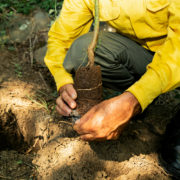 Fellipe Ditadi, Unsplash+
 A.C., Unsplash+
 Will Francis, Unsplash