• Link to X
  • Link to Facebook
  • Link to Instagram
  • Link to Rss this site
Indigenous Climate Hub
  • Home
    • About Us
  • Climate Action Programs
    • First Nation Adapt Program
      • Indigenous Climate Change Adaptation Gatherings
    • Indigenous Community-Based Climate Monitoring Program
    • Climate Change and Health Adaptation Program
    • Climate Change Preparedness in the North
    • Environment and Climate Change Canada
  • Funding
  • Resources
    • Climate Change Directory
    • Resource Library
    • Community Adaptation Projects
  • Events
  • Podcast
  • Blog
  • Contact/FAQs
  • Click to open the search input field Click to open the search input field Search
  • Menu Menu

Saddle Lake Cree Nation Water Vulnerability Assessment Project and Documentary

Alberta, Climate Change, Documentary, Video

After completing a Rural Waterline Feasibility Study in 2017 and an On-Reserve Source Water Protection Plan in 2018, the Saddle Lake Cree Nation retained Urban Systems Ltd. to complete a Climate Change and Source Water Vulnerability Assessment of the Nation’s water source, Saddle Lake, to understand the viability of the Nation’s water supply under impacts from climate change, and increased water demand due to population and economic growth. In October 2019, the Climate Change and Source Water Vulnerability Assessment was released.

Saddle Lake Cree Nation began this project by engaging our youth, elders and general membership in a dialogue about water, climate change and perceived adaptability to address water security. In past projects we have engaged our community in a similar way but have found it difficult to extend the results of the engagement and the project itself beyond those in attendance at the sessions. Because we are a community that traditionally shares knowledge through oral teachings, the idea of documenting the project in a video was proposed. The scope of this project included community engagement sessions, projecting future climate change events related to Saddle Lake, a water quantity assessment, a water quality assessment, and a documentary with the intention that this video will be used to educate our members about our impact assessment of climate change on our ability to fulfill our growing community’s basic need for water, as well as our efforts to preserve the lands, resources and culture of our people.

The community engagement sessions brought forward knowledge that validated historical hydrological modeling which informed future climate change projections. The Assessment revealed that increasing temperatures will magnify the negative impacts associated with contaminants entering the lake. To protect Saddle Lake from such impacts, the Saddle Lake Cree Nation recognized the need to implement the strategic plan previously identified in their 2017 Protection Plan. The Assessment found that Saddle Lake water levels are expected to increase, ensuring adequate water quantity for the community. Another outcome of the Assessment revealed that the water treatment plant is equipped to handle changes in water quality however additional funding is required to invest in the water treatment system and to train the next generation of operators (a vulnerability noted by this study).

Overall, the Assessment revealed that Saddle Lake will remain a viable long-term water source for the community. However, due to the importance of Saddle Lake as a water source for the community, a number of adaptation strategies were outlined for consideration and implementation to increase the resiliency of Saddle Lake and to ensure the continued supply of clean drinking water to the community. These adaptation strategies included:

  • Implementation of a buffer zone around the lake
  • Raising awareness of the Source Water Protection Plan in the community
  • Eliminate wastewater outfalls around the lake
  • Development of a water quality monitoring program
  • Development of a formal Water Treatment Plan performance monitoring program
  • Development of user-friendly summaries of day to day operations
  • Development of a standard operating procedures for the Water Treatment Plant
  • Confirmation that pathogen reduction recommendations are being met
  • Assessment of the environmental impacts of the Water Treatment Plant residual disposal
  • Hiring of an additional Water Treatment Plant operator
  • Conduct a full analysis of operations and maintenance costs for the Water Treatment Plant
  • Conduct a cost benefit analysis of continuing to operate and maintain the Water Treatment Plant
  • Completion of floodplain mapping for the lake
  • Investigation of the influence of neighboring communities and beaver damns on the inflow to Saddle Lake
  • Collect a depth profile of Saddle Lake to improve the understanding of the lake’s storage volume
  • Continue to pursue the rural waterline expansion project to improve water delivery to our homes
  • Engagement with the youth on source water protection, water treatment, and climate change
  • Conduction of a feasibility study for developing an emergency back-up water supply
  • Decommissioning of old groundwater wells

By commissioning the Climate Change and Source Water Vulnerability Assessment, the Saddle Lake Cree Nation were able to gain a better understanding of the future of their water supply, Saddle Lake, under climate change and could begin developing plans on how to address such changes.
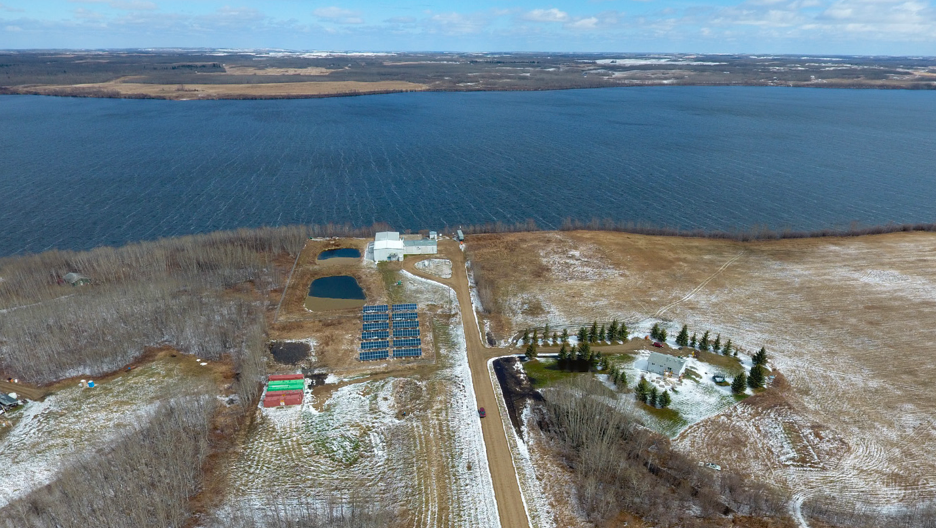
Saddle Lake Water Treatment Plant

Figure 1. Saddle Lake Water Treatment Plant


Blog Article by: Saddle Lake Cree Nation

August 24, 2020/by IndigenousClimateHub
Tags: Community Engagement, Elders, Hydrological Modeling, Impact Assessment, Saddle Lake Cree Nation, Water, Water Quality Assessment, Water Quantity Assessment, Water Vulnerability Assessment, Youth
Share this entry
  • Share on Facebook
  • Share on X
  • Share on WhatsApp
  • Share on Pinterest
  • Share on LinkedIn
  • Share on Tumblr
  • Share on Reddit
  • Share by Mail
https://indigenousclimatehub.ca/wp-content/uploads/2020/08/Saddle-Lake-Cree-Nation-Project.png 528 936 IndigenousClimateHub https://indigenousclimatehub.ca/wp-content/uploads/2020/10/logo-horiz-clr-01-small-300x88.png IndigenousClimateHub2020-08-24 15:44:322020-08-24 15:47:01Saddle Lake Cree Nation Water Vulnerability Assessment Project and Documentary
You might also like
Climate Change Adaptation in Kanaka Bar
WaterJong Marshes, Unsplash The Spirit of Water: Life’s Electrical Symphony
Researchers and Community looking at maps of flooding eventsYellow Quill First Nation Preparing for the Future – How Yellow Quill First Nation is using Indigenous knowledge and Science to Mitigate the Risk of Flooding
The Role of Elders in Guiding Climate Change Mitigation: Wisdom from Canada’s First Nations
Dealing with the Climate Crisis in Manitoba’s Interlake Region
Installation of north end weather monitorGift Lake Métis Settlement Education Through Interaction: A Community-Based Approach to Environmental Monitoring and Climate Change
X Logo X Logo Followon X RSS Feed Logo RSS Feed Logo Subscribeto RSS Feed

Subscribe to Our Blog

This field is required.

Check your inbox or spam folder to confirm your subscription.

Recent Posts

  • Water Is a Relative, Not a Resource
  • The River Is Telling Us Something: Indigenous-Led Water Monitoring as Canada’s Climate Early Warning System
  • Night Skies and Shifting Stars: How Indigenous Celestial Knowledge Tracks a Changing Climate
  • From Ownership to Relationship: Reclaiming Our Responsibilities to Land
  • Human Foolishness in Floodplains

Archives

  • June 2026
  • May 2026
  • April 2026
  • March 2026
  • February 2026
  • January 2026
  • December 2025
  • November 2025
  • October 2025
  • September 2025
  • August 2025
  • July 2025
  • June 2025
  • May 2025
  • April 2025
  • March 2025
  • February 2025
  • January 2025
  • December 2024
  • November 2024
  • October 2024
  • September 2024
  • August 2024
  • July 2024
  • June 2024
  • May 2024
  • April 2024
  • March 2024
  • February 2024
  • January 2024
  • December 2023
  • November 2023
  • October 2023
  • September 2023
  • August 2023
  • July 2023
  • June 2023
  • May 2023
  • April 2023
  • March 2023
  • February 2023
  • January 2023
  • December 2022
  • November 2022
  • October 2022
  • September 2022
  • August 2022
  • July 2022
  • June 2022
  • May 2022
  • April 2022
  • March 2022
  • February 2022
  • January 2022
  • December 2021
  • November 2021
  • October 2021
  • September 2021
  • August 2021
  • July 2021
  • June 2021
  • May 2021
  • April 2021
  • March 2021
  • February 2021
  • January 2021
  • December 2020
  • November 2020
  • October 2020
  • September 2020
  • August 2020
  • July 2020
  • June 2020
  • February 2020
  • October 2019
  • August 2019
  • July 2019
  • June 2019
  • May 2019
  • April 2019
  • March 2019

Categories

  • Adaptation
  • Alberta
  • Announcements
  • Arctic
  • Atlantic/NB
  • Awards
  • Blog
  • British Columbia
  • Climate Change
  • Climate Change Adaptation
  • Climate Change Education
  • Climate Change News
  • Climate Change Project
  • Climate Crisis
  • Climate Monitoring
  • Community Engagement
  • Community-Based Environmental Monitoring
  • Documentaries
  • Documentary
  • Events
  • Flooding
  • Food
  • Food Security
  • Food Sovereignty
  • Forest Fires
  • Funding Opportunity
  • ICCAG 2019
  • Indigenous Perspectives
  • Manitoba
  • Media
  • Métis
  • Métis Settlement
  • News
  • Op-Ed
  • Quebec
  • Saskatchewan
  • Technology
  • Video
  • Water
  • Webinars

Tags

Alberta Arctic Arctic Resilience Forum British Columbia Carbon Sequestration Caribou Caribou Recovery CIRNAC Climate Adaptation Climate Change Climate Change Adaptation Climate Resilience Community Engagement Education Environmental Stewardship Environment and Climate Change Canada (ECCC) First Nations Flooding Food Security Food Sovereignty Global Warming Indigenous Indigenous Guardians Toolkit Indigenous Knowledge Indigenous Stewardship Infrastructure Inuit landscape Mental Health Paris Agreement Policy Renewable Energy Research Resilience Science Traditional Ecological Knowledge Traditional Ecological Knowledge (TEK) Traditional Knowledge UNDRIP United Nations United Nations (UN) Webinar Wildfires WWF-Canada Youth
Contact

About Us

The Indigenous Climate Hub is a unique online community of Indigenous climate change leaders that have come together to share their stories and climate change adaptation experiences. The website is the result of the recommendations brought forward by Indigenous peoples at the Indigenous Climate Change Adaptation Gathering in 2018.

Indigenous Climate Hub Podcast

Be a part of the Indigenous Climate Hub Podcast. We are looking for unique perspectives and experiences in environmental stewardship, Indigenous ecological and traditional knowledge, and resource management offer valuable knowledge and teachings that can benefit Indigenous communities across Turtle Island and beyond.

Indigenous-led Initiatives

Are you a program or organization that funds or supports Indigenous Peoples  working on climate change initiatives?  If you would like to provide information to potential recipients here, please reach out to Okwaho so that we can work with you to highlight your program.

© Copyright - Indigenous Climate Hub, 2025-2026
  • Terms of Service
  • Privacy Policy
Link to: Adapting to Climate Change through Indigenous-led Watershed Planning Link to: Adapting to Climate Change through Indigenous-led Watershed Planning Adapting to Climate Change through Indigenous-led Watershed PlanningStephen Walker (Unsplash) Link to: How Indigenous communities are protecting salmon habitat from the effects of climate change Link to: How Indigenous communities are protecting salmon habitat from the effects of climate change Drew Farwell (Unsplash)How Indigenous communities are protecting salmon habitat from the effects of...
Scroll to top Scroll to top Scroll to top