
Canada Where the Land Writes the Law
Natural law, the Original Instructions, and the teachings of place
Law that was here first
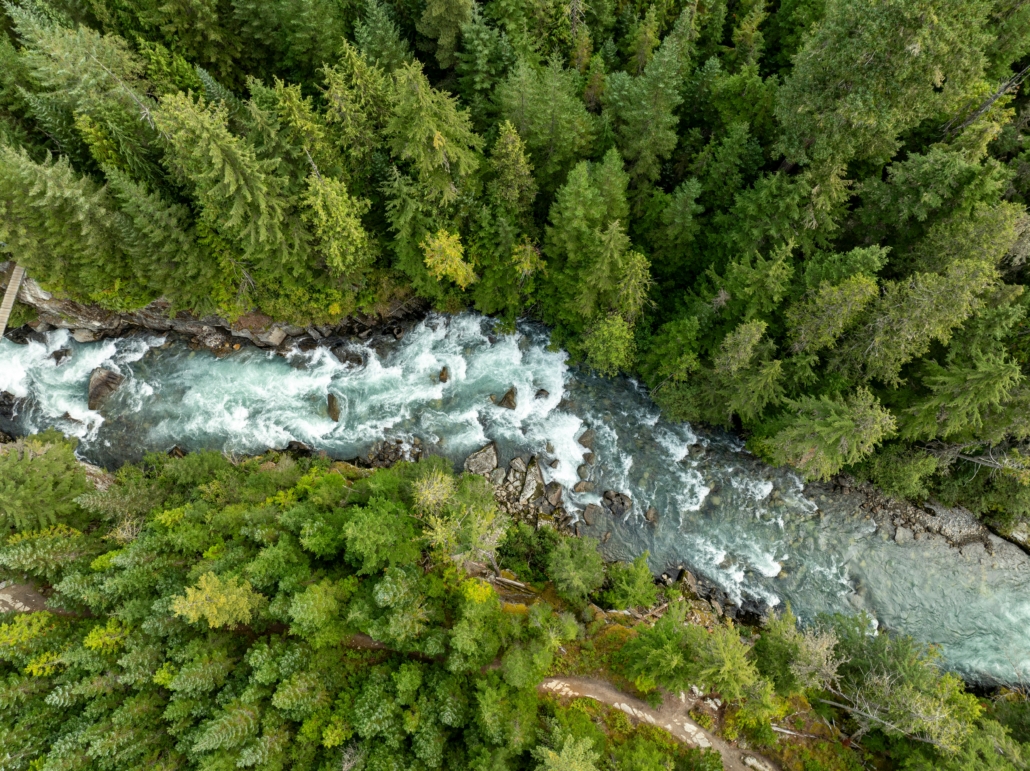
Long before any parliament sat or any treaty was signed, a river was already making law.
It decided where the cedar could grow and where the marsh would spread. It told the salmon when to return and the bear when to come down to the bank. It set the limits of the flood plain and the timing of the ice. Every living thing along its length organized itself around what the river allowed and what it would not tolerate. That is a legal order. It has jurisdiction, rules, consequences and a long memory.
When Indigenous Peoples speak of natural law, this is what is meant. Not a set of rules people invented and imposed on the land, but the law the land itself already holds. People did not write it. Our responsibility has always been to learn to read it.
This piece is an invitation to non-Indigenous readers to step back from thinking about law as something humans make, and to consider law as something that emerges from place: from water, soil, seasons, plants, animals and the relationships that hold them together.
The Original Instructions
Many Indigenous Nations teach that at Creation, every being was given Original Instructions: a purpose, a way of living, and a set of responsibilities to everything else.
The sun was instructed to give light and warmth. The water was instructed to give life and to move. The plants were given the work of feeding, healing and cleaning the air. The animals each received their own gifts and duties. In these teachings, none of these beings has stopped following its instructions. The maple still runs in spring. The geese still leave in autumn. The water still finds its way to the sea.
This is the foundation of natural law. Each being carries a role, and the roles fit together into a whole. Law, in this understanding, is the pattern of responsibilities that keeps that whole alive.
The difference from Western legal thinking is significant. Western law mostly begins with rights: what a person or a corporation is entitled to. Natural law begins with responsibilities: what each being owes to the others so that life can continue. A right asks, “What can I take?” A responsibility asks, “What must I give, and what must I protect, so the circle holds?”
Humans also received Original Instructions. In many teachings, we were the last to arrive and the most dependent. We carry no special authority over Creation. Our instructions are to watch, learn, give thanks, take carefully and help keep the balance the other beings already maintain.
How place makes law
Natural law is not universal in the way Western law tries to be. It is place-based. The laws of a prairie are not the laws of a coastal rainforest, and the laws of a northern lake are not the laws of a southern river valley. Each place has its own actors, its own rhythms and its own limits. So, each place produces its own law.
Three things create the conditions for that law to emerge
The actors. Every place is home to beings who co-exist and depend on one another: water, soil, fire, wind, plants, insects, fish, birds, animals and the spirits Indigenous Peoples recognize within them. Each one is a participant in the legal order, not an object inside it.
The relationships. Law lives in the connections between those actors. The wolf shapes the movement of the deer. The deer shapes the growth of the forest. The forest shapes the snowpack, which shapes the spring flow of the river, which shapes the fish. Pull on one strand and the whole web moves. Every one of those relationships carries an obligation, and those obligations together are the law of that place.
The cycles. Natural law is written in time as much as in space. Seasons, migrations, spawning runs, flowering, freeze-up and break-up are the calendar of the land. They tell every being when to act and when to rest. A law that ignores timing is not a law the land recognizes.
This means jurisdiction, in natural law, belongs to the place itself. A watershed has authority over what happens within it. People living there are not the owners of that authority. They are among the beings bound by it.
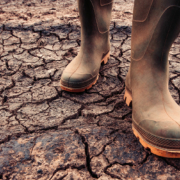
It also means consequences are real and built in. When the relationships are honoured, the place stays abundant. When they are broken through overharvesting, damming, draining or poisoning, the land responds: fish stop returning, soil blows away, fires burn hotter, water turns. Natural law enforces itself. The climate crisis is, in part, the land enforcing its law at a planetary scale.
Reading the land: laws people can learn
Indigenous legal traditions are learned by watching. Elders and knowledge keepers point to how a being lives and ask: what is this teaching us about how to live? The examples below are offered as illustrations of that way of reading, not as the codified law of any one Nation. Each Nation holds its own laws, and they are carried by its own people.
Water: the law of giving without keeping
Water gives itself to every living thing and keeps moving. It cannot be held still for long without going stagnant. From water, people can read a law that life must circulate, and that hoarding what sustains life breaks the order. Anishinaabe teachings about Nibi (water) place responsibility for water’s care with women, who carry water in the womb. The late Grandmother Josephine Mandamin walked around the Great Lakes carrying a copper pail of water to honour that responsibility.
Beaver: the law of building for others
The beaver changes a place more than almost any other animal, yet what it builds serves many. Its dams create wetlands that hold water through drought, filter it, and shelter fish, birds, frogs and moose. The law here is that any being with the power to reshape a place carries a duty to make it more livable for others, not only for itself.
Salmon: the law of return
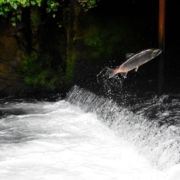
Salmon leave their home rivers, travel the ocean, and come back to give their bodies to the place that made them. Their return feeds bears, eagles, wolves, people and even the forest itself, as nutrients from the sea are carried into the trees. The law is reciprocity across generations: what you were given, you return, and the place that raised you is owed your care.
Plants: the law of the honourable harvest
Potawatomi botanist Robin Wall Kimmerer has written about the Honourable Harvest, a set of teachings shared in many forms across Nations. In plain terms: ask permission before taking, never take the first, take only what you need, use everything you take, give thanks, and give something back. Sweetgrass, she notes, actually grows better when it is harvested respectfully than when it is left alone. The law is relationship, not abstention.
The shared dish: the law of enough
Around the Great Lakes, the Dish with One Spoon wampum records an agreement among Anishinaabe, Haudenosaunee and other Nations to share the land as one bowl. Everyone eats from it. No one takes more than they need. Something is always left for others and for those still to come, and the dish is kept clean. That agreement still applies to the land where Toronto now stands. Its law came from the land’s own limits: a dish can only feed everyone if no one empties it.
Fire: the law of renewal through restraint
Many Nations have long used carefully timed, low-intensity burns to renew grasslands, open forests and encourage berries and medicines. Fire is both destroyer and healer. Its law is that renewal needs the right timing and the right scale. When people suppress fire entirely, fuel builds up and the land answers with fires far beyond what it can absorb.
Buffalo: the law of kinship
For Plains Nations, the buffalo was a relative who gave food, shelter, tools and ceremony. In 2014, Nations on both sides of the medicine line signed the Buffalo Treaty, committing to bring the buffalo back to the land. It is a treaty with an animal, made because the buffalo’s return restores the grasslands and the relationships that depend on it. Cree teachings call this web of kinship wahkohtowin: we are all related, and relatives carry obligations to one another.
Why the land defines the people, and the law
For Indigenous Peoples, natural law is not an academic theory. It is the ground of identity. Many Nations take their names from the land, the water or the beings they live among. Languages are shaped by place: verbs for the way ice moves, words for winds that only blow in one valley, names for plants that grow on one hillside. The land is not a backdrop to culture. It is the source of it.
This is why knowledge and law cannot be separated from territory. Ceremonies follow the land’s calendar. Stories carry the land’s laws in a form that can be remembered and passed down: a story about a greedy hunter who loses the animals is a legal precedent, told so it will never be forgotten. Harvesting practices are the law applied in daily life. Every generation learns the law by living inside it.
It is also why so many Indigenous Peoples describe themselves as responsible to the land rather than owners of it. You cannot own a relative. You can only be in good relationship with them or fail to be. Anishinaabe teachings call the good life that comes from living in right relationship mino-bimaadiziwin. Mi’kmaw teachings speak of netukulimk: taking what the land offers in a way that never undermines its ability to keep giving.
And it is why the loss of land has been so devastating. When people are removed from their territory, they lose more than property. They lose access to the teacher, the classroom and the legal source all at once. Restoring Indigenous relationships to land is therefore also restoring a living body of law.
What could change if natural law were honoured
Recognizing natural law would not mean adding a few environmental rules to an existing system. It would change the starting question. Instead of asking, “How much can we use?” decision-makers would ask, “What does this place require to stay whole, and what is our role within it?”
That shift is already beginning to show up in practice.
Indigenous-led conservation. Indigenous Protected and Conserved Areas across Canada are governed by Nations according to their own laws and responsibilities, often with Guardians programs that watch over the land the way their ancestors did.
Restoring relatives. Buffalo returning to the prairies, salmon returning to rivers after dams come down, and cultural burning returning to forests are all acts of putting natural law back into effect.
Two ways of seeing together. Mi’kmaw Elder Albert Marshall’s principle of Two-Eyed Seeing asks us to look with the strengths of Indigenous knowledge in one eye and Western science in the other. Natural law and ecological science often describe the same truths in different languages.
For non-Indigenous People, honouring natural law is also a path into reconciliation that goes deeper than apology. Reconciliation between peoples is incomplete without reconciliation with the land. The relationships that colonization broke were never only between humans. They included the rivers that were dammed, the species that were driven out and the territories that were cut off from their caretakers.
If we let the land teach us again, we may find that the answers to the climate crisis were never missing. They were written into every watershed, every forest and every migration route, waiting to be read.
Learning to listen
Natural law asks something simple and difficult of everyone: slow down enough to notice. Learn the name of the watershed you live in. Learn which Nations have cared for it and whose laws still hold there. Watch what grows, what migrates and what has gone missing. Ask what your place needs from you.
The land has never stopped following its Original Instructions. The question for all of us, Indigenous and non-Indigenous alike, is whether we are ready to follow ours.
A note on respect: Indigenous laws belong to the Nations that hold them and are carried by their Elders and knowledge keepers. The teachings here are shared to open understanding, not to stand in for those voices. To learn the laws of a specific place, seek out the people of that place, on their terms.
By Rye Karonhiowanen Barberstock
Photo by Getty Images on Unsplash
 Bart Heird (Unsplash)
 Casey Horner, Unsplash
 Markus Spiske, Unsplash
 Drew Farwell (Unsplash)
 Envato Elements (Licensed)
 Image Credit-Yunus Tug-Unsplash
