
A Supersized El Niño: What Winter 2026–27 and 2027 Could Mean for Canada
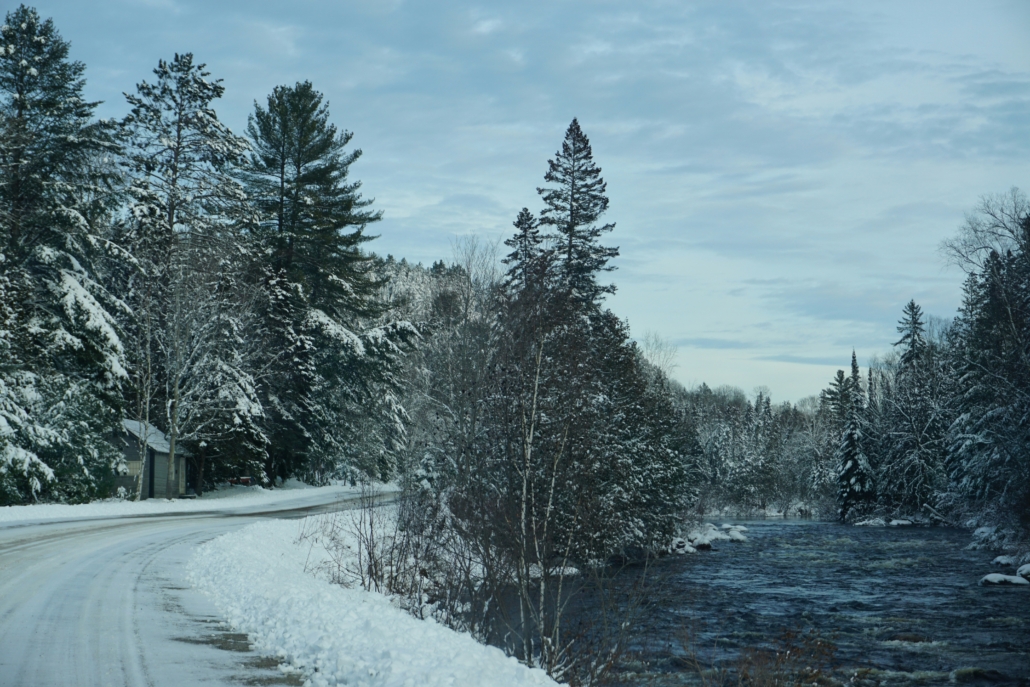
A milder winter can sound like welcome news. But for a community waiting for a winter road to carry fuel and building supplies, or a family relying on safe ice to reach harvesting areas, warmer conditions can bring difficult trade-offs. The significance of the coming El Niño is not simply how much temperatures might rise, but what changing winter conditions could mean for food, travel, health, and community life.
One of the strongest El Niño events in the modern record may be developing in the tropical Pacific. NOAA’s October 8 assessment placed an 83% probability on its October–December three-month Relative Oceanic Niño Index reaching at least +2.5°C—a threshold it identifies with an event stronger than previous El Niños in its record dating back to 1950.
For First Nations, Inuit, and Métis communities, the implications will depend on location, local conditions, and the systems people rely on. This is not a forecast of the same experience everywhere: it is an opportunity to consider how a large-scale climate event could interact with existing community priorities and risks.
El Niño, not La Niña
El Niño and La Niña are the warm and cool phases of the El Niño–Southern Oscillation, or ENSO. During El Niño, unusual warming in the central and eastern tropical Pacific changes atmospheric circulation, influencing weather far beyond the Pacific.
El Niño is a naturally occurring climate pattern, distinct from long-term human-caused climate change, although the two can combine to influence temperatures and extreme-weather risks. A strong event changes the odds of particular conditions; it does not determine the weather in any individual community.
What the forecasts suggest
NOAA’s October assessment indicated that a strong-to-very-strong El Niño was likely through January–March 2027. The World Meteorological Organization’s September update also anticipated a very strong event peaking near the end of 2026, with impacts continuing into 2027.
Environment and Climate Change Canada’s August assessment pointed toward a milder winter across much of Canada, with the possibility of drought and wildfire risks extending into the following spring and summer. Its August-issued winter outlook favoured above-normal temperatures across much of British Columbia, the Yukon, Manitoba, Ontario, Quebec, and Atlantic Canada, while parts of western Canada were more likely to be drier than normal.
These are seasonal outlooks, not predictions of conditions on a particular day or travel route. Cold spells, heavy snow, freezing rain, and other dangerous weather can still occur during an otherwise mild winter.
Winter roads, essential connections
For some remote First Nations, winter roads provide a limited seasonal window for moving heavy freight that supports daily life and planned construction. When conditions prevent trucks from carrying full loads, the consequences can reach well beyond transportation.
In February 2024, Nishnawbe Aski Nation Chiefs-in-Assembly declared a winter-roads state of emergency after unusually warm conditions restricted freight movement. NAN identified fuel and construction deliveries among the essential supplies at risk. That experience illustrates why another potentially warm winter deserves attention, although it does not establish what the 2026–27 road season will bring.
The practical planning question is therefore larger than whether a road will open: it includes how essential deliveries and community projects will be supported if the operating season is disrupted. Seasonal forecasts can inform contingency planning, but decisions about road access and load limits must remain grounded in actual local conditions.
Food, culture, and seasonal relationships
Changing winter conditions can also affect access to harvested foods and the relationships sustained through harvesting and sharing. Inuit Tapiriit Kanatami identifies country food as central to Inuit well-being and sharing practices, while highlighting climate-related pressures on access to locally harvested foods. Safe travel is therefore about more than reaching a destination; it also supports food systems and connections between generations.
These concerns take different forms elsewhere. Along the British Columbia coast, El Niño-associated ocean warming can affect fisheries and shellfish, creating another reason to monitor conditions important to harvesting and livelihoods. In Ontario, the Métis Nation of Ontario has identified increasingly unpredictable harvesting seasons among the climate changes affecting Métis citizens.
These are existing climate concerns, not proof that a particular harvest will fail in 2027. The connection to El Niño is the possibility that another season of unusual conditions could add pressure to food systems already adapting to environmental change.
Looking beyond winter
Some of the most consequential risks may emerge after the snow melts. Reduced snowpack, limited spring runoff, and warm, dry conditions can contribute to drought and a more favourable environment for wildfire. ECCC’s August-issued outlook for spring 2027 indicated a high probability of above-normal temperatures across much of western Canada.
For communities facing wildfire, preparedness involves more than protecting buildings. Fires can threaten harvesting areas and medicinal plants, while evacuations require continuity of health care, access to medications, mental-health support, and culturally safe services.
The First Nations Health Authority’s wildfire response resources reflect that broader understanding of safety through support for clean-air spaces, health-service access, counselling, and cultural supports. These considerations belong in early planning wherever local assessments identify elevated risk—not because El Niño guarantees a severe fire season, but because preparation takes time.
Different places, different risks
A national headline about a warmer winter can obscure important regional differences. ECCC’s review found that parts of Nunavut experienced colder-than-normal winters during previous very strong El Niño events, even while much of the country was warmer. The historical sample is small, so that pattern should be treated as a tendency rather than a community-level prediction.
Coastal communities may also face a different combination of concerns, including heavy rain, storm surge, and coastal flooding. Neither a warm national outlook nor an expectation of colder conditions elsewhere can establish whether local ice is safe: community observations and current conditions remain essential.
Indigenous leadership already at work
Indigenous communities are not approaching these risks without knowledge, experience, or solutions. First Nations, Inuit, and Métis climate strategies identify their own priorities for preparedness, food systems, infrastructure, and community well-being.
SmartICE provides one practical example of locally grounded adaptation. Its community-based services bring Indigenous and local ice knowledge together with monitoring technology to support travel decisions. Information is shared through tools including SIKU, as well as local communication channels. Monitoring supports knowledge and decision-making; it does not replace the judgement of experienced ice users.
Land stewardship offers another example. In spring 2026, Gitanyow Land Guardians and Firekeepers carried out cultural burns intended, in part, to support food and medicinal plants. Such initiatives should not be presented as responses to the coming El Niño; they demonstrate stewardship and adaptation work already underway.
The Assembly of First Nations’ National Climate Strategy places First Nations jurisdiction, knowledge systems, and self-determined priorities at the centre of climate action. Inuit Tapiriit Kanatami similarly calls for Inuit-led decisions and partnerships that support Inuit priorities. Preparing for the coming season should build on that leadership rather than treat communities only as recipients of emergency advice.
Preparing on community terms
A useful starting point is to connect updated forecasts with the decisions communities already make about transportation, harvesting, water, health, and emergency readiness. Depending on local priorities, planning could include:
- Reviewing essential deliveries. Identify supplies and projects exposed to winter-road disruption, and discuss contingency arrangements before shortages develop.
- Supporting local monitoring. Resource community-selected approaches to observing ice, snow, water, and travel conditions, alongside current weather information.
- Protecting food access. Consider support for harvesters, food sharing, storage, and alternative supplies where access may be disrupted.
- Preparing for smoke and evacuation. Review clean-air spaces, transportation, medication access, health-service continuity, and culturally safe supports.
- Following regional updates. Revisit plans as ECCC’s monthly seasonal forecasts and local assessments provide a clearer picture.
Planning also requires resources and clear responsibilities beyond the community itself. The AFN’s climate strategy calls for sustained funding and direct partnership with First Nations rights and title holders, including action on infrastructure and emergency-management capacity. Inuit climate priorities likewise identify infrastructure gaps and the need for partnerships shaped by Inuit decisions.
A very strong El Niño does not guarantee a particular winter-road season, harvest, drought, or wildfire outcome. Its value as an early warning lies in the time it provides to prepare—and in whether that time is matched with the resources and decision-making authority communities need to act on their own priorities.
By:Rye Karonhiowanen Barberstock
Photo by: Goran Vinko at Unsplash
 Stephen Walker (Unsplash)
 Jan Kopřiva, Unsplash
 Markus Spiske, Unsplash
 Bart Heird (Unsplash)
 Arnaud Measureur, Unsplash

Leave a Reply
Want to join the discussion?Feel free to contribute!