• Link to X
  • Link to Facebook
  • Link to Instagram
  • Link to Rss this site
Indigenous Climate Hub
  • Home
    • About Us
  • Climate Action Programs
    • First Nation Adapt Program
      • Indigenous Climate Change Adaptation Gatherings
    • Indigenous Community-Based Climate Monitoring Program
    • Climate Change and Health Adaptation Program
    • Climate Change Preparedness in the North
    • Environment and Climate Change Canada
  • Funding
  • Resources
    • Climate Change Directory
    • Resource Library
    • Community Adaptation Projects
  • Events
  • Podcast
  • Blog
  • Contact/FAQs
  • Click to open the search input field Click to open the search input field Search
  • Menu Menu

Appreciating ‘Place’ in Relation to Climate Change and Indigenous Health
Blog, Climate Change

An appreciation of place is crucial to understanding the impact of climate change on the health of Indigenous peoples. A place-based understanding of climate change can help to recognize how changes in the environment effect physical, mental, emotional, and spiritual facets of both individual and community health and well-being.

The terms ‘place-focused’ and ‘place-based’ are used primarily by non-Indigenous governments, academics, and planning and design professionals. For example, the Government of Victoria, Australia has offered explanations for how they use both place-focused and place-based approaches in their work. Place-focused approaches involve highlighting a particular place to ensure that government-driven or other service-related plans cater to the characteristics and experiences of people living in a specific geographic area. By contrast, place-based approaches engage with people from a particular geographic area to bring meaning from their cultural and environmental contexts, histories, and practices, to develop solutions to problems, using a process of shared-decision making.

While land dispossession and other impacts of colonialism, and climate change effects continue to disrupt the attachment to place for many Indigenous communities, not all place attachments have been lost. Increasingly, Indigenous communities are engaging in their own community planning processes that could be considered by non-Indigenous planners as “place-based.” Examples of Indigenous-led community plans in Canada, that incorporate elements of culture, health, and well-being, include the Six Nations Community Plan and M’Chigeeng First Nation Comprehensive Community Plan, among others. By comparison, Canadian municipal official plans often exclude direct references to cultural and health factors; these become the content of supplementary plans and policy reports. However, place-based approaches to community planning and official plan processes are becoming more popular among local governments for reasons that often include climate change resilience.

The emotional and psychological health effects of climate change among Indigenous peoples around the world are largely understudied, however, the existing literature attributes these effects to “changes in place attachment, disrupted cultural continuity, altered food security and systems,” and other factors. For example, in the community of Nain, located in Northern Labrador, Canada, an “appreciation of place” is crucial to understanding how sea ice, and its uses by the Inuit, have a positive impact on Inuit mental health, even with the increase in physical injuries, and reduced access to their traditional environments, brought upon by climate change.

Focusing on the ongoing impact of the current combined pandemics of climate change and COVID-19, the Indigenous Health Adaptation to Climate Change (IHACC) program highlights a connection between the protection of key places for Indigenous foods and medicines in remote Indigenous communities in Uganda, the Peruvian Amazon and the Arctic ecosystem, and the protection of Indigenous knowledge, practices, and rights of Indigenous peoples to access their lands.

Place, climate change, and Indigenous health are connected. Together they reveal how different threats to Indigenous traditional environments negatively impact overall Indigenous health. Subsequently, the contributions made by Indigenous-led community plans to reduce climate health effects on Indigenous communities are also worth further exploration.

By Leela Viswanathan


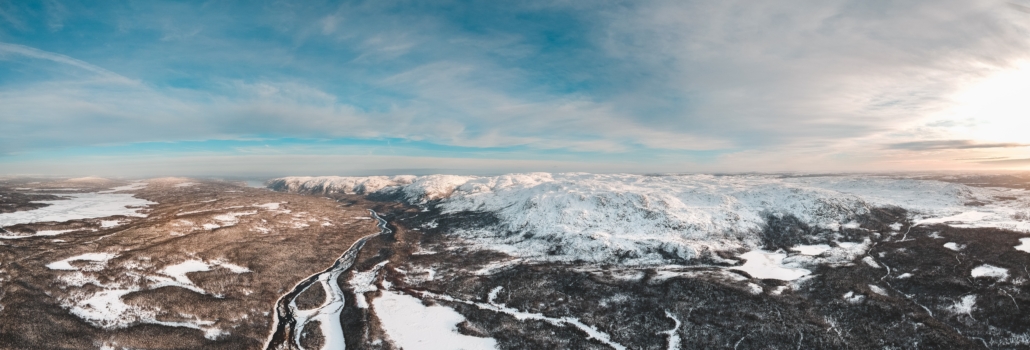
(Photo Credit: Erik McLean, Unsplash)
January 12, 2021/by IndigenousClimateHub
Tags: Australia, Community Plans, Food Security, Government of Victoria, Indigenous Communities, Indigenous Foods, Indigenous Health, Indigenous-led, M'Chigeeng First Nation, place-based, place-focused, Six Nations
Share this entry
  • Share on Facebook
  • Share on X
  • Share on WhatsApp
  • Share on Pinterest
  • Share on LinkedIn
  • Share on Tumblr
  • Share on Reddit
  • Share by Mail
https://indigenousclimatehub.ca/wp-content/uploads/2021/01/erik-mclean-WfSvA0NoFMU-unsplash-scaled.jpg 871 2560 IndigenousClimateHub https://indigenousclimatehub.ca/wp-content/uploads/2020/10/logo-horiz-clr-01-small-300x88.png IndigenousClimateHub2021-01-12 17:33:082021-01-12 17:33:08Appreciating ‘Place’ in Relation to Climate Change and Indigenous Health
You might also like
Prioritizing the Protection of Indigenous Rights to Achieve a Sustainable Future
Image Credit : Patrick Hendry, Unsplash Healing the Land, Healing Ourselves: Climate Grief and Indigenous Ceremonial Practices

Ahmed, Unsplash Climate Change and Indigenous Health: Addressing the Impacts on Well-being
Food Sovereignty Indicators for the Health of Indigenous Communities
ChatGPT AI Generated Centre Concept Proposing A Global Indigenous Centre for Climate Change Resilience: A Vision for the Future
Indigenous Protected and Conserved Areas Help Fight Climate Change Through Indigenous Stewardship
X Logo X Logo Followon X RSS Feed Logo RSS Feed Logo Subscribeto RSS Feed

Subscribe to Our Blog

This field is required.

Check your inbox or spam folder to confirm your subscription.

Recent Posts

  • Water Is a Relative, Not a Resource
  • The River Is Telling Us Something: Indigenous-Led Water Monitoring as Canada’s Climate Early Warning System
  • Night Skies and Shifting Stars: How Indigenous Celestial Knowledge Tracks a Changing Climate
  • From Ownership to Relationship: Reclaiming Our Responsibilities to Land
  • Human Foolishness in Floodplains

Archives

  • June 2026
  • May 2026
  • April 2026
  • March 2026
  • February 2026
  • January 2026
  • December 2025
  • November 2025
  • October 2025
  • September 2025
  • August 2025
  • July 2025
  • June 2025
  • May 2025
  • April 2025
  • March 2025
  • February 2025
  • January 2025
  • December 2024
  • November 2024
  • October 2024
  • September 2024
  • August 2024
  • July 2024
  • June 2024
  • May 2024
  • April 2024
  • March 2024
  • February 2024
  • January 2024
  • December 2023
  • November 2023
  • October 2023
  • September 2023
  • August 2023
  • July 2023
  • June 2023
  • May 2023
  • April 2023
  • March 2023
  • February 2023
  • January 2023
  • December 2022
  • November 2022
  • October 2022
  • September 2022
  • August 2022
  • July 2022
  • June 2022
  • May 2022
  • April 2022
  • March 2022
  • February 2022
  • January 2022
  • December 2021
  • November 2021
  • October 2021
  • September 2021
  • August 2021
  • July 2021
  • June 2021
  • May 2021
  • April 2021
  • March 2021
  • February 2021
  • January 2021
  • December 2020
  • November 2020
  • October 2020
  • September 2020
  • August 2020
  • July 2020
  • June 2020
  • February 2020
  • October 2019
  • August 2019
  • July 2019
  • June 2019
  • May 2019
  • April 2019
  • March 2019

Categories

  • Adaptation
  • Alberta
  • Announcements
  • Arctic
  • Atlantic/NB
  • Awards
  • Blog
  • British Columbia
  • Climate Change
  • Climate Change Adaptation
  • Climate Change Education
  • Climate Change News
  • Climate Change Project
  • Climate Crisis
  • Climate Monitoring
  • Community Engagement
  • Community-Based Environmental Monitoring
  • Documentaries
  • Documentary
  • Events
  • Flooding
  • Food
  • Food Security
  • Food Sovereignty
  • Forest Fires
  • Funding Opportunity
  • ICCAG 2019
  • Indigenous Perspectives
  • Manitoba
  • Media
  • Métis
  • Métis Settlement
  • News
  • Op-Ed
  • Quebec
  • Saskatchewan
  • Technology
  • Video
  • Water
  • Webinars

Tags

Alberta Arctic Arctic Resilience Forum British Columbia Carbon Sequestration Caribou Caribou Recovery CIRNAC Climate Adaptation Climate Change Climate Change Adaptation Climate Resilience Community Engagement Education Environmental Stewardship Environment and Climate Change Canada (ECCC) First Nations Flooding Food Security Food Sovereignty Global Warming Indigenous Indigenous Guardians Toolkit Indigenous Knowledge Indigenous Stewardship Infrastructure Inuit landscape Mental Health Paris Agreement Policy Renewable Energy Research Resilience Science Traditional Ecological Knowledge Traditional Ecological Knowledge (TEK) Traditional Knowledge UNDRIP United Nations United Nations (UN) Webinar Wildfires WWF-Canada Youth
Contact

About Us

The Indigenous Climate Hub is a unique online community of Indigenous climate change leaders that have come together to share their stories and climate change adaptation experiences. The website is the result of the recommendations brought forward by Indigenous peoples at the Indigenous Climate Change Adaptation Gathering in 2018.

Indigenous Climate Hub Podcast

Be a part of the Indigenous Climate Hub Podcast. We are looking for unique perspectives and experiences in environmental stewardship, Indigenous ecological and traditional knowledge, and resource management offer valuable knowledge and teachings that can benefit Indigenous communities across Turtle Island and beyond.

Indigenous-led Initiatives

Are you a program or organization that funds or supports Indigenous Peoples  working on climate change initiatives?  If you would like to provide information to potential recipients here, please reach out to Okwaho so that we can work with you to highlight your program.

© Copyright - Indigenous Climate Hub, 2025-2026
  • Terms of Service
  • Privacy Policy
Link to: Adaptive Capacity and Adaptation of Indigenous Peoples to Environmental Change Link to: Adaptive Capacity and Adaptation of Indigenous Peoples to Environmental Change Adaptive Capacity and Adaptation of Indigenous Peoples to Environmental Cha... Link to: IRTC Climate Change Project: Nature Based Solutions to Climate Adaptation Link to: IRTC Climate Change Project: Nature Based Solutions to Climate Adaptation IRTC Climate Change Project: Nature Based Solutions to Climate Adaptation
Scroll to top Scroll to top Scroll to top