
• Link to X
  • Link to Facebook
  • Link to Instagram
  • Link to Rss this site
Indigenous Climate Hub
  • Home
    • About Us
  • Climate Action Programs
    • First Nation Adapt Program
      • Indigenous Climate Change Adaptation Gatherings
    • Indigenous Community-Based Climate Monitoring Program
    • Climate Change and Health Adaptation Program
    • Climate Change Preparedness in the North
    • Environment and Climate Change Canada
  • Funding
  • Resources
    • Climate Change Directory
    • Resource Library
    • Community Adaptation Projects
  • Events
  • Podcast
  • Blog
  • Contact/FAQs
  • Click to open the search input field Click to open the search input field Search
  • Menu Menu

IRTC Climate Change Project: Nature Based Solutions to Climate Adaptation
Adaptation, Blog, Climate Change, Climate Change Project, Manitoba

The Power of Natural Capital

Adapting to the impacts of climate change requires a “systems thinking” approach. This is especially true given the non-linear nature of these impacts. Over the last two years, the IRTC (Interlake Reserves Tribal Council) climate project has reported on how these impacts have caused displacement and continue to threaten sources of livelihoods. While adaptation strategies have been largely focused on infrastructure engineered solutions, nature-based solutions (NBS) provide a more sustainable approach to combating the threat of climate change.

Benefits

These natural capital – including peatlands, forests, mangroves, wetlands, savannahs, coral reefs and other landscapes – can provide a wide range environmental, economic, and social benefits, when projects are developed (or co-developed) and led by First Nations. For instance, without mangroves, it has been estimated that more than 18 million people worldwide would experience coastal flooding. Furthermore, the First Nations carbon collaborative further gives an insight into the opportunities and challenges that NBS presents.

Using the power of natural capital, NBS can help reduce greenhouse gas emissions and in adaptation efforts. This process involves restoring, protecting, and managing ecosystems that are critical in the prevention of biodiversity loss. The International Union for Conservation of Nature describes NBS as “actions to protect, sustainably manage, and restore natural or modified ecosystems, that address societal challenges effectively and adaptively, simultaneously providing human well-being and biodiversity benefits.”

In addition to the primary benefit, NBS provides a wide range of co-benefits. For example, deploying NBS in flood management can reduce flood risk, improve water quality, and aid in nutrients sequestration. Engineered solutions (dykes, floodwalls, and levees, for instance), on the other hand, provide a single benefit and often require long term maintenance.

Within our communities, discussions on nature-based solutions are happening. These discussion stem from our stewardship laws and principles – principles that have been passed down from generation to generation.

These guiding principles include making offerings to the land when hunting or gathering plants and harvesting only the necessary quantities of resources to avoid depletion and improve conservation efforts.

Within the context of our lived reality, NBS can complement more traditional engineered solutions, according to community members. Due to its potential benefits, community members have expressed the need to advance NBS around the Interlake region. However, there are barriers to indigenous participation in NBS.

These barriers are rooted in the systemic exclusion of our communities in environmental governance and management – and underpins some of the environmental challenges we currently face.

Part of this, according to a 2018 report on indigenous led conversation, stems from the fact that: “Indigenous worldviews differ fundamentally from the philosophies that guide many Crown-protected areas, where conservation is achieved by restricting activities and limiting access. In Indigenous worldviews, conservation is achieved when the relationships and uses that have conserved the lands and waters for thousands of years remain intact or are re-established.”

Notwithstanding, conversations with community members suggests that these challenges can be surmounted. What, then, is the way forward? In part 2, we’ll explore some of these.


Blog by: IRTC (To learn more about IRTC, visit https://irtc.ca)

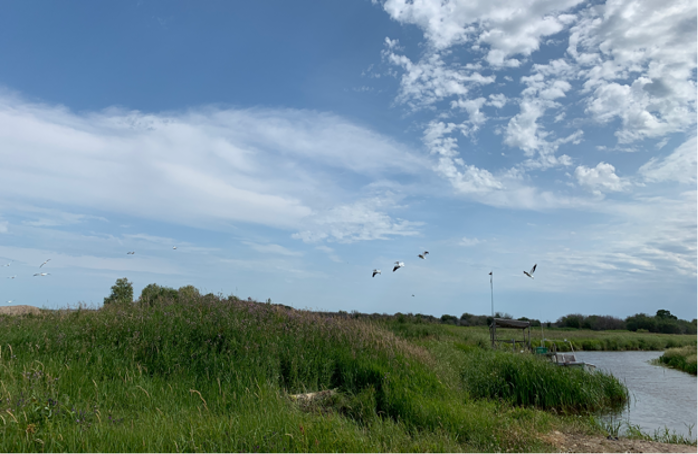
(Image Source: IRTC)
January 18, 2021/by IndigenousClimateHub
Tags: Interlake Region, IRTC, Natural Capital, Nature-Based Solutions (NBS), Systems Thinking
Share this entry
  • Share on Facebook
  • Share on X
  • Share on WhatsApp
  • Share on Pinterest
  • Share on LinkedIn
  • Share on Tumblr
  • Share on Reddit
  • Share by Mail
https://indigenousclimatehub.ca/wp-content/uploads/2021/01/IRTC-Image.png 454 698 IndigenousClimateHub https://indigenousclimatehub.ca/wp-content/uploads/2020/10/logo-horiz-clr-01-small-300x88.png IndigenousClimateHub2021-01-18 16:02:162021-01-18 16:02:16IRTC Climate Change Project: Nature Based Solutions to Climate Adaptation
You might also like
Dealing with the Climate Crisis in Manitoba’s Interlake Region
X Logo X Logo Followon X RSS Feed Logo RSS Feed Logo Subscribeto RSS Feed

Subscribe to Our Blog

This field is required.

Check your inbox or spam folder to confirm your subscription.

Recent Posts

  • Water Is a Relative, Not a Resource
  • The River Is Telling Us Something: Indigenous-Led Water Monitoring as Canada’s Climate Early Warning System
  • Night Skies and Shifting Stars: How Indigenous Celestial Knowledge Tracks a Changing Climate
  • From Ownership to Relationship: Reclaiming Our Responsibilities to Land
  • Human Foolishness in Floodplains

Archives

  • June 2026
  • May 2026
  • April 2026
  • March 2026
  • February 2026
  • January 2026
  • December 2025
  • November 2025
  • October 2025
  • September 2025
  • August 2025
  • July 2025
  • June 2025
  • May 2025
  • April 2025
  • March 2025
  • February 2025
  • January 2025
  • December 2024
  • November 2024
  • October 2024
  • September 2024
  • August 2024
  • July 2024
  • June 2024
  • May 2024
  • April 2024
  • March 2024
  • February 2024
  • January 2024
  • December 2023
  • November 2023
  • October 2023
  • September 2023
  • August 2023
  • July 2023
  • June 2023
  • May 2023
  • April 2023
  • March 2023
  • February 2023
  • January 2023
  • December 2022
  • November 2022
  • October 2022
  • September 2022
  • August 2022
  • July 2022
  • June 2022
  • May 2022
  • April 2022
  • March 2022
  • February 2022
  • January 2022
  • December 2021
  • November 2021
  • October 2021
  • September 2021
  • August 2021
  • July 2021
  • June 2021
  • May 2021
  • April 2021
  • March 2021
  • February 2021
  • January 2021
  • December 2020
  • November 2020
  • October 2020
  • September 2020
  • August 2020
  • July 2020
  • June 2020
  • February 2020
  • October 2019
  • August 2019
  • July 2019
  • June 2019
  • May 2019
  • April 2019
  • March 2019

Categories

  • Adaptation
  • Alberta
  • Announcements
  • Arctic
  • Atlantic/NB
  • Awards
  • Blog
  • British Columbia
  • Climate Change
  • Climate Change Adaptation
  • Climate Change Education
  • Climate Change News
  • Climate Change Project
  • Climate Crisis
  • Climate Monitoring
  • Community Engagement
  • Community-Based Environmental Monitoring
  • Documentaries
  • Documentary
  • Events
  • Flooding
  • Food
  • Food Security
  • Food Sovereignty
  • Forest Fires
  • Funding Opportunity
  • ICCAG 2019
  • Indigenous Perspectives
  • Manitoba
  • Media
  • Métis
  • Métis Settlement
  • News
  • Op-Ed
  • Quebec
  • Saskatchewan
  • Technology
  • Video
  • Water
  • Webinars

Tags

Alberta Arctic Arctic Resilience Forum British Columbia Carbon Sequestration Caribou Caribou Recovery CIRNAC Climate Adaptation Climate Change Climate Change Adaptation Climate Resilience Community Engagement Education Environmental Stewardship Environment and Climate Change Canada (ECCC) First Nations Flooding Food Security Food Sovereignty Global Warming Indigenous Indigenous Guardians Toolkit Indigenous Knowledge Indigenous Stewardship Infrastructure Inuit landscape Mental Health Paris Agreement Policy Renewable Energy Research Resilience Science Traditional Ecological Knowledge Traditional Ecological Knowledge (TEK) Traditional Knowledge UNDRIP United Nations United Nations (UN) Webinar Wildfires WWF-Canada Youth
Contact

About Us

The Indigenous Climate Hub is a unique online community of Indigenous climate change leaders that have come together to share their stories and climate change adaptation experiences. The website is the result of the recommendations brought forward by Indigenous peoples at the Indigenous Climate Change Adaptation Gathering in 2018.

Indigenous Climate Hub Podcast

Be a part of the Indigenous Climate Hub Podcast. We are looking for unique perspectives and experiences in environmental stewardship, Indigenous ecological and traditional knowledge, and resource management offer valuable knowledge and teachings that can benefit Indigenous communities across Turtle Island and beyond.

Indigenous-led Initiatives

Are you a program or organization that funds or supports Indigenous Peoples  working on climate change initiatives?  If you would like to provide information to potential recipients here, please reach out to Okwaho so that we can work with you to highlight your program.

© Copyright - Indigenous Climate Hub, 2025-2026
  • Terms of Service
  • Privacy Policy
Link to: Appreciating ‘Place’ in Relation to Climate Change and Indigenous Health Link to: Appreciating ‘Place’ in Relation to Climate Change and Indigenous Health Appreciating ‘Place’ in Relation to Climate Change and Indigenous Healt... Link to: Climate Science 2050: Mobilizing Indigenous-led Research and Knowledge on Climate Change Link to: Climate Science 2050: Mobilizing Indigenous-led Research and Knowledge on Climate Change Climate Science 2050: Mobilizing Indigenous-led Research and Knowledge on Climate...
Scroll to top Scroll to top Scroll to top