• Link to X
  • Link to Facebook
  • Link to Instagram
  • Link to Rss this site
Indigenous Climate Hub
  • Home
    • About Us
  • Climate Action Programs
    • First Nation Adapt Program
      • Indigenous Climate Change Adaptation Gatherings
    • Indigenous Community-Based Climate Monitoring Program
    • Climate Change and Health Adaptation Program
    • Climate Change Preparedness in the North
    • Environment and Climate Change Canada
  • Funding
  • Resources
    • Climate Change Directory
    • Resource Library
    • Community Adaptation Projects
  • Events
  • Podcast
  • Blog
  • Contact/FAQs
  • Click to open the search input field Click to open the search input field Search
  • Menu Menu

Fighting Fire with Fire: Reducing Wildfire Risk Through Indigenous Fire Stewardship (IFS)
Blog, Climate Change, Climate Crisis, Forest Fires

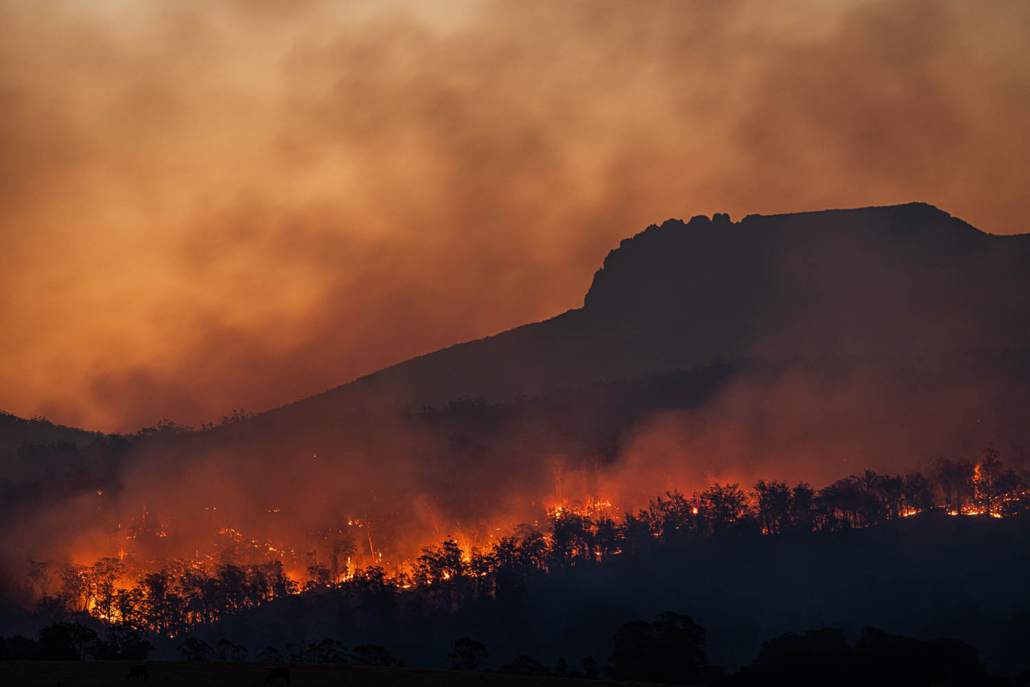
Extreme heat and the resultant forest fires are an annual occurrence in Canada. The impacts can be devastating for communities and could alter Earth’s climate. There is growing recognition that Indigenous fire stewardship has a positive long-term impact on managing forests and mitigating the risk of uncontrollable fires around the world.

Indigenous fire stewardship (IFS) is the use of fire by diverse Indigenous people to assist in “responding to climate and local environmental conditions to promote desired landscapes, habitats, [and] species.” IFS serves “to increase the abundance of favored resources to sustain knowledge systems, ceremonial, and subsistence practices, economies, and livelihoods.” Indigenous fire stewardship practices are collaborative and attempt to support communities to become more “fire dependent” by enhancing a community’s reliance on fire to create optimal conditions in the landscape that support a community’s livelihood and capacity to protect the ecosystem from the adverse impacts of wildfires. This compares to simply being “fire adaptive” and remaining “informed and prepared” to “safely coexist with wildland fire.”

Diverse Indigenous nations are implementing fire stewardship practices and are “revitalizing traditional burning” to develop “wildfire mitigation strategies that can maintain or enhance cultural attributes of First Nations communities.” Also referred to as “cultural burning” the controlled burning of dead grass, for example, improves the habitat for some animal species, and encourages new vegetation. Drawing from intergenerational knowledge about fire and sharing “beliefs and practices among fire-dependent cultures,” IFS consists of a combination of “fire regimes, fire effects, and the role of cultural burning in fire-prone ecosystems and habitats.” The impact of IFS on Indigenous communities is strongest where there is also a connection between rural wildland and urban regions, and where a combination of permanent and seasonal human settlements exists, along with trails and roads that involve managed habitats for food, among other gifts of Mother Nature.

Along the West Coast of the United States (i.e., region of California), the Karuk Tribe and the Yurok Tribe have engaged in partnerships with the Nature Conservancy Training Exchange (TREX) and the Western Klamath Restoration Partnership to ensure that Indigenous fire stewardship practices are implemented across multiple tribal, federal, and private lands and jurisdictions. In another example, The First Nations Adapt Program, funded by Indigenous Services Canada,  assesses  “climate change vulnerabilities and [identifies] Indigenous cultural values and traditional burning knowledge.” The partnership of The First Nations Emergency Services Society – Forest Fuel Management (FFM) and three First Nations communities, the Shackan Indian Band, Xwisten (Bridge River First Nation) and the Yunesit’n National Government, has resulted in key educational outcomes including a storytelling project and videos from the Shackan and Xwisten Indian Bands, outlining the importance of cultural burning revitalization.

Given that complete fire suppression is impossible, fire can be used as a tool for forest management. In turn, centuries-old Indigenous practices of controlled burning – fighting fire with fire – must become part of a global solution to reduce the risk of wildfires ravaging the planet.


By Leela Viswanathan


(Image Credit: Matt Palmer, Unsplash)
August 16, 2021/by IndigenousClimateHub
Tags: Cultural Burning, Forest Fires, Forest Management, IFS, Indigenous Fire Stewardship, Traditional Burning, Wildfires
Share this entry
  • Share on Facebook
  • Share on X
  • Share on WhatsApp
  • Share on Pinterest
  • Share on LinkedIn
  • Share on Tumblr
  • Share on Reddit
  • Share by Mail
https://indigenousclimatehub.ca/wp-content/uploads/2021/08/matt-palmer-unsplash-crop.jpg 1001 1500 IndigenousClimateHub https://indigenousclimatehub.ca/wp-content/uploads/2020/10/logo-horiz-clr-01-small-300x88.png IndigenousClimateHub2021-08-16 19:50:312021-08-16 19:55:18Fighting Fire with Fire: Reducing Wildfire Risk Through Indigenous Fire Stewardship (IFS)
You might also like
Improving Air Quality and Respiratory Health in Indigenous Communities
ThisisEngineering, Licensed from Unsplash Bridging Two Worlds: Integrating Indigenous Knowledge and Western Science in Climate Policy
Indigenous Design and Climate Change Adaptation
Wild fires The Changing Regime of Wildfires
John Towner First Nations Fire Protection Strategy 2023-2028
Climate Change Adaptation in Kanaka Bar
X Logo X Logo Followon X RSS Feed Logo RSS Feed Logo Subscribeto RSS Feed

Subscribe to Our Blog

This field is required.

Check your inbox or spam folder to confirm your subscription.

Recent Posts

  • Water Is a Relative, Not a Resource
  • The River Is Telling Us Something: Indigenous-Led Water Monitoring as Canada’s Climate Early Warning System
  • Night Skies and Shifting Stars: How Indigenous Celestial Knowledge Tracks a Changing Climate
  • From Ownership to Relationship: Reclaiming Our Responsibilities to Land
  • Human Foolishness in Floodplains

Archives

  • June 2026
  • May 2026
  • April 2026
  • March 2026
  • February 2026
  • January 2026
  • December 2025
  • November 2025
  • October 2025
  • September 2025
  • August 2025
  • July 2025
  • June 2025
  • May 2025
  • April 2025
  • March 2025
  • February 2025
  • January 2025
  • December 2024
  • November 2024
  • October 2024
  • September 2024
  • August 2024
  • July 2024
  • June 2024
  • May 2024
  • April 2024
  • March 2024
  • February 2024
  • January 2024
  • December 2023
  • November 2023
  • October 2023
  • September 2023
  • August 2023
  • July 2023
  • June 2023
  • May 2023
  • April 2023
  • March 2023
  • February 2023
  • January 2023
  • December 2022
  • November 2022
  • October 2022
  • September 2022
  • August 2022
  • July 2022
  • June 2022
  • May 2022
  • April 2022
  • March 2022
  • February 2022
  • January 2022
  • December 2021
  • November 2021
  • October 2021
  • September 2021
  • August 2021
  • July 2021
  • June 2021
  • May 2021
  • April 2021
  • March 2021
  • February 2021
  • January 2021
  • December 2020
  • November 2020
  • October 2020
  • September 2020
  • August 2020
  • July 2020
  • June 2020
  • February 2020
  • October 2019
  • August 2019
  • July 2019
  • June 2019
  • May 2019
  • April 2019
  • March 2019

Categories

  • Adaptation
  • Alberta
  • Announcements
  • Arctic
  • Atlantic/NB
  • Awards
  • Blog
  • British Columbia
  • Climate Change
  • Climate Change Adaptation
  • Climate Change Education
  • Climate Change News
  • Climate Change Project
  • Climate Crisis
  • Climate Monitoring
  • Community Engagement
  • Community-Based Environmental Monitoring
  • Documentaries
  • Documentary
  • Events
  • Flooding
  • Food
  • Food Security
  • Food Sovereignty
  • Forest Fires
  • Funding Opportunity
  • ICCAG 2019
  • Indigenous Perspectives
  • Manitoba
  • Media
  • Métis
  • Métis Settlement
  • News
  • Op-Ed
  • Quebec
  • Saskatchewan
  • Technology
  • Video
  • Water
  • Webinars

Tags

Alberta Arctic Arctic Resilience Forum British Columbia Carbon Sequestration Caribou Caribou Recovery CIRNAC Climate Adaptation Climate Change Climate Change Adaptation Climate Resilience Community Engagement Education Environmental Stewardship Environment and Climate Change Canada (ECCC) First Nations Flooding Food Security Food Sovereignty Global Warming Indigenous Indigenous Guardians Toolkit Indigenous Knowledge Indigenous Stewardship Infrastructure Inuit landscape Mental Health Paris Agreement Policy Renewable Energy Research Resilience Science Traditional Ecological Knowledge Traditional Ecological Knowledge (TEK) Traditional Knowledge UNDRIP United Nations United Nations (UN) Webinar Wildfires WWF-Canada Youth
Contact

About Us

The Indigenous Climate Hub is a unique online community of Indigenous climate change leaders that have come together to share their stories and climate change adaptation experiences. The website is the result of the recommendations brought forward by Indigenous peoples at the Indigenous Climate Change Adaptation Gathering in 2018.

Indigenous Climate Hub Podcast

Be a part of the Indigenous Climate Hub Podcast. We are looking for unique perspectives and experiences in environmental stewardship, Indigenous ecological and traditional knowledge, and resource management offer valuable knowledge and teachings that can benefit Indigenous communities across Turtle Island and beyond.

Indigenous-led Initiatives

Are you a program or organization that funds or supports Indigenous Peoples  working on climate change initiatives?  If you would like to provide information to potential recipients here, please reach out to Okwaho so that we can work with you to highlight your program.

© Copyright - Indigenous Climate Hub, 2025-2026
  • Terms of Service
  • Privacy Policy
Link to: How Indigenous Sustainable Farming Practices Mitigate the Impacts of Climate Change Link to: How Indigenous Sustainable Farming Practices Mitigate the Impacts of Climate Change How Indigenous Sustainable Farming Practices Mitigate the Impacts of Climate... Link to: Peer-to-Peer Learning During COVID-19 Link to: Peer-to-Peer Learning During COVID-19 Peer-to-Peer Learning During COVID-19
Scroll to top Scroll to top Scroll to top