
• Link to X
  • Link to Facebook
  • Link to Instagram
  • Link to Rss this site
Indigenous Climate Hub
  • Home
    • About Us
  • Climate Action Programs
    • First Nation Adapt Program
      • Indigenous Climate Change Adaptation Gatherings
    • Indigenous Community-Based Climate Monitoring Program
    • Climate Change and Health Adaptation Program
    • Climate Change Preparedness in the North
    • Environment and Climate Change Canada
  • Funding
  • Resources
    • Climate Change Directory
    • Resource Library
    • Community Adaptation Projects
  • Events
  • Podcast
  • Blog
  • Contact/FAQs
  • Click to open the search input field Click to open the search input field Search
  • Menu Menu

Nature’s Voice and the “InBetween”
Blog, Climate Change, Op-Ed, Water
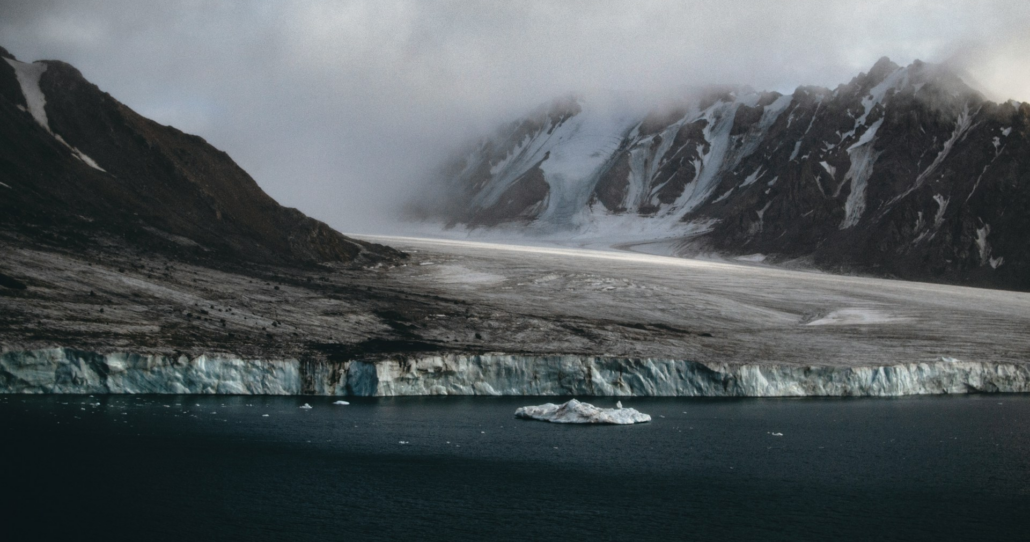
Image Credit: Hector John Periquin, Unsplash

The world was not made for human beings; human beings were made within a world already in motion. Mountains were rising, waters circulating, winds sculpting landscapes, and beings living, dying, and evolving long before anyone called them “resources” or “ecosystems.”

To remember this is to remember that humans are participants, not protagonists, in a larger, unfolding story. The “inbetween” names the field of forces, relationships, and intelligences that hold everything together and quietly teach us how to live.

The Missing Presence

In climate conversations, nearly all focus remains on human experience: our heat waves, our floods, our economies. Even when we speak of “nature,” it is often treated as an abstraction, absent, silent, reduced to numbers and reports.

Picture two people discussing ocean warming, the changing salinity, acidity, and oxygen levels. Their concerns may be sincere, their facts accurate, yet the ocean itself is nowhere to be found. No seawater in sight, no salt in the air, no tangible presence of what they are trying to defend.

What’s missing is not just an object but a relationship. Without water, they speak for the ocean rather than with it. That gap between human words and living reality is the “inbetween”: the space of copresence and reciprocity where genuine listening begins.

The InBetween as Relational Reality

The “inbetween” is the connective tissue of life, the space between beings that is never empty. It is where energy and responsibility circulate, where lessons about balance, limits, and renewal emerge. It is both a classroom and an ethical space: the testing ground for whether humans dominate the conversation or make room for morethanhuman voices.

When discussions ignore the inbetween, they collapse the world into a single human perspective. Nature becomes a backdrop, a passive object in need of representation. Yet the Earth is constantly communicating through tides, wind, migrations, decay, and regeneration. The problem is not silence; it is our failure to listen.

Water as Intelligent Presence

Consider water. Often labelled a “resource” or a line on a climate chart, water is in fact one of the planet’s most sophisticated presences. It shapes coastlines, redistributes heat, carries memory, and enlivens every ecosystem it touches.

Water:

  • Holds memory in glaciers, aquifers, clouds, and rivers.
  • Organizes life in complex webs that adapt to shifts in chemistry and temperature.
  • Nourishes land and species with exquisite timing where its cycles remain intact.

To call water intelligent is not metaphorical flattery. It acknowledges a living system that responds, adapts, and cocreates the conditions for life — something no technology can replicate.

Talking With, Not For

Honouring the inbetween means refusing to speak for nature in its absence and learning instead to talk to it. This begins with presence, bringing the element into the space of dialogue, physically and symbolically, and engaging it with respect.

Imagine climate discussions where:

  • A vessel of seawater rests at the center of the room, grounding the conversation in the reality it concerns.
  • Participants take a moment of silence, touch the waterl, and consider where that water has travelled and what it has witnessed.
  • Decisions are framed as questions to the water: What do you need from us? How are you already responding? How must we change to restore the right relationship?

The water does not answer in words, but through currents, chemistry, and movement. Listening becomes a relational practice of dialogue instead of a monologue.

Beyond HumanCentred Narratives

Recentring the inbetween overturns familiar climate narratives. It shifts concern from what climate change is doing to us to what Earth is asking of all beings, human and morethanhuman. It challenges the idea that the world is a stage built for human achievement and replaces it with humility, the awareness that our knowledge, while powerful, is partial.

Environmental destruction is not only a technical crisis but a relational one. When we discuss oceans, forests, and skies as abstractions, we reproduce the same separation and control that caused the damage.

Reweaving the Web of Relationship

Listening to nature’s voice through the inbetween calls for new practices of connection:

  • Bringing elements such as water, soil, plants, and stones into meetings and ceremonies as honoured participants.
  • Holding gatherings outdoors, where the morethanhuman world is not excluded but present.
  • Practising protocols of greeting, gratitude, and consent before making decisions that affect the land.
  • Learning from Indigenous teachings that treat land, waters, and elements as relatives with agency and law, not as mute resources.

In this way, the “impact of climate change” becomes a lived conversation among all beings. Human speech joins a chorus rather than dominating the soundscape.

Honouring the InBetween

Life will continue in some form with or without us, but human survival depends on restoring right relationships with the living world. The inbetween is where those relationships form, deepen, and become sacred again.

When climate dialogue makes space for the presence and voice of water, land, and other beings, it shifts from crisis management to relationship repair. We remember that we are not speaking on behalf of a silent planet, we are speaking within a living one.

In that shift from speaking for to speaking with, another kind of future becomes possible: one where humans take their rightful place inside a wider intelligence, listening to the teachers that have been here far longer than we have, and shaping choices that honour the lifegiving spaces in between.


Blog by Rye Karonhiowanen Barberstock

Image Credit: Hector John Periquin, Unsplash

 

February 15, 2026/by IndigenousClimateHub
Tags: Beyond HumanCentred Narratives, Honouring the InBetween, Not For, Reweaving the Web of Relationship, Talking With, The InBetween as Relational Reality, Water as Intelligent Presence
Share this entry
  • Share on Facebook
  • Share on X
  • Share on WhatsApp
  • Share on Pinterest
  • Share on LinkedIn
  • Share on Tumblr
  • Share on Reddit
  • Share by Mail
https://indigenousclimatehub.ca/wp-content/uploads/2026/02/Hector-John-Periquin-Unsplash-e1771347030337.png 1010 1920 IndigenousClimateHub https://indigenousclimatehub.ca/wp-content/uploads/2020/10/logo-horiz-clr-01-small-300x88.png IndigenousClimateHub2026-02-15 16:27:332026-02-17 16:51:46Nature’s Voice and the “InBetween”
X Logo X Logo Followon X RSS Feed Logo RSS Feed Logo Subscribeto RSS Feed

Subscribe to Our Blog

This field is required.

Check your inbox or spam folder to confirm your subscription.

Recent Posts

  • Water Is a Relative, Not a Resource
  • The River Is Telling Us Something: Indigenous-Led Water Monitoring as Canada’s Climate Early Warning System
  • Night Skies and Shifting Stars: How Indigenous Celestial Knowledge Tracks a Changing Climate
  • From Ownership to Relationship: Reclaiming Our Responsibilities to Land
  • Human Foolishness in Floodplains

Archives

  • June 2026
  • May 2026
  • April 2026
  • March 2026
  • February 2026
  • January 2026
  • December 2025
  • November 2025
  • October 2025
  • September 2025
  • August 2025
  • July 2025
  • June 2025
  • May 2025
  • April 2025
  • March 2025
  • February 2025
  • January 2025
  • December 2024
  • November 2024
  • October 2024
  • September 2024
  • August 2024
  • July 2024
  • June 2024
  • May 2024
  • April 2024
  • March 2024
  • February 2024
  • January 2024
  • December 2023
  • November 2023
  • October 2023
  • September 2023
  • August 2023
  • July 2023
  • June 2023
  • May 2023
  • April 2023
  • March 2023
  • February 2023
  • January 2023
  • December 2022
  • November 2022
  • October 2022
  • September 2022
  • August 2022
  • July 2022
  • June 2022
  • May 2022
  • April 2022
  • March 2022
  • February 2022
  • January 2022
  • December 2021
  • November 2021
  • October 2021
  • September 2021
  • August 2021
  • July 2021
  • June 2021
  • May 2021
  • April 2021
  • March 2021
  • February 2021
  • January 2021
  • December 2020
  • November 2020
  • October 2020
  • September 2020
  • August 2020
  • July 2020
  • June 2020
  • February 2020
  • October 2019
  • August 2019
  • July 2019
  • June 2019
  • May 2019
  • April 2019
  • March 2019

Categories

  • Adaptation
  • Alberta
  • Announcements
  • Arctic
  • Atlantic/NB
  • Awards
  • Blog
  • British Columbia
  • Climate Change
  • Climate Change Adaptation
  • Climate Change Education
  • Climate Change News
  • Climate Change Project
  • Climate Crisis
  • Climate Monitoring
  • Community Engagement
  • Community-Based Environmental Monitoring
  • Documentaries
  • Documentary
  • Events
  • Flooding
  • Food
  • Food Security
  • Food Sovereignty
  • Forest Fires
  • Funding Opportunity
  • ICCAG 2019
  • Indigenous Perspectives
  • Manitoba
  • Media
  • Métis
  • Métis Settlement
  • News
  • Op-Ed
  • Quebec
  • Saskatchewan
  • Technology
  • Video
  • Water
  • Webinars

Tags

Alberta Arctic Arctic Resilience Forum British Columbia Carbon Sequestration Caribou Caribou Recovery CIRNAC Climate Adaptation Climate Change Climate Change Adaptation Climate Resilience Community Engagement Education Environmental Stewardship Environment and Climate Change Canada (ECCC) First Nations Flooding Food Security Food Sovereignty Global Warming Indigenous Indigenous Guardians Toolkit Indigenous Knowledge Indigenous Stewardship Infrastructure Inuit landscape Mental Health Paris Agreement Policy Renewable Energy Research Resilience Science Traditional Ecological Knowledge Traditional Ecological Knowledge (TEK) Traditional Knowledge UNDRIP United Nations United Nations (UN) Webinar Wildfires WWF-Canada Youth
Contact

About Us

The Indigenous Climate Hub is a unique online community of Indigenous climate change leaders that have come together to share their stories and climate change adaptation experiences. The website is the result of the recommendations brought forward by Indigenous peoples at the Indigenous Climate Change Adaptation Gathering in 2018.

Indigenous Climate Hub Podcast

Be a part of the Indigenous Climate Hub Podcast. We are looking for unique perspectives and experiences in environmental stewardship, Indigenous ecological and traditional knowledge, and resource management offer valuable knowledge and teachings that can benefit Indigenous communities across Turtle Island and beyond.

Indigenous-led Initiatives

Are you a program or organization that funds or supports Indigenous Peoples  working on climate change initiatives?  If you would like to provide information to potential recipients here, please reach out to Okwaho so that we can work with you to highlight your program.

© Copyright - Indigenous Climate Hub, 2025-2026
  • Terms of Service
  • Privacy Policy
Link to: Climate Resilience as an Act of Self-Determination Link to: Climate Resilience as an Act of Self-Determination Climate Resilience as an Act of Self-DeterminationImage Credit : Kenzie Broad, Unsplash Link to: Human Foolishness in Floodplains Link to: Human Foolishness in Floodplains Image Credit: Ries Bosch, UnsplashHuman Foolishness in Floodplains
Scroll to top Scroll to top Scroll to top