• Link to X
  • Link to Facebook
  • Link to Instagram
  • Link to Rss this site
Indigenous Climate Hub
  • Home
    • About Us
  • Climate Action Programs
    • First Nation Adapt Program
      • Indigenous Climate Change Adaptation Gatherings
    • Indigenous Community-Based Climate Monitoring Program
    • Climate Change and Health Adaptation Program
    • Climate Change Preparedness in the North
    • Environment and Climate Change Canada
  • Funding
  • Resources
    • Climate Change Directory
    • Resource Library
    • Community Adaptation Projects
  • Events
  • Podcast
  • Blog
  • Contact/FAQs
  • Click to open the search input field Click to open the search input field Search
  • Menu Menu

Evidence of Changing Seasons in the Context of Climate Change
Blog, Climate Change, Climate Crisis

Climate change reflects a “shifting rhythm of nature.” Government-sponsored high-resolution maps, scientific studies about the impacts of global warming, and witness accounts by Indigenous elders offer evidence of changing seasons due to climate change.

A key sign of how seasons are shifting is the increase in global temperatures. According to the National Oceanic and Atmospheric Administration (NOAA), Earth’s “combined land and ocean temperature has increased” at an average rate of 0.18 degrees Celsius per decade since 1981. The 2018 IPCC Special Report on Global Warming produced the target of 1.5 degrees Celsius, to limit global warming. In 2021, global warming was a key topic for discussion at the COP26 conference where global efforts to reduce greenhouse gas emissions were highlighted.

More evidence of changing seasons is noted by shifts in plant hardiness zones. A plant hardiness zone is a specified geographic area with a certain range of annual minimum temperatures which are vital for plants to survive. Maps of plant hardiness zones in Canada and the United States are showing that the zones are creeping northward over time. This shift can have an impact on the length of the growing season, rapid adjustments to agricultural practices and to farmers’ crops, and access to food year-round. In turn, urban agriculture projects and residential gardens are also affected.

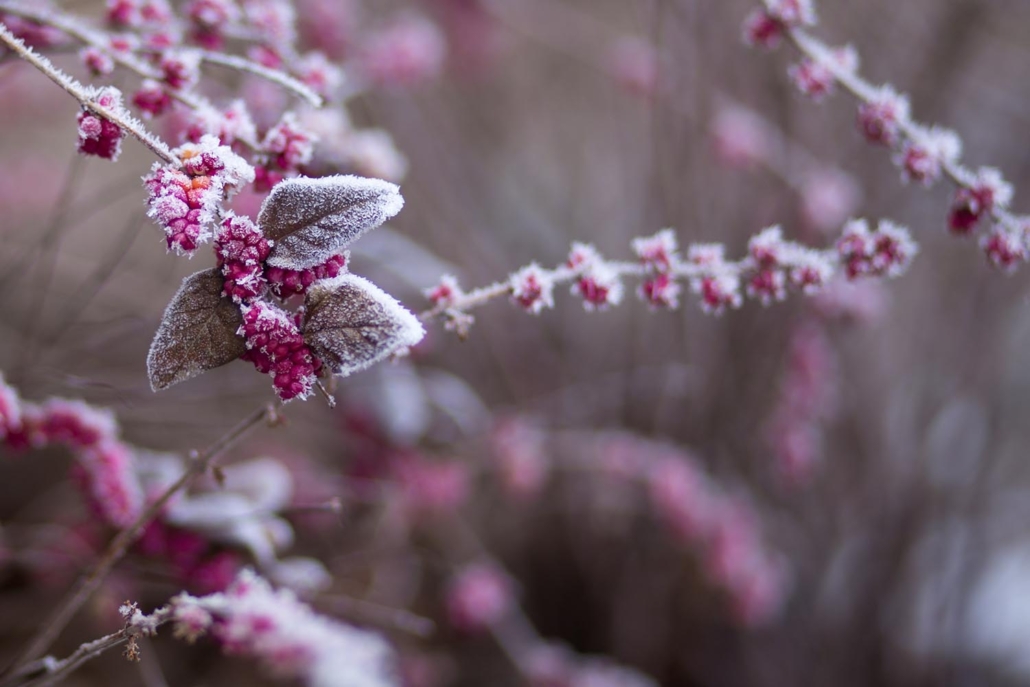
Even a slight increase in temperature has an impact on the start of each season. For example, spring thaw happens earlier and pushes the onset of the first frost. Ultimately “winters are shorter, spring is earlier, summers are longer, and fall arrives earlier.” The phenomenon of “false spring” is also witnessed in North America, more frequently in recent years than in previous decades. False spring happens when temperatures rise suddenly and cause plants and trees to bud and bloom too early, making them vulnerable to the still-present risk of frost. A report by the US-based National Atmospheric and Space Administration (NASA), from almost 20 years ago, had signaled that “regional thawing trends” in North America were “advancing almost one day a year since 1988,” and “[had] the potential to alter the cycle of atmospheric carbon dioxide intake and release by vegetation and soils across the region, potentially resulting in changes in Earth’s climate” and reflects current phenomena.

Changing seasons in Northern communities reveal how earlier spring thaws trigger permafrost thaw and sea ice retreat and ultimately, coastal erosion. When permafrost thaws, the ground becomes permeable and the ensuing degradation has destructive impacts on infrastructure, such as on roads and buildings, and on sustainable development efforts too. Furthermore, while engineering solutions to these problems exist, they are also costly.

Coproducing knowledge with Indigenous communities can offer crucial insights, not always shown in high-resolution maps of coastal erosion, of permafrost degradation, and of the progression of spring thaws over time. Documenting the experiences of Indigenous elders who witness climate change will also help to paint a clearer picture of the impact of changing seasons on plants and wildlife.


By Leela Viswanathan


(Image credit – Freestocks, Unsplash)
April 15, 2022/by IndigenousClimateHub
Tags: 2018 IPCC Special Report on Global Warming, False Spring, Global Warming, Indigenous Knowledge, NOAA, Permafrost Thaw
Share this entry
  • Share on Facebook
  • Share on X
  • Share on WhatsApp
  • Share on Pinterest
  • Share on LinkedIn
  • Share on Tumblr
  • Share on Reddit
  • Share by Mail
https://indigenousclimatehub.ca/wp-content/uploads/2022/04/frost-on-flowers.jpg 1000 1500 IndigenousClimateHub https://indigenousclimatehub.ca/wp-content/uploads/2020/10/logo-horiz-clr-01-small-300x88.png IndigenousClimateHub2022-04-15 15:35:532022-04-15 15:41:08Evidence of Changing Seasons in the Context of Climate Change
You might also like
Creating Pathways to Indigenous-led Climate Policy in Canada
Image Credit: Dustin Bowdige, Unsplash Night Skies and Shifting Stars: How Indigenous Celestial Knowledge Tracks a Changing Climate
Meechim Project – Food Sovereignty in Northern Manitoba (Video)
A.C., Unsplash+ Decolonizing Urban and Regional Planning: Haudenosaunee Knowledge, Stewardship, and Climate Adaptation
Arnaud Measureur, Unsplash Connecting Stewardship to Climate Adaptation and Resiliency: A Bioregional Approach
Bonnie Kittle (Unsplash) Gardens and Climate Change – How Growing a Resilient Garden Helps Fight Global Warming
X Logo X Logo Followon X RSS Feed Logo RSS Feed Logo Subscribeto RSS Feed

Subscribe to Our Blog

This field is required.

Check your inbox or spam folder to confirm your subscription.

Recent Posts

  • Water Is a Relative, Not a Resource
  • The River Is Telling Us Something: Indigenous-Led Water Monitoring as Canada’s Climate Early Warning System
  • Night Skies and Shifting Stars: How Indigenous Celestial Knowledge Tracks a Changing Climate
  • From Ownership to Relationship: Reclaiming Our Responsibilities to Land
  • Human Foolishness in Floodplains

Archives

  • June 2026
  • May 2026
  • April 2026
  • March 2026
  • February 2026
  • January 2026
  • December 2025
  • November 2025
  • October 2025
  • September 2025
  • August 2025
  • July 2025
  • June 2025
  • May 2025
  • April 2025
  • March 2025
  • February 2025
  • January 2025
  • December 2024
  • November 2024
  • October 2024
  • September 2024
  • August 2024
  • July 2024
  • June 2024
  • May 2024
  • April 2024
  • March 2024
  • February 2024
  • January 2024
  • December 2023
  • November 2023
  • October 2023
  • September 2023
  • August 2023
  • July 2023
  • June 2023
  • May 2023
  • April 2023
  • March 2023
  • February 2023
  • January 2023
  • December 2022
  • November 2022
  • October 2022
  • September 2022
  • August 2022
  • July 2022
  • June 2022
  • May 2022
  • April 2022
  • March 2022
  • February 2022
  • January 2022
  • December 2021
  • November 2021
  • October 2021
  • September 2021
  • August 2021
  • July 2021
  • June 2021
  • May 2021
  • April 2021
  • March 2021
  • February 2021
  • January 2021
  • December 2020
  • November 2020
  • October 2020
  • September 2020
  • August 2020
  • July 2020
  • June 2020
  • February 2020
  • October 2019
  • August 2019
  • July 2019
  • June 2019
  • May 2019
  • April 2019
  • March 2019

Categories

  • Adaptation
  • Alberta
  • Announcements
  • Arctic
  • Atlantic/NB
  • Awards
  • Blog
  • British Columbia
  • Climate Change
  • Climate Change Adaptation
  • Climate Change Education
  • Climate Change News
  • Climate Change Project
  • Climate Crisis
  • Climate Monitoring
  • Community Engagement
  • Community-Based Environmental Monitoring
  • Documentaries
  • Documentary
  • Events
  • Flooding
  • Food
  • Food Security
  • Food Sovereignty
  • Forest Fires
  • Funding Opportunity
  • ICCAG 2019
  • Indigenous Perspectives
  • Manitoba
  • Media
  • Métis
  • Métis Settlement
  • News
  • Op-Ed
  • Quebec
  • Saskatchewan
  • Technology
  • Video
  • Water
  • Webinars

Tags

Alberta Arctic Arctic Resilience Forum British Columbia Carbon Sequestration Caribou Caribou Recovery CIRNAC Climate Adaptation Climate Change Climate Change Adaptation Climate Resilience Community Engagement Education Environmental Stewardship Environment and Climate Change Canada (ECCC) First Nations Flooding Food Security Food Sovereignty Global Warming Indigenous Indigenous Guardians Toolkit Indigenous Knowledge Indigenous Stewardship Infrastructure Inuit landscape Mental Health Paris Agreement Policy Renewable Energy Research Resilience Science Traditional Ecological Knowledge Traditional Ecological Knowledge (TEK) Traditional Knowledge UNDRIP United Nations United Nations (UN) Webinar Wildfires WWF-Canada Youth
Contact

About Us

The Indigenous Climate Hub is a unique online community of Indigenous climate change leaders that have come together to share their stories and climate change adaptation experiences. The website is the result of the recommendations brought forward by Indigenous peoples at the Indigenous Climate Change Adaptation Gathering in 2018.

Indigenous Climate Hub Podcast

Be a part of the Indigenous Climate Hub Podcast. We are looking for unique perspectives and experiences in environmental stewardship, Indigenous ecological and traditional knowledge, and resource management offer valuable knowledge and teachings that can benefit Indigenous communities across Turtle Island and beyond.

Indigenous-led Initiatives

Are you a program or organization that funds or supports Indigenous Peoples  working on climate change initiatives?  If you would like to provide information to potential recipients here, please reach out to Okwaho so that we can work with you to highlight your program.

© Copyright - Indigenous Climate Hub, 2025-2026
  • Terms of Service
  • Privacy Policy
Link to: The Changing Regime of Wildfires Link to: The Changing Regime of Wildfires The Changing Regime of WildfiresWild fires Link to: Preventing Climate Maladaptation Link to: Preventing Climate Maladaptation Preventing Climate Maladaptation
Scroll to top Scroll to top Scroll to top