• Link to X
  • Link to Facebook
  • Link to Instagram
  • Link to Rss this site
Indigenous Climate Hub
  • Home
    • About Us
  • Climate Action Programs
    • First Nation Adapt Program
      • Indigenous Climate Change Adaptation Gatherings
    • Indigenous Community-Based Climate Monitoring Program
    • Climate Change and Health Adaptation Program
    • Climate Change Preparedness in the North
    • Environment and Climate Change Canada
  • Funding
  • Resources
    • Climate Change Directory
    • Resource Library
    • Community Adaptation Projects
  • Events
  • Podcast
  • Blog
  • Contact/FAQs
  • Click to open the search input field Click to open the search input field Search
  • Menu Menu

Mi’kmaq Confederacy of Prince Edward Island Supports Communities in Adapting to Climate Change

Adaptation, Atlantic/NB, Blog, Climate Change, Climate Change Adaptation, Climate Monitoring, Flooding, Technology

Since 2013, the Mi’kmaq Confederacy of Prince Edward Island (MCPEI) has supported the communities of Lennox Island and Abegweit First Nations in preparing and adapting to climate change impacts.

Recent studies have shown that climate change is contributing to sea-level rise, coastal erosion, and increased storm surges on Prince Edward Island, putting communities such as Lennox Island at risk. Coastal residences, critical community infrastructure, sacred grounds, and medicinal plant sites are all under threat from climate change and we needed to prepare for these challenges.

Having the community identify their priorities and concerns has been integral to the success of this project. We hosted workshops with Lennox Island and Abegweit First Nations to identify and prioritize key climate risks to the community. Issues related to emergency response and human health, vulnerability of infrastructure, sea-level rise, coastal flooding, and vulnerability of traditional fishing and hunting areas were identified as key concerns by the community. “Climate change adaptation and the protection of our home, Lennox Island, is one of the most pressing challenges we face today” stated Chief Darlene Bernard of Lennox Island First Nation. “We appreciate the partnerships that have formed to help us achieve that goal.”

We also partnered with the University of Prince Edward Island’s Climate Land and Simon Fraser University’s Spatial Interface Research Lab on the Coastal Impact Visualization Environment (CLIVE). CLIVE combines historical erosion data, model projections of sea-level rise, aerial imagery, and high-resolution digital elevation data to draw map out coastal erosion and future sea-level rise scenarios. By using 3D game engine technology, CLIVE is able to communicate climate change information to community members that is visual and easy to understand.

We are planning future activities that will include continued community consultations, development of an archeological climate change risk assessment tool, and training on how to operate UAVs for community members. Our project will culminate in the development of an adaptation plan that will help our communities improve their resiliency to climate change.
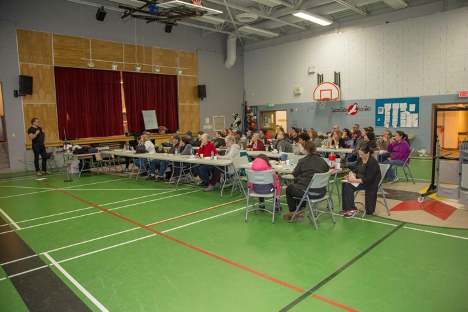
Caption: Audience at Lennox Island (PEI) attending community workshop on climate change


Blog Post from: Mi’kmaq Confederacy of Prince Edward Island
June 23, 2020/by IndigenousClimateHub
Tags: Abegweit First Nation, Aerial Imagery, Coastal Erosion, Health, Infrastructure, Lennox Island, MCPEI, Mi'kmaq Confederacy of Prince Edward Island, Partnerships, PEI, Prince Edward Island, Resiliency, Sea-Level Rise
Share this entry
  • Share on Facebook
  • Share on X
  • Share on WhatsApp
  • Share on Pinterest
  • Share on LinkedIn
  • Share on Tumblr
  • Share on Reddit
  • Share by Mail
https://indigenousclimatehub.ca/wp-content/uploads/2020/06/Lennox.png 312 468 IndigenousClimateHub https://indigenousclimatehub.ca/wp-content/uploads/2020/10/logo-horiz-clr-01-small-300x88.png IndigenousClimateHub2020-06-23 16:30:362020-06-23 16:30:36Mi’kmaq Confederacy of Prince Edward Island Supports Communities in Adapting to Climate Change
You might also like
Award-winning New Tool Helping First Nations Adapt their Infrastructure to Climate Change
Researchers and Community looking at maps of flooding eventsYellow Quill First Nation Preparing for the Future – How Yellow Quill First Nation is using Indigenous knowledge and Science to Mitigate the Risk of Flooding
Plants to Limit Coastal Erosion in Ekuanitshit
Mohawk Council of Kahnawà:ke Undertakes a Shoreline Vulnerability Assessment
Adaptive Capacity and Adaptation of Indigenous Peoples to Environmental Change
X Logo X Logo Followon X RSS Feed Logo RSS Feed Logo Subscribeto RSS Feed

Subscribe to Our Blog

This field is required.

Check your inbox or spam folder to confirm your subscription.

Recent Posts

  • Water Is a Relative, Not a Resource
  • The River Is Telling Us Something: Indigenous-Led Water Monitoring as Canada’s Climate Early Warning System
  • Night Skies and Shifting Stars: How Indigenous Celestial Knowledge Tracks a Changing Climate
  • From Ownership to Relationship: Reclaiming Our Responsibilities to Land
  • Human Foolishness in Floodplains

Archives

  • June 2026
  • May 2026
  • April 2026
  • March 2026
  • February 2026
  • January 2026
  • December 2025
  • November 2025
  • October 2025
  • September 2025
  • August 2025
  • July 2025
  • June 2025
  • May 2025
  • April 2025
  • March 2025
  • February 2025
  • January 2025
  • December 2024
  • November 2024
  • October 2024
  • September 2024
  • August 2024
  • July 2024
  • June 2024
  • May 2024
  • April 2024
  • March 2024
  • February 2024
  • January 2024
  • December 2023
  • November 2023
  • October 2023
  • September 2023
  • August 2023
  • July 2023
  • June 2023
  • May 2023
  • April 2023
  • March 2023
  • February 2023
  • January 2023
  • December 2022
  • November 2022
  • October 2022
  • September 2022
  • August 2022
  • July 2022
  • June 2022
  • May 2022
  • April 2022
  • March 2022
  • February 2022
  • January 2022
  • December 2021
  • November 2021
  • October 2021
  • September 2021
  • August 2021
  • July 2021
  • June 2021
  • May 2021
  • April 2021
  • March 2021
  • February 2021
  • January 2021
  • December 2020
  • November 2020
  • October 2020
  • September 2020
  • August 2020
  • July 2020
  • June 2020
  • February 2020
  • October 2019
  • August 2019
  • July 2019
  • June 2019
  • May 2019
  • April 2019
  • March 2019

Categories

  • Adaptation
  • Alberta
  • Announcements
  • Arctic
  • Atlantic/NB
  • Awards
  • Blog
  • British Columbia
  • Climate Change
  • Climate Change Adaptation
  • Climate Change Education
  • Climate Change News
  • Climate Change Project
  • Climate Crisis
  • Climate Monitoring
  • Community Engagement
  • Community-Based Environmental Monitoring
  • Documentaries
  • Documentary
  • Events
  • Flooding
  • Food
  • Food Security
  • Food Sovereignty
  • Forest Fires
  • Funding Opportunity
  • ICCAG 2019
  • Indigenous Perspectives
  • Manitoba
  • Media
  • Métis
  • Métis Settlement
  • News
  • Op-Ed
  • Quebec
  • Saskatchewan
  • Technology
  • Video
  • Water
  • Webinars

Tags

Alberta Arctic Arctic Resilience Forum British Columbia Carbon Sequestration Caribou Caribou Recovery CIRNAC Climate Adaptation Climate Change Climate Change Adaptation Climate Resilience Community Engagement Education Environmental Stewardship Environment and Climate Change Canada (ECCC) First Nations Flooding Food Security Food Sovereignty Global Warming Indigenous Indigenous Guardians Toolkit Indigenous Knowledge Indigenous Stewardship Infrastructure Inuit landscape Mental Health Paris Agreement Policy Renewable Energy Research Resilience Science Traditional Ecological Knowledge Traditional Ecological Knowledge (TEK) Traditional Knowledge UNDRIP United Nations United Nations (UN) Webinar Wildfires WWF-Canada Youth
Contact

About Us

The Indigenous Climate Hub is a unique online community of Indigenous climate change leaders that have come together to share their stories and climate change adaptation experiences. The website is the result of the recommendations brought forward by Indigenous peoples at the Indigenous Climate Change Adaptation Gathering in 2018.

Indigenous Climate Hub Podcast

Be a part of the Indigenous Climate Hub Podcast. We are looking for unique perspectives and experiences in environmental stewardship, Indigenous ecological and traditional knowledge, and resource management offer valuable knowledge and teachings that can benefit Indigenous communities across Turtle Island and beyond.

Indigenous-led Initiatives

Are you a program or organization that funds or supports Indigenous Peoples  working on climate change initiatives?  If you would like to provide information to potential recipients here, please reach out to Okwaho so that we can work with you to highlight your program.

© Copyright - Indigenous Climate Hub, 2025-2026
  • Terms of Service
  • Privacy Policy
Link to: The Imalirijiit Program: A Community-Based Environmental Monitoring Program of the George River Watershed in Nunavik, Quebec Link to: The Imalirijiit Program: A Community-Based Environmental Monitoring Program of the George River Watershed in Nunavik, Quebec The Imalirijiit Program: A Community-Based Environmental Monitoring Program... Link to: Gardens and Climate Change – How Growing a Resilient Garden Helps Fight Global Warming Link to: Gardens and Climate Change – How Growing a Resilient Garden Helps Fight Global Warming Bonnie Kittle (Unsplash)Gardens and Climate Change – How Growing a Resilient Garden Helps Fight...
Scroll to top Scroll to top Scroll to top