• Link to X
  • Link to Facebook
  • Link to Instagram
  • Link to Rss this site
Indigenous Climate Hub
  • Home
    • About Us
  • Climate Action Programs
    • First Nation Adapt Program
      • Indigenous Climate Change Adaptation Gatherings
    • Indigenous Community-Based Climate Monitoring Program
    • Climate Change and Health Adaptation Program
    • Climate Change Preparedness in the North
    • Environment and Climate Change Canada
  • Funding
  • Resources
    • Climate Change Directory
    • Resource Library
    • Community Adaptation Projects
  • Events
  • Podcast
  • Blog
  • Contact/FAQs
  • Click to open the search input field Click to open the search input field Search
  • Menu Menu

Climate Resilience and Indigenous Values

Blog, Climate Change

According to the Centre for Climate Change and Energy Solutions “Climate resilience is the ability to anticipate, prepare for, and respond to hazardous events, trends, or disturbances related to climate.” An Indigenous community may improve its resilience to climate change by considering current and future risks associated with climate change, and by drawing from their shared values to influence legislation protecting the environment.

Indigenous communities are taking an active role to build their own climate change resilience through local and traditional knowledge systems and control over their resources. If these aspects are undermined by non-Indigenous and Western scientific knowledge and land management practices, Indigenous climate resilience is threatened.

The values of diverse Indigenous peoples contribute to strengthening Indigenous climate resilience worldwide by:

  • Sustaining a physical and spiritual connection with Mother Earth;
  • Upholding the sense that one’s personal and community’s well-being is connected to the well-being of the environment; and
  • Fostering Intergenerational equity: “the principle that every generation holds the Earth in common with members of the present generation and with other generations, past and future.”

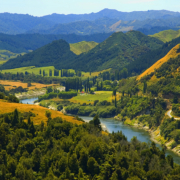
In Aotearoa (New Zealand), the Māori principle that the well-being of humans and nature are connected, influenced the Te Awa Tupua (Whanganui River Claims Settlement) Act 2017, which granted the Whanganu River, and the nearby forest, the same “rights, powers, and duties of a legal person.” Many Indigenous communities, inspired by this legislation, are trying to enact similar laws in their own jurisdictions, and contribute to their own climate resilience.


By Leela Viswanathan
November 2, 2020/by IndigenousClimateHub
Tags: Aotearoa, Climate Resilience, Intergenerational Equity, Legislation, Māori, New Zealand, Traditional Knowledge Systems
Share this entry
  • Share on Facebook
  • Share on X
  • Share on WhatsApp
  • Share on Pinterest
  • Share on LinkedIn
  • Share on Tumblr
  • Share on Reddit
  • Share by Mail
https://indigenousclimatehub.ca/wp-content/uploads/2020/11/casey-horner-2_rEmajTjcg-unsplash-scaled.jpg 1709 2560 IndigenousClimateHub https://indigenousclimatehub.ca/wp-content/uploads/2020/10/logo-horiz-clr-01-small-300x88.png IndigenousClimateHub2020-11-02 15:34:462020-11-02 15:34:46Climate Resilience and Indigenous Values
You might also like
Shutterstock, Licensed The Role of Indigenous Women in Climate Resilience and Adaptation
James Shook Naming, Knowing, and Listening: Deepening Our Understanding of Personhood in Place and Space
Fellipe Ditadi, Unsplash+ Reimagining Our Relationship with Natural Resources: A Path Toward Climate Resilience through Natural Law and Decommodification
Meechim Project – Food Sovereignty in Northern Manitoba (Video)
Connecting Climate Justice and Social Justice
X Logo X Logo Followon X RSS Feed Logo RSS Feed Logo Subscribeto RSS Feed

Subscribe to Our Blog

This field is required.

Check your inbox or spam folder to confirm your subscription.

Recent Posts

  • Water Is a Relative, Not a Resource
  • The River Is Telling Us Something: Indigenous-Led Water Monitoring as Canada’s Climate Early Warning System
  • Night Skies and Shifting Stars: How Indigenous Celestial Knowledge Tracks a Changing Climate
  • From Ownership to Relationship: Reclaiming Our Responsibilities to Land
  • Human Foolishness in Floodplains

Archives

  • June 2026
  • May 2026
  • April 2026
  • March 2026
  • February 2026
  • January 2026
  • December 2025
  • November 2025
  • October 2025
  • September 2025
  • August 2025
  • July 2025
  • June 2025
  • May 2025
  • April 2025
  • March 2025
  • February 2025
  • January 2025
  • December 2024
  • November 2024
  • October 2024
  • September 2024
  • August 2024
  • July 2024
  • June 2024
  • May 2024
  • April 2024
  • March 2024
  • February 2024
  • January 2024
  • December 2023
  • November 2023
  • October 2023
  • September 2023
  • August 2023
  • July 2023
  • June 2023
  • May 2023
  • April 2023
  • March 2023
  • February 2023
  • January 2023
  • December 2022
  • November 2022
  • October 2022
  • September 2022
  • August 2022
  • July 2022
  • June 2022
  • May 2022
  • April 2022
  • March 2022
  • February 2022
  • January 2022
  • December 2021
  • November 2021
  • October 2021
  • September 2021
  • August 2021
  • July 2021
  • June 2021
  • May 2021
  • April 2021
  • March 2021
  • February 2021
  • January 2021
  • December 2020
  • November 2020
  • October 2020
  • September 2020
  • August 2020
  • July 2020
  • June 2020
  • February 2020
  • October 2019
  • August 2019
  • July 2019
  • June 2019
  • May 2019
  • April 2019
  • March 2019

Categories

  • Adaptation
  • Alberta
  • Announcements
  • Arctic
  • Atlantic/NB
  • Awards
  • Blog
  • British Columbia
  • Climate Change
  • Climate Change Adaptation
  • Climate Change Education
  • Climate Change News
  • Climate Change Project
  • Climate Crisis
  • Climate Monitoring
  • Community Engagement
  • Community-Based Environmental Monitoring
  • Documentaries
  • Documentary
  • Events
  • Flooding
  • Food
  • Food Security
  • Food Sovereignty
  • Forest Fires
  • Funding Opportunity
  • ICCAG 2019
  • Indigenous Perspectives
  • Manitoba
  • Media
  • Métis
  • Métis Settlement
  • News
  • Op-Ed
  • Quebec
  • Saskatchewan
  • Technology
  • Video
  • Water
  • Webinars

Tags

Alberta Arctic Arctic Resilience Forum British Columbia Carbon Sequestration Caribou Caribou Recovery CIRNAC Climate Adaptation Climate Change Climate Change Adaptation Climate Resilience Community Engagement Education Environmental Stewardship Environment and Climate Change Canada (ECCC) First Nations Flooding Food Security Food Sovereignty Global Warming Indigenous Indigenous Guardians Toolkit Indigenous Knowledge Indigenous Stewardship Infrastructure Inuit landscape Mental Health Paris Agreement Policy Renewable Energy Research Resilience Science Traditional Ecological Knowledge Traditional Ecological Knowledge (TEK) Traditional Knowledge UNDRIP United Nations United Nations (UN) Webinar Wildfires WWF-Canada Youth
Contact

About Us

The Indigenous Climate Hub is a unique online community of Indigenous climate change leaders that have come together to share their stories and climate change adaptation experiences. The website is the result of the recommendations brought forward by Indigenous peoples at the Indigenous Climate Change Adaptation Gathering in 2018.

Indigenous Climate Hub Podcast

Be a part of the Indigenous Climate Hub Podcast. We are looking for unique perspectives and experiences in environmental stewardship, Indigenous ecological and traditional knowledge, and resource management offer valuable knowledge and teachings that can benefit Indigenous communities across Turtle Island and beyond.

Indigenous-led Initiatives

Are you a program or organization that funds or supports Indigenous Peoples  working on climate change initiatives?  If you would like to provide information to potential recipients here, please reach out to Okwaho so that we can work with you to highlight your program.

© Copyright - Indigenous Climate Hub, 2025-2026
  • Terms of Service
  • Privacy Policy
Link to: Planning for Climate Change in Canadian Municipalities Link to: Planning for Climate Change in Canadian Municipalities Planning for Climate Change in Canadian Municipalities Link to: Community Social Networks and Indigenous Resilience to Climate Change Link to: Community Social Networks and Indigenous Resilience to Climate Change TreesCommunity Social Networks and Indigenous Resilience to Climate Change
Scroll to top Scroll to top Scroll to top