
Climate Resilience as an Act of Self-Determination
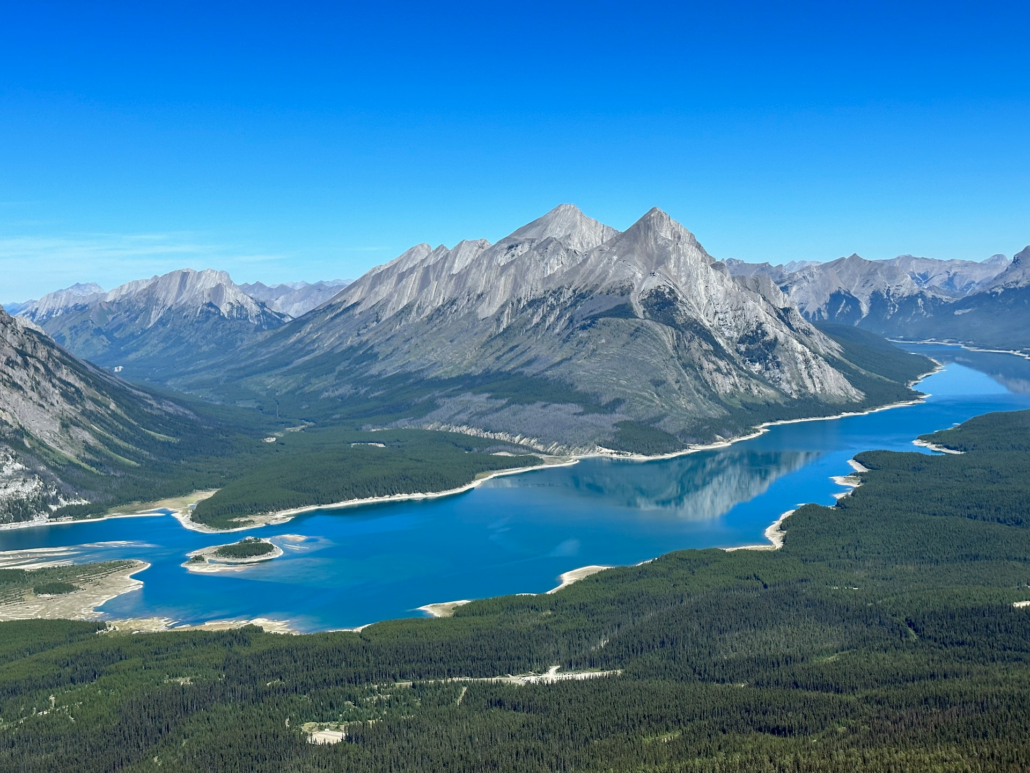 Image Credit : Kenzie Broad, Unsplash
Across these lands, First Nations are not simply responding to climate change; they are expressing a profound act of self-determination. Investing in resilience is not just about reducing risk or protecting infrastructure; it is about renewing relationships with land, water, plants, animals, and elements as the primary teachers of how to live, adapt, and thrive in a rapidly changing world.
For Indigenous communities, resilience is inseparable from identity, language, law, and governance. It is a way of saying: We will define our own adaptation, guided by the natural laws that have sustained life here for millennia.
Learning from Nature’s Long History of Change
Climate change is often described as novel or purely human-made. While industrial activity has unquestionably accelerated, the Earth’s climate has always been in motion. Over millennia, warming, cooling, flooding, and fire have continuously reshaped life. In these cycles, nature teaches a hard truth: some species perish, others adapt. Those that survive don’t just endure; they reorganize, forge new relationships, and sometimes emerge more resilient and diverse than before.
Indigenous Peoples have observed and lived within these adaptive processes for thousands of years. By watching how plants root deeper, how animals shift migration patterns, and how waters carve new paths, communities learn what authentic adaptation means. Adaptation is not an optional add-on; it is a law of life.
More-than-Human Teachers of Autonomy
Indigenous law and lifeways are rooted in the more-than-human world. Languages carry the verbs and metaphors of specific territories, while hunting, fishing, harvesting, and ceremony express ecological kinship.
From this perspective:
- Plants teach patience, rootedness, and collective defence.
- Animals show mobility, alertness, and cooperation.
- Waters’ model persistence and the quiet strength of flow.
- Fire and wind remind us of transformation and the limits of control.
These beings are not “resources.” They are teachers. They show that autonomy is not isolation but the capacity to respond to change while remaining in right relationship with the web of life. For many First Nations, this is where self-determination begins in the school of the land, long before it is written into policy.
Climate Change as a Crucible for Renewal
When communities design resilient housing, energy systems, food networks, or water infrastructure, they do more than install technology; they realign human systems with the teachings of their territories. This can mean:
- Designing community layouts that follow local contours, winds, and wildlife corridors.
- Adjusting hunting and fishing practices to track shifting species while maintaining reciprocity.
- Reclaiming fire stewardship to protect habitats and renew ecosystems.
- Localizing food and energy to reduce reliance on fossil-fuel-heavy supply chains.
Each of these is a form of climate self-determination. The more space, resources, and authority First Nations must shape such models, the more deeply adaptation can take root in long-term relationships with land and water. These shifts are not only technical but also cultural, linguistic, and spiritual. They create the conditions for communities to renew their institutions, habits, and values at the pace the Earth now demands.
Knowledge That Evolves with the Climate
As First Nations engage closely with their territories, monitoring ice, tracking plant cycles, observing wildlife, and watching shorelines, a living record of change emerges. Each project produces two transformations:
- Infrastructure evolves through new buildings, systems, and practices.
- Knowledge evolves, deepening understanding of place, risk, and interdependence.
This co-evolution is crucial. Static plans soon fail in a world of accelerating climate disruptions. True resilience relies on the capacity to read the land, interpret signals, and adjust course. When governance is grounded in the agency of the land itself, Indigenous Nations are uniquely positioned to lead this kind of adaptive practice.
From Self-Determination to Shared Sovereignty
When First Nations lead adaptation, they are not only strengthening their own communities, but they are also modelling shared sovereignty rooted in place. Shared sovereignty does not erase difference; it anchors relationships in mutual responsibility.
It rests on three recognitions:
- Natural laws, those governing water, soil, species, and climate, are the highest laws.
- Human governance must fit within them, not above them.
- Nation-to-nation relationships are strongest when grounded in shared duties to land and water.
As First Nations are supported to listen to and act from the authority of land, new possibilities for collaboration and climate justice open. Non-Indigenous societies have much to learn from these approaches, not just techniques, but humility: accepting that humans must adapt to the Earth, not the other way around.
A Path Forward for Climate Justice
Climate change is revealing the brittleness of systems built on extraction and the denial of limits. In contrast, Indigenous climate leadership offers another path, one grounded in relationship with morethanhuman relatives and exercised through responsibility rather than domination.
For readers of the Indigenous Climate Hub, this is an invitation to see resilience not as a technical challenge but as a renewal of connection:
- Supporting First Nations’ leadership strengthens teachers’ adaptation to lands, waters, and living beings.
- Investing in Indigenous self-determination invests in knowledge systems that can guide all communities through uncertainty.
- Embracing shared sovereignty honours natural law and the hope that, by learning from the Earth, humanity can move beyond survival into a state of balance.
In this light, climate change becomes more than a threat; it becomes the crucible through which deeper self-determination, wiser stewardship, and more just relationships among nations are forged.
Blog by Rye Karonhiowanen Barberstock
Image Credit : Kenzie Broad, Unsplash

 Image Credit : Ardian Pranomo, Unsplash
 Image Credit: Hector John Periquin, Unsplash