Past Events

  • Arctic Resilience Forum: Human Health and Pandemics

    The Arctic Resilience Forum will be convened every Wednesday from 11:30am – 1:00pm (EST) over a series of ten weeks, beginning October 7, 2020. The online series seeks to engage a broad audience in conversations about how to build the resilience of Arctic communities and ecosystems across a variety of focus areas, including: October 28: […]

  • Arctic Resilience Forum: Broadband Connectivity

    The Arctic Resilience Forum will be convened every Wednesday from 11:30am – 1:00pm (EST) over a series of ten weeks, beginning October 7, 2020. The online series seeks to engage a broad audience in conversations about how to build the resilience of Arctic communities and ecosystems across a variety of focus areas, including: November 11: […]

  • 2020 Virtual Indigenous Mapping Workshop

    Description from website: Introducing the very first Virtual Indigenous Mapping Workshop. For the first time ever, IMW participants can develop their skills, with cutting edge geospatial technologies, from anywhere around the globe. Learn to redefine Indigenous landscapes from Indigenous mapping experts. Develop hands-on skills from leading industry professionals including Esri, Google, NASA, Mapbox and more. […]

  • Arctic Resilience Forum: Gender

    The Arctic Resilience Forum will be convened every Wednesday from 11:30am – 1:00pm (EST) over a series of ten weeks, beginning October 7, 2020. The online series seeks to engage a broad audience in conversations about how to build the resilience of Arctic communities and ecosystems across a variety of focus areas, including: November 18: […]

  • Arctic Resilience Forum: Socio-Ecological Resilience

    The Arctic Resilience Forum will be convened every Wednesday from 11:30am – 1:00pm (EST) over a series of ten weeks, beginning October 7, 2020. The online series seeks to engage a broad audience in conversations about how to build the resilience of Arctic communities and ecosystems across a variety of focus areas, including: November 25: […]

  • Arctic Resilience Forum: Financing Resilience

    The Arctic Resilience Forum will be convened every Wednesday from 11:30am – 1:00pm (EST) over a series of ten weeks, beginning October 7, 2020. The online series seeks to engage a broad audience in conversations about how to build the resilience of Arctic communities and ecosystems across a variety of focus areas, including: December 2: […]

  • Indigenous Moose Monitoring and Stewardship – Part 2

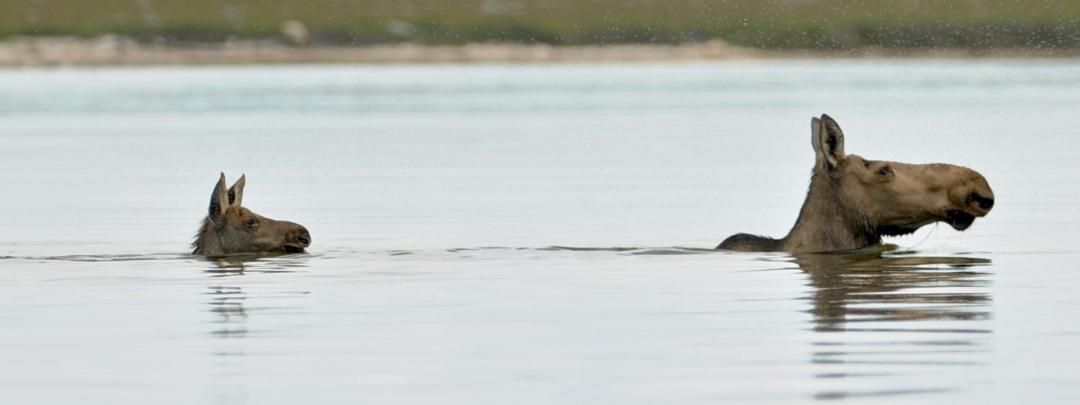
    In the last decade, Indigenous peoples across Canada have been sounding the alarm about moose populations and their habitats. Moose, a species of deep importance to many Indigenous peoples, cultures, and communities across Canada, have declined in numbers dramatically in many areas – with far-reaching impacts to Indigenous communities, food security, cultures, and ways of […]

  • Arctic Resilience Forum: Infrastructure

    The Arctic Resilience Forum will be convened every Wednesday from 11:30am – 1:00pm (EST) over a series of ten weeks, beginning October 7, 2020. The online series seeks to engage a broad audience in conversations about how to build the resilience of Arctic communities and ecosystems across a variety of focus areas, including: December 9: […]

  • Arctic Resilience Forum: Respecting Traditional Indigenous Knowledge Systems

    The Arctic Resilience Forum will be convened every Wednesday from 11:30am – 1:00pm (EST) over a series of ten weeks, beginning October 7, 2020. The online series seeks to engage a broad audience in conversations about how to build the resilience of Arctic communities and ecosystems across a variety of focus areas, including: December 16: […]

  • Indigenous Knowledges & Two-Eyed Seeing

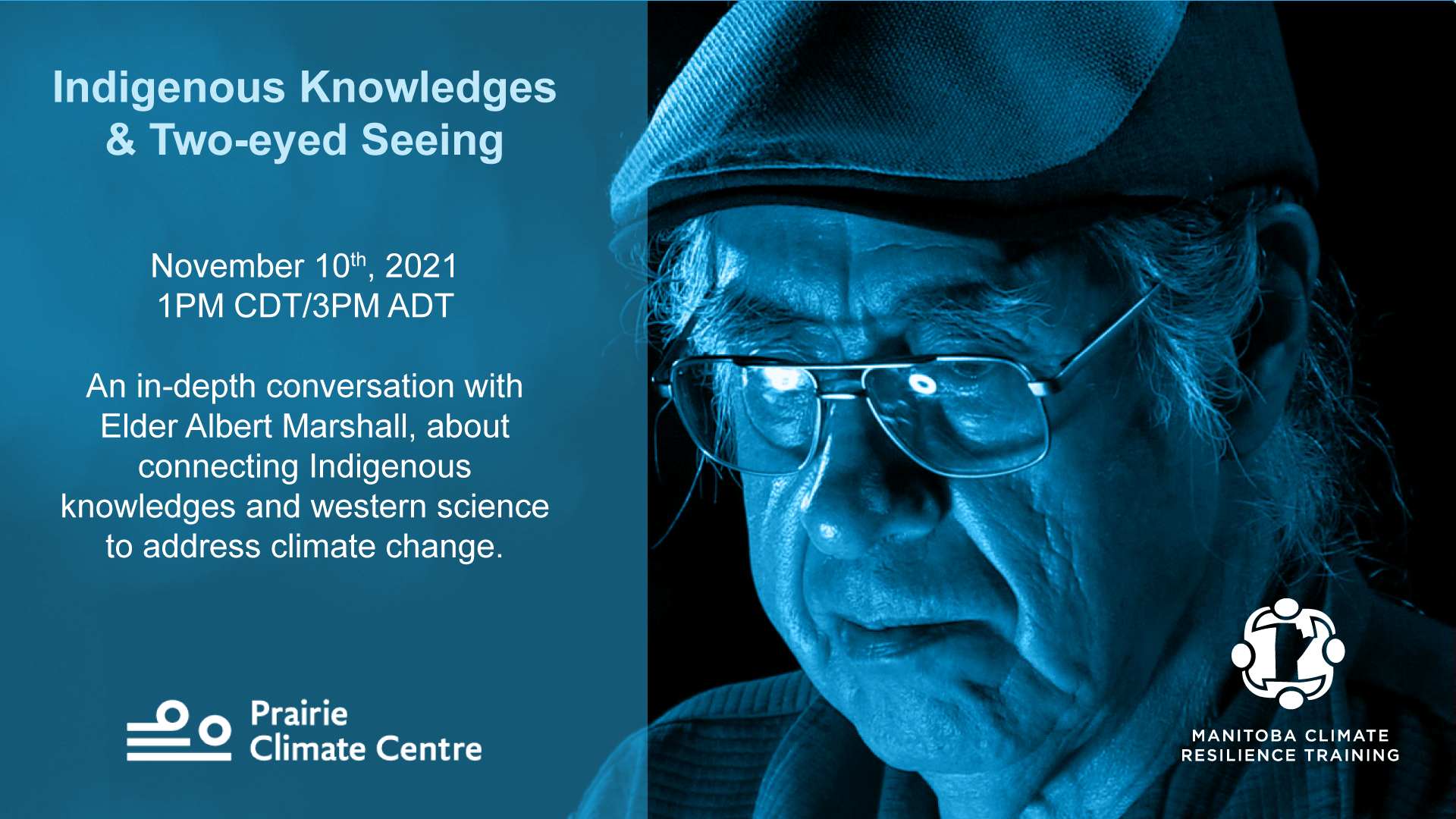
    Information from Prairie Climate Centre: Featuring an in-depth conversation with Mi’kmaw Elder Albert Marshall – from Eskasoni First Nation in Unama’ki (Cape Breton) – this event will reflect on the importance of Indigenous knowledges in addressing climate change. Elder Marshall is a passionate advocate for cross-cultural understanding, linking Indigenous and Western ways of knowing, and […]

  • Event and Webinar : Mitigating the Impacts of Climate Change Insights on Environmental Protection and Restoration

    Concordia University Pavillon J.‐W.‐McConnell 1400 De Maisonneuve Blvd. W., Montreal, QC, Canada

    Speaker: Cole Teionieh’táthe Delisle works as an Environmental Projects Coordinator for Terrestrial Habitats with a wide range of projects. He coordinates KEPO's seed saving activities, EAB project, species at risk, bird program, and drone work. A graduate from Concordia University’s Anthropology program, he is interested in archeology and the community’s history. Outside of terrestrial work, he also leads Kahnawà:ke's participation in Transport Canada's Enhanced Maritime Situational Awareness Program monitoring the impacts of industrial shipping.

    Audience: Concordia community and external

    This event has been generously funded by the Chamandy Foundation.

    Free
  • Webinar : Mitigating the Impacts of Climate Change: A workshop with Diane Obed

    In this workshop, Inuk climate emotion researcher, Diane Obed, invites participants into a space of inquiry that honors Indigenous paradigms of relationality, where emotions are not pathologies to fix, but relational feedback mechanisms from the lands, waters, skies, kinfolk, we are entangled with.

    Together, we’ll explore:

    What shifts when we treat climate grief and fear not as dysfunction, but as relational intelligence?
    How Indigenous land-based worldviews metabolize emotion through kinship, ceremony, and responsibility.
    Expect reflection, dialogue, and gentle embodied practices, not as solutions, but as invitations to listen differently to what moves through us when the land speaks.
    Speaker: Diane Obed is an Inuk woman mixed with English ancestry, originally from Hopedale, Nunatsiavut, Labrador. She currently lives in Nalikitquniejk– “place of torn branches” in Mi’kma’ki, in the territory of Peace and Friendship Treaties, also known as Antigonish, Nova Scotia.

    Diane is currently studying in the Inter-University Educational Foundations PhD program at Mount Saint Vincent University. Her doctoral research project explores the intersections between Indigenous land education and contemplative studies to draw on ancient wisdom for modern day psycho-social issues such as cultivating courage to be able to face and engage in dialogue about the current climate crisis.

    Audience: Concordia community and external

    This event has been generously funded by the Chamandy Foundation.
    Free